


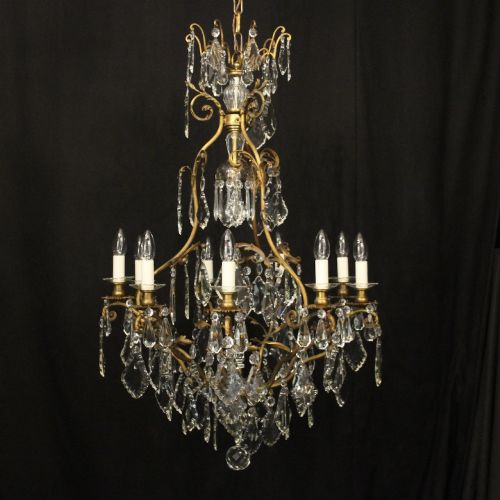
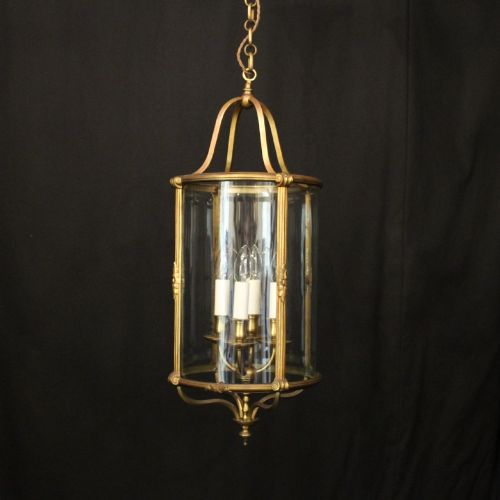
Brass Glass Light Fixture
A brass glass light fixture brings the warmth of metal and the refraction of crystal into a room.
Brass Glass Light Fixture
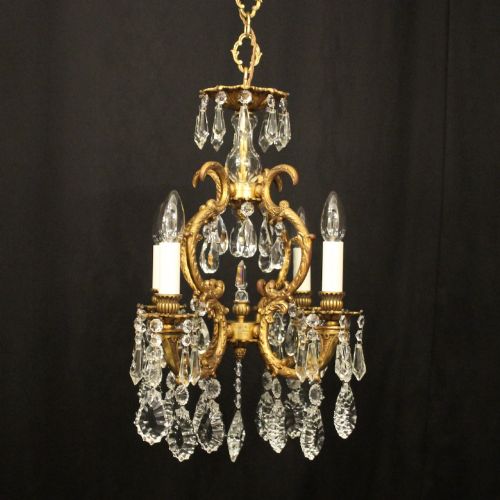
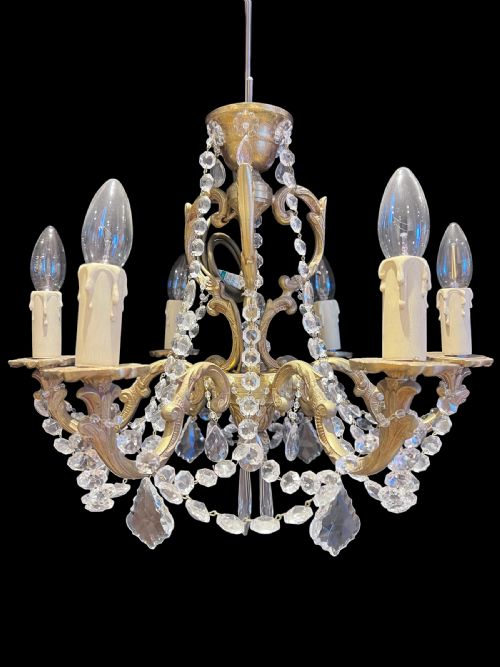
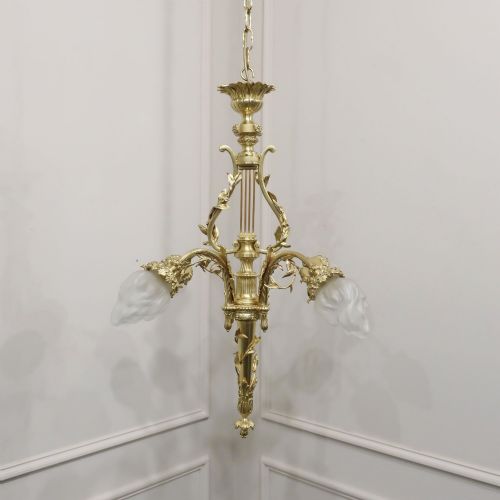
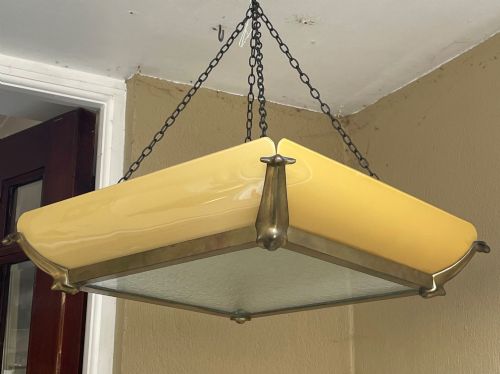
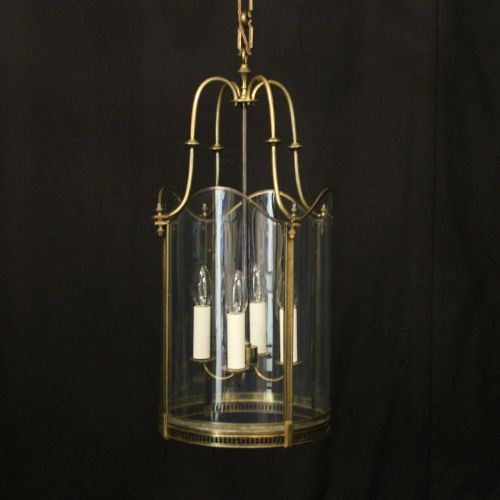
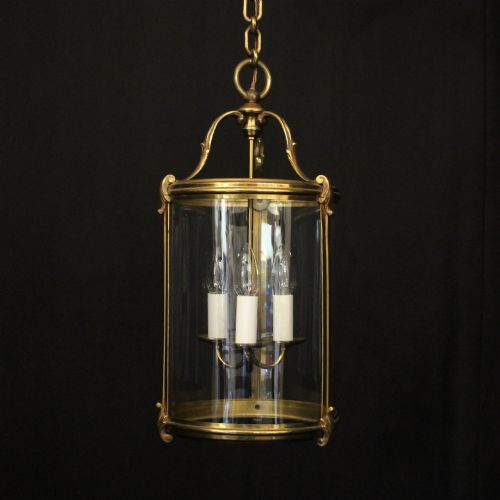
When you search for a brass glass light fixture, you are looking at illumination that balances structural metalwork with transparent or translucent shades. These pieces take many architectural forms, ranging from simple ceiling pendants to multi-armed chandeliers and enclosed hall lanterns. The selection on this page draws heavily from French ateliers and English workshops spanning the Victorian era through the Art Deco period.
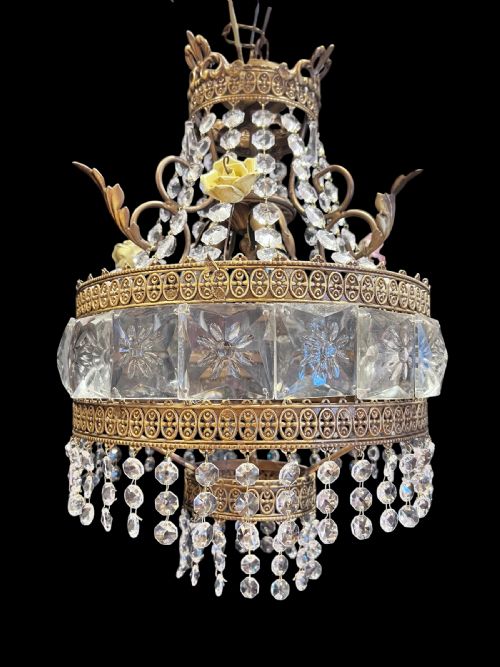
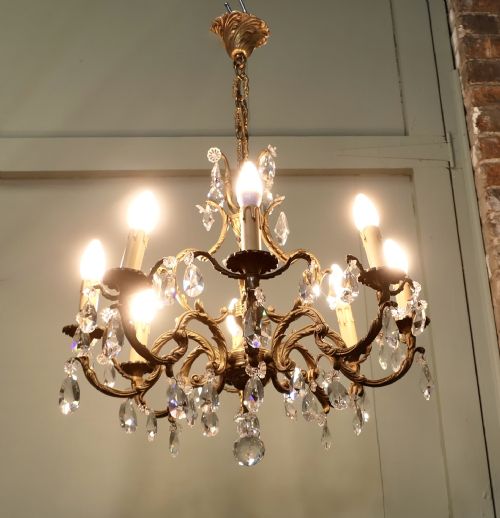
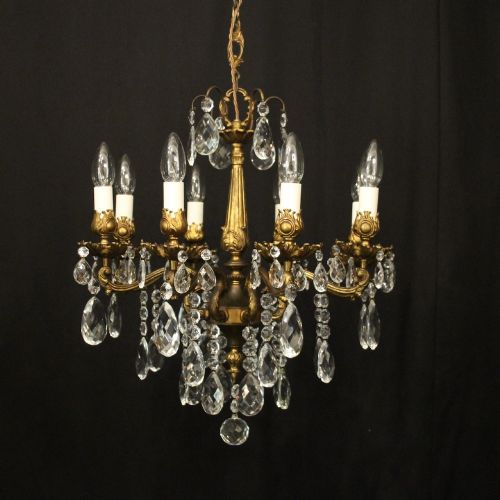
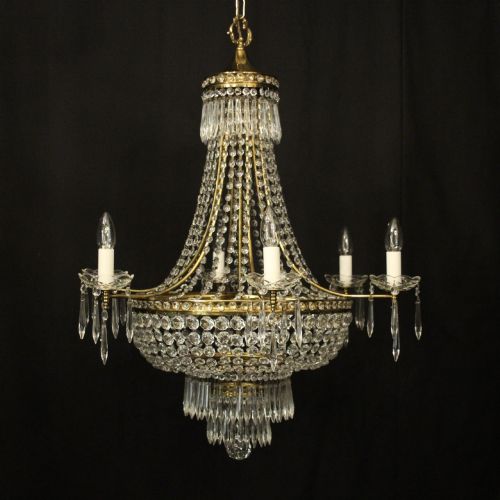
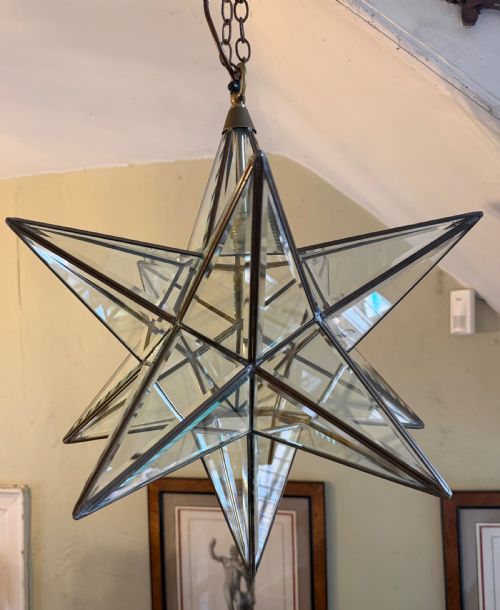
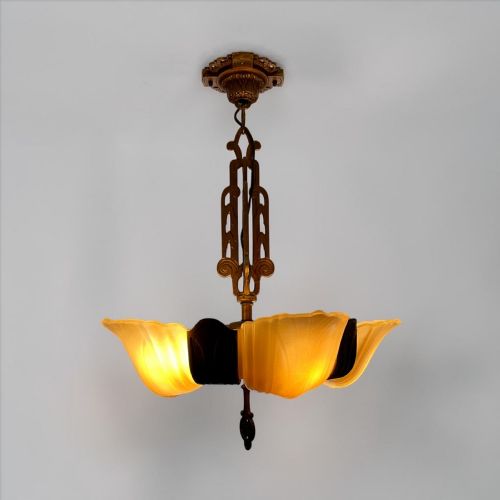
Chandeliers and ceiling lights dominate the offerings, often taking the form of tent and waterfall designs hung with crystal lustres. You will also encounter specialised lighting such as Moravian stars, slip shade pendants, and Gothic revival gasoliers adapted for electricity. The prevalent aesthetic leans toward French styles like Empire, Neoclassical, and Rococo, alongside sturdy Arts and Crafts and industrial utilitarian forms.
Dating ranges from the nineteenth century into the 1930s, capturing shifts in domestic illumination from gas to electric power. Edwardian plafonniers and moonstone glass globes sit alongside elaborate twenty-five light gilt bronze centerpieces. Every item utilises a brass or bronze framework to support glass elements, whether cut, bevelled, opalescent, or leaded.
Assessing Quality
Quality in these fixtures resides in the crispness of the metal casting and the clarity of the glass elements. Heavier, finely chased gilt bronze frames with deep relief ornamentation separate high-end atelier pieces from standard commercial production. Similarly, hand-cut crystal lustres with sharp facets refract light with greater brilliance than mass-molded glass.
Integration of design defines the upper tier of the range, where every brass arm, crystal drop, and glass shade serves a unified aesthetic purpose. Superior examples display thoughtful proportions, such as balanced tent and waterfall configurations or precisely fitted bevelled glass panels in lanterns. Original patination on the brass and the presence of matching, undamaged glass components further elevate a piece.
Brass Glass Light Fixture Retail Price Guide 2026
Typical asking prices for brass glass light fixture among the pieces listed under this phrase on Sellingantiques today, from the lower quarter to the upper quarter. They describe what is for sale here now, not the wider market.
The listings here span the 19th century up through the 1930s, featuring periods including Victorian, Edwardian, Art Deco, and French Empire.
The Brass Glass Light Fixture Glossary
- Plafonnier
- A ceiling-mounted light fixture with a glass bowl or shade held close to the ceiling. These items sit flat against the overhead surface rather than hanging on a chain.
- Lustre
- A cut glass pendant or drop hung from a chandelier to reflect and multiply light. These elements catch illumination from multiple angles.
- Gasolier
- A light fixture designed for gas lighting, later converted to electricity. They often feature multiple rigid arms and heavy brass gas keys near the burners.
- Tent and waterfall
- A chandelier style featuring a triangular upper canopy of crystal beads resembling a tent, cascading down to lower arms. This configuration creates a dense curtain of glass.
- Slip shade
- A piece of pressed glass inserted into a metal frame to direct light downward. These shades are characteristic of Art Deco lighting design.
Brass Glass Light Fixture: Frequently Asked Questions
How do I date a brass glass light fixture?
Dating relies upon stylistic markers, manufacturing techniques, and the transition from gas to electrical components. Victorian and Edwardian examples often display heavier cast brass and ornate detailing, while Art Deco pieces favour geometric slip shades and streamlined glass globes.
Examining the wiring channels and socket types also provides clues, though many antique fixtures have been rewired for modern use. Comparing the specific brasswork against known period motifs helps narrow the decade of production.
Can I hang a heavy chandelier in a modern ceiling?
Heavy chandeliers require secure anchorage directly into ceiling joists or structural nogging using appropriate steel hooks. Standard plasterboard or lath and plaster ceilings cannot support the weight of multi-armed bronze and crystal fixtures without reinforcement.
Professional installation is essential for safety, ensuring the electrical supply box bears no structural load. A qualified electrician can assess ceiling capacity and install a proper mounting bracket.
How should I clean antique glass and brass?
Cleaning requires gentle methods that preserve the original metallic patina and fragile glass components. Dusting with a soft brush removes surface particles, while a damp microfiber cloth handles light grime on glass shades without harsh chemical cleaners.
Unlacquered brass develops a natural ageing process that many collectors prefer to leave intact rather than polishing to a bright shine. Crystal lustres can be washed individually in warm soapy water and dried thoroughly before rehanging.
What is the difference between a pendant and a plafonnier?
A pendant light hangs downward from the ceiling via a chain, cord, or rigid stem, positioning the light source lower in the room. This form works well over tables or in high-ceilinged spaces where the drop creates a focal point.
A plafonnier mounts directly flush against the ceiling with minimal clearance, making it suitable for rooms with lower overhead clearance. Both styles utilise brass and glass, but their spatial footprint differs significantly.