












Crystal Drinking Vessel
When you handle a crystal drinking vessel, you hold centuries of English glassmaking in your hand, from humble dram glasses to heavy rummers.
Crystal Drinking Vessel
A crystal drinking vessel encompasses functional tableware designed for wine, ale, spirits, and cordials. The selection on this page leans heavily toward eighteenth-century Georgian wine glasses and nineteenth-century rummers.
Buyers encounter distinct forms spanning baluster, balustroid, and opaque twist wine glasses alongside heavier rummers and goblets. These objects served utilitarian and social drinking functions in domestic and tavern settings.
The material record draws primarily from English production across the eighteenth, nineteenth, and early twentieth centuries. Pieces range from delicate cordial glasses to substantial cocktail shakers with sterling silver tops.
How they were made
Makers utilised lead glass, lead crystal, and flint glass, shaped through hand-blowing techniques. Clear glass formed the foundation for subsequent manipulation and decorative treatment.
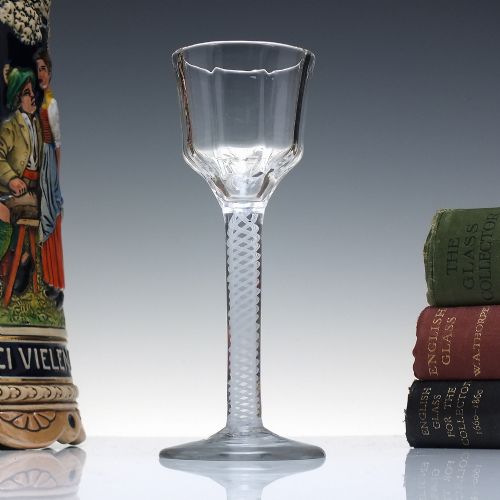
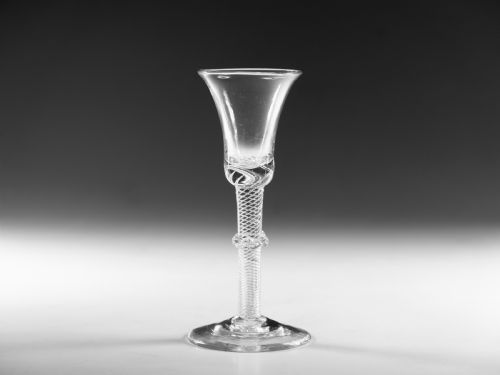
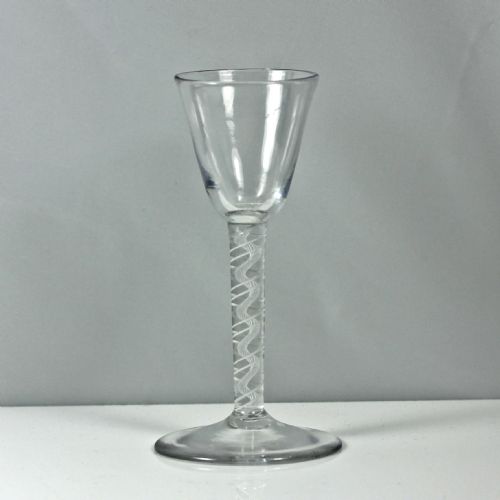
Craftsmen introduced air bubbles and white enamel pastes into the molten metal to draw out intricate air twist and opaque twist stems. Engravers applied intaglio, etching, and wheel-cut motifs such as hops and barley directly to the bowls.
Crystal Drinking Vessel Retail Price Guide 2026
Typical asking prices for crystal drinking vessel among the pieces listed under this phrase on Sellingantiques today, from the lower quarter to the upper quarter. They describe what is for sale here now, not the wider market.
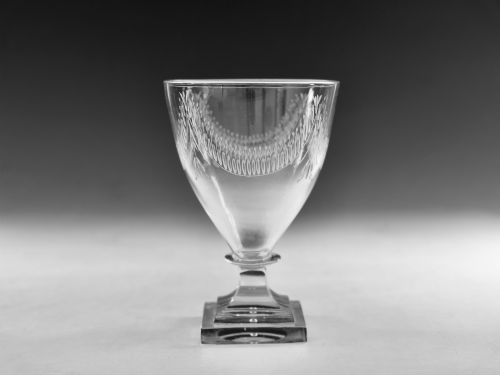
Certain Georgian rummers rest upon lemon squeezer bases, shaped with pressed corners to mimic kitchen utensils.
What varies in quality
Quality rests upon the clarity of the metal and the precision of the stem formation, whether single series, double series, or composite. Heavier vessels depend on the crispness of the cut facets and the stability of folded or lemon squeezer bases.
The refinement of the engraving distinguishes superior pieces from standard workshop output. Subtle touches like domed feet and ribbed ogee bowls elevate the architectural merit of the vessel.
The Crystal Drinking Vessel Glossary
- Baluster stem
- A heavy, swelling stem form reminiscent of architectural balusters, common in early eighteenth-century English wine glasses. It adds substantial weight to the lower section of the vessel.
- Opaque twist
- A stem containing white or coloured enamel threads drawn into spiral patterns. Makers produced single series and double series variations during the Georgian period.
- Rummer
- A large, sturdy goblet used for ale, rum, or wine during the Georgian and Victorian eras. They frequently feature square bases or lemon squeezer feet.
- Folded foot
- A glass foot where the rim is turned under to create a smooth, thickened edge. This technique added strength to vulnerable bases on eighteenth-century tableware.
- Intaglio
- A design incised into the surface of the glass so that the pattern sits below the outer plane. It produces a subtle, tactile relief when viewed across the bowl.
Crystal Drinking Vessel: Frequently Asked Questions
How do I identify a Georgian wine glass?
Examine the stem construction and foot formation for characteristics typical of the eighteenth century, such as baluster profiles or air twist canes. Pontil marks underneath the foot confirm hand-blown manufacture.
Check the weight and ring of the metal, as eighteenth-century lead glass possesses a distinct density compared to later Victorian soda glass.
What is a rummer used for?
A rummer functioned as a generous drinking vessel for ale, wine, or punch in homes and taverns. Their heavy build suited social toasts and everyday dining.
Victorian examples often display etched decoration around the bowl, whilst earlier Georgian versions favour plain or cut faceted profiles.
How should I clean antique glass?
Wash antique crystal drinking vessels gently by hand in warm water using mild soap. Avoid sudden temperature changes to prevent cracking the old metal.
Dry them immediately with a lint-free cloth to maintain clarity and prevent water spots on intaglio or etched surfaces.
What distinguishes an air twist from an opaque twist?
An air twist contains elongated bubbles trapped inside the stem and drawn into a spiral thread. These rely purely on manipulated air within the clear metal.
An opaque twist incorporates white or coloured enamel rods melted into the glass matrix to form distinct, opaque white threads.