



Crystal Claret Decanter
A crystal claret decanter combines brilliant cut glass with silver or silver plate to pour wine with formal nineteenth and early twentieth century elegance.
Crystal Claret Decanter
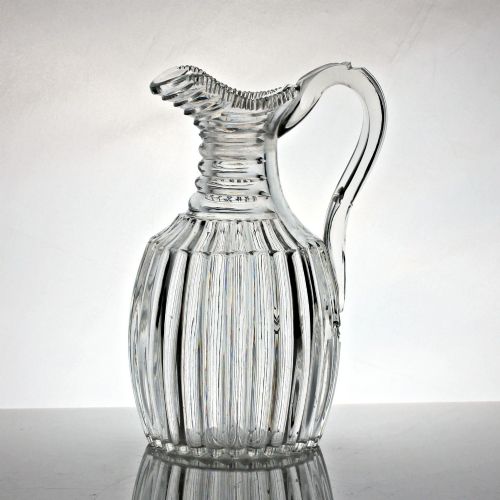
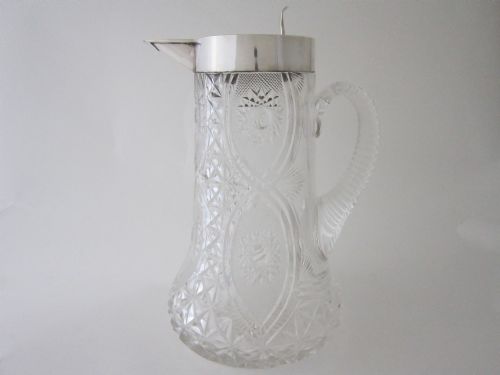
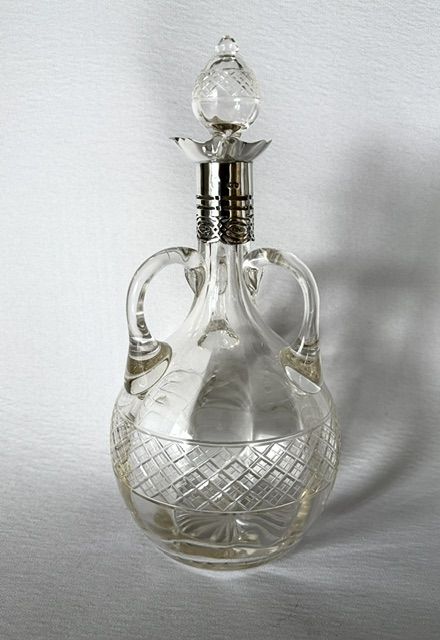
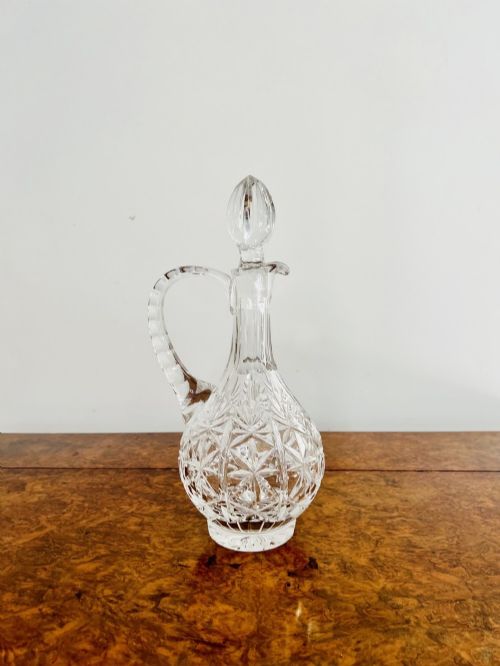
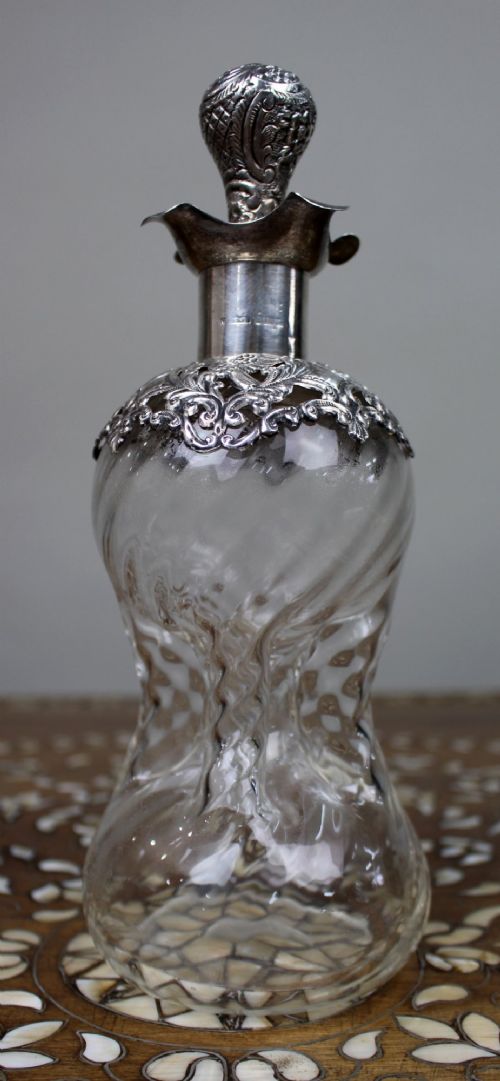
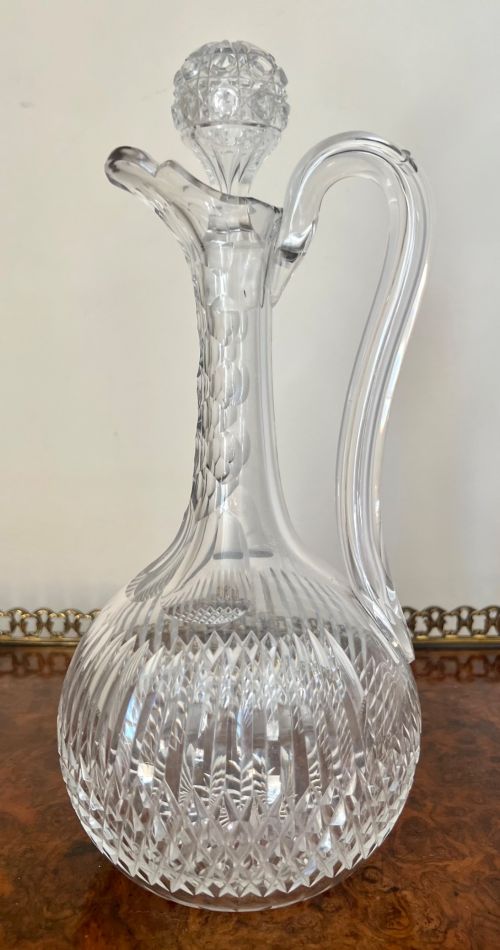
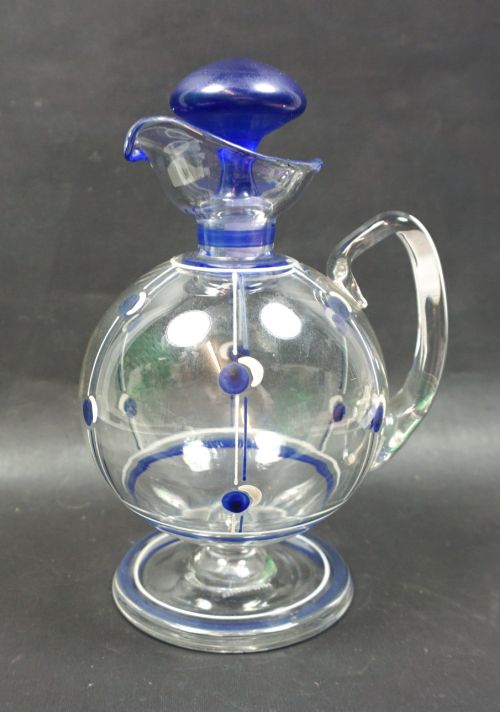
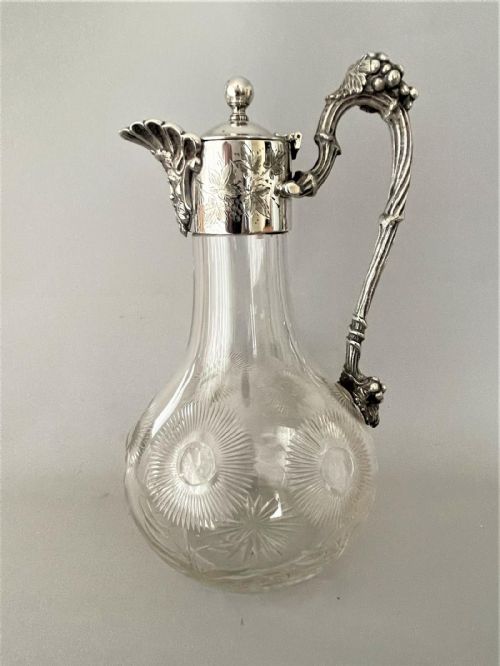
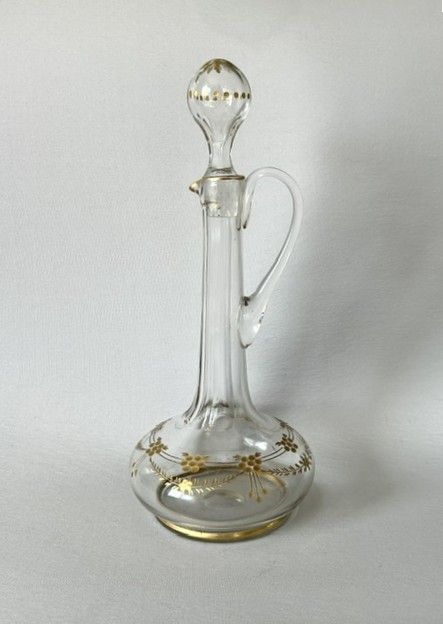
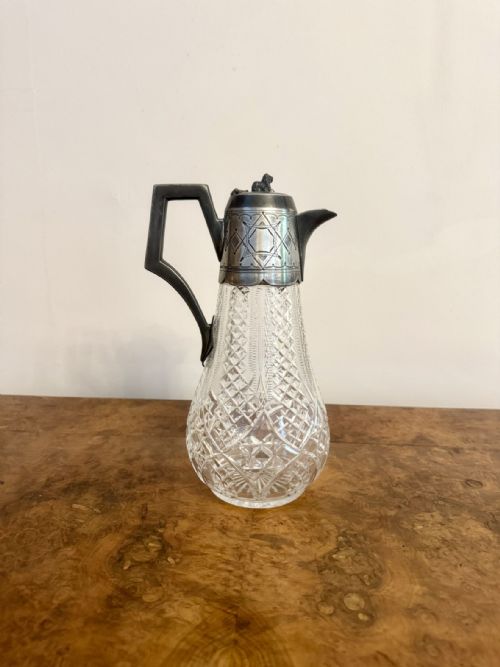
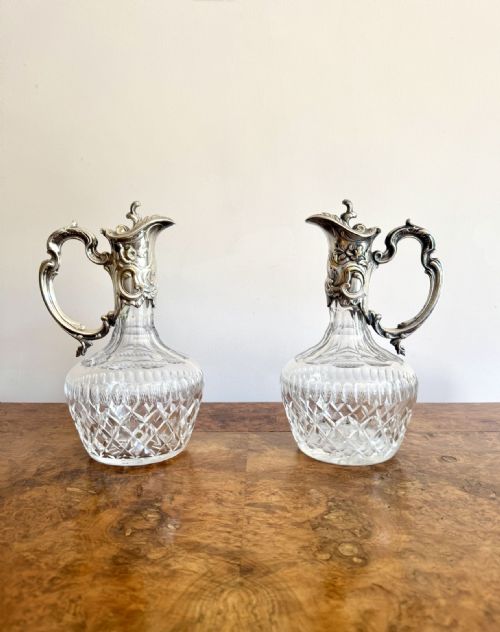
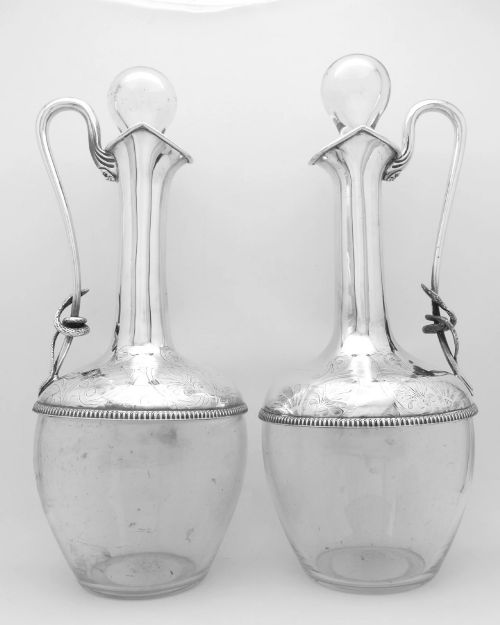
A crystal claret decanter for sale on this page typically takes the form of a tall jug, ewer or handled vessel designed specifically for serving wine at the dining table. The selection spans nineteenth century Victorian and Edwardian examples alongside earlier Georgian pieces and later mid-century iterations.
Most pieces combine a clear or cut glass body with metal mounts, hinged lids and handles. The forms range from bulbous ewers with elaborate pouring spouts to slender pillar-cut decanters intended for formal dining rooms.
Materials and Technique
These vessels rely on heavy cut crystal or clear glass bodies, often shaped with deep facets, pillar cuts or prism patterns that refract light through the glass. Many feature engraved motifs such as fruiting vines, dolphins or heraldic crests.
Silversmiths and metalworkers fitted these glass bodies with sterling silver or silver plated mounts, hinged covers and cast handles. Specialised techniques like blue enamel work, gilding and white glass latticinio decoration appear on continental European examples.
Listings feature pieces from the Victorian, Edwardian, and Art Deco periods, utilising cut glass, crystal, sterling silver, and silver plate.
Craftsmanship and Proportion
Quality rests in the crispness of the glass cutting and the weight of the crystal body. Superior pieces display deep, sharp facets and heavy lead glass that feels substantial in the hand.
The integration between the glass body and the metal mount dictates the refinement of the piece. Finely cast silver mounts, secure hinged lids and balanced handles separate exceptional workshop output from standard commercial production.
Asprey and Co. Ltd·Richardsons·Baccarat·Tiffany
The Crystal Claret Decanter Glossary
- Crystal
- A high-clarity glass containing lead oxide, which increases weight, brilliance and the capacity for deep facet cutting. This material forms the primary body of these wine jugs.
- Silver Plate
- A base metal coated with a thin layer of sterling silver, commonly utilised for the handles, collars and hinged lids of Edwardian and Victorian decanters.
- Ewer
- A large jug with a wide spout and a curved handle, traditionally used for holding and pouring wine or water at the table.
- Latticinio
- A decorative glass technique incorporating fine opaque white threads into the clear glass body, found on nineteenth century European pieces.
Crystal Claret Decanter: Frequently Asked Questions
How do I date a claret decanter?
Dating relies on stylistic markers within the glass cutting, the profile of the vessel, and any hallmarks stamped onto the silver mounts. Victorian and Edwardian pieces often display distinct mounting styles and registry marks.
Examining the depth of the glass facets and the method of handle attachment helps narrow the production era further when hallmarks are absent.
Were these decanters meant for daily use?
These vessels were created primarily for formal dining and entertaining in nineteenth and early twentieth century households. They sat on the dining table for the service of claret and other red wines.
Today, collectors utilise them for contemporary dining or display them as cabinet pieces due to their decorative silver mounts and brilliant cut crystal.
What is the difference between a decanter and a claret jug?
A traditional decanter is a stoppered bottle designed to hold and aerate wine before serving. A claret jug incorporates an integrated handle, a hinged lid, and a pouring spout.
The inclusion of the silver or silver-plated mount with a thumbpiece allows the host to pour wine single-handedly at the table.
How do I clean an antique crystal decanter?
Cleaning requires warm water and mild detergent, avoiding sudden temperature changes that can stress old glass. Bottle brushes and specialised cleaning beads help reach sediment inside narrow necks.
Silver mounts must be polished separately with a soft cloth to prevent tarnish cleaners from damaging the adjacent glass surface.