
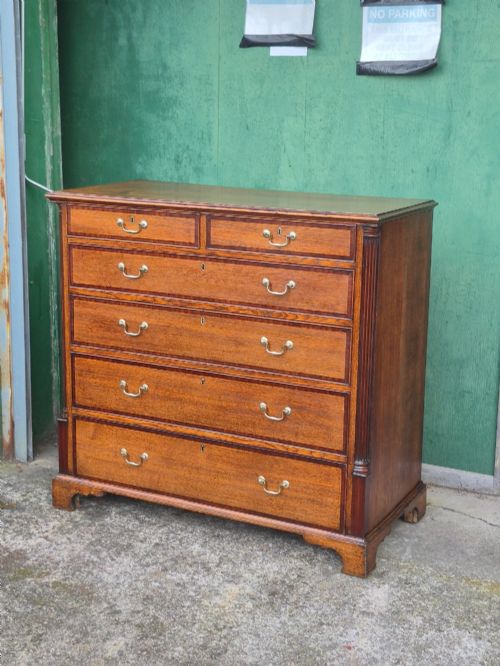
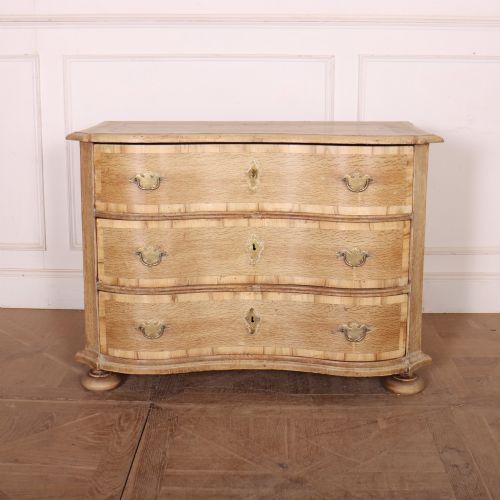
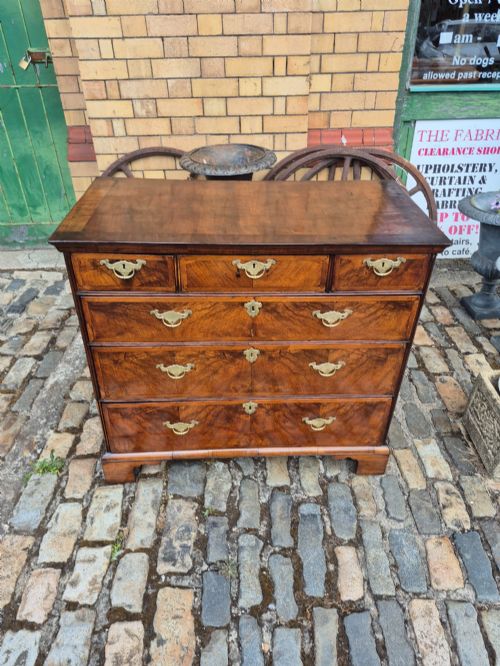
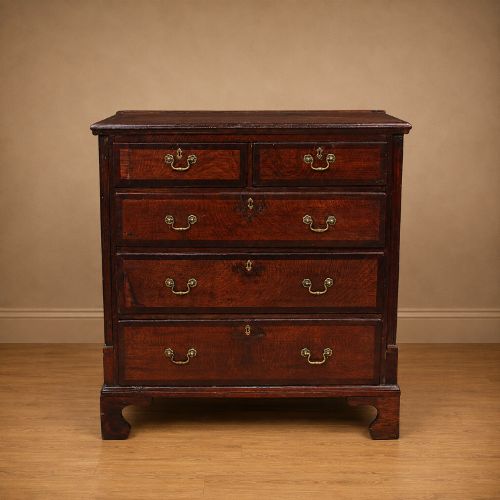
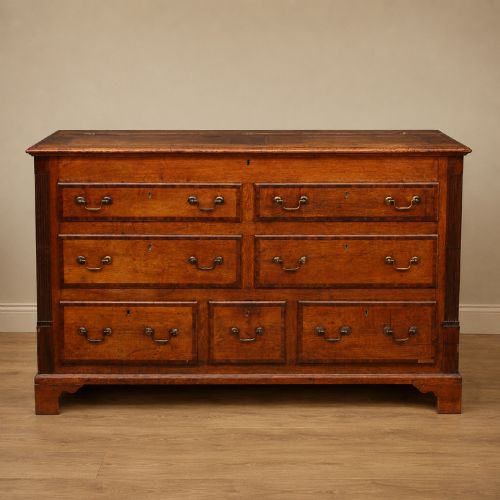
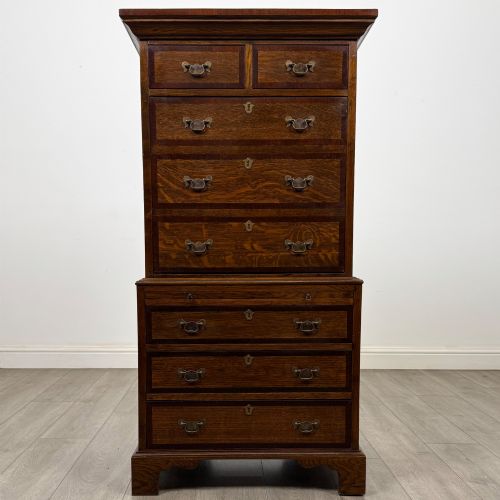
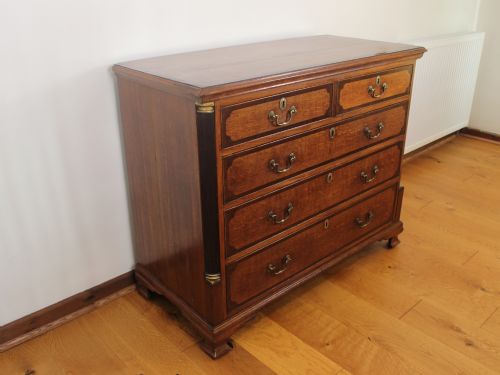


Crossbanded Oak Chest
A crossbanded oak chest brings warmth and distinct border detail to a room, offering sturdy storage rooted in Georgian tradition.
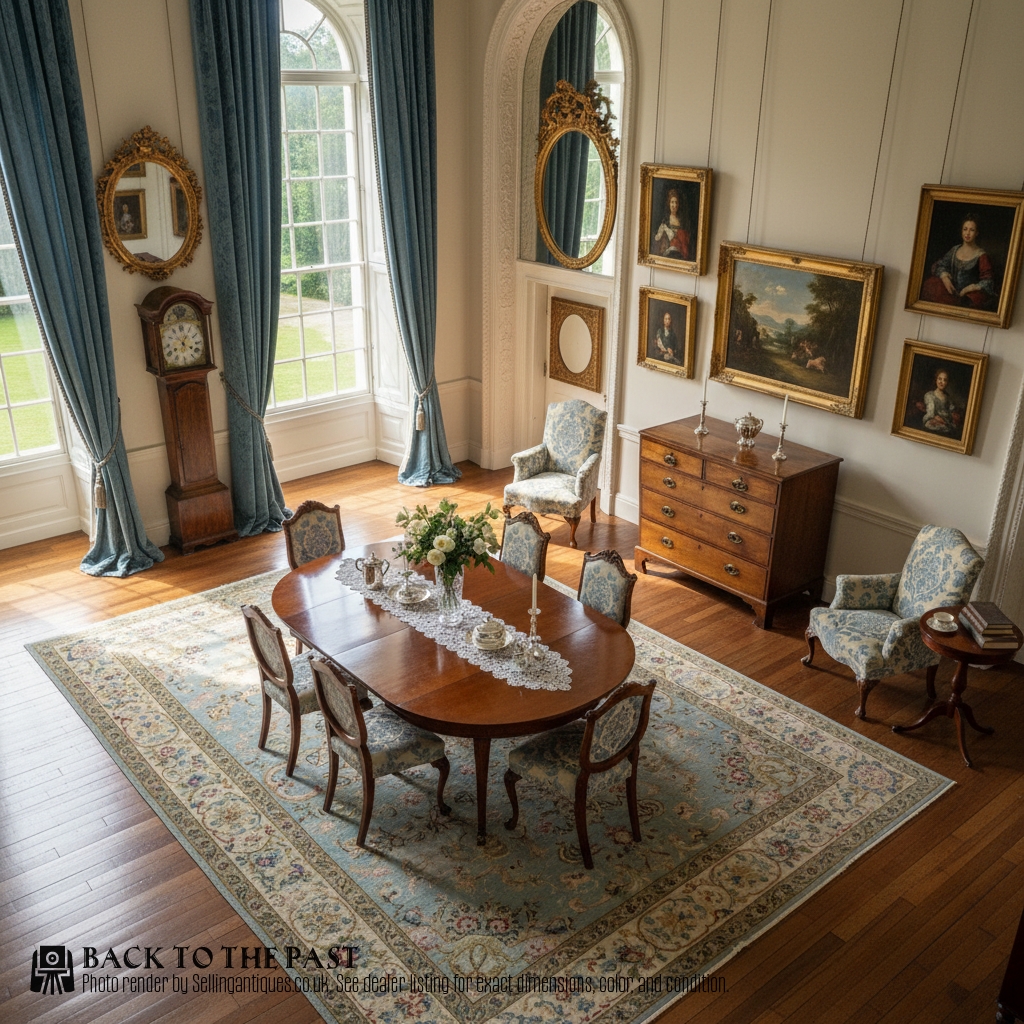
Crossbanded Oak Chest
A crossbanded oak chest is fundamentally a utilitarian storage piece, most frequently encountered as a chest of drawers or mule chest originating from the Georgian period.
The selection ranges from standard chests of drawers and tallboys to mule chests, dresser bases, and miniature versions, predominantly built in the eighteenth and early nineteenth centuries.
Makers often combined sturdy oak carcases with contrasting borders, creating functional furniture that spans country workshops and more formal regional designs.
Construction and contrasting timbers
Makers constructed the primary carcase using solid oak, often selected for its golden tone, while utilising mahogany or walnut for the characteristic border banding.
Details such as fruitwood inlay, brass handles, and walnut accents enhance the structural grain of the oak.
Joinery relies on traditional techniques to house drawers and hinged lids securely within the heavy timber frame.
Listings feature oak combined with mahogany, walnut, and fruitwood inlay across Georgian and Edwardian periods.
Assessing visual balance and timber selection
Quality rests in the precision of the crossbanding and the choice of figuring in the oak, distinguishing simple country pieces from refined urban work.
Proportion and the retention of original brass hardware heavily influence the character and visual harmony of each chest.
The Crossbanded Oak Chest Glossary
- Crossbanding
- A border technique where thin strips of veneer are laid across the grain of the primary wood to frame drawer fronts or tops.
- Mule chest
- A storage chest fitted with one or more drawers beneath the main lift-top compartment, combining the functions of a coffer and a chest of drawers.
- Tallboy
- A tall chest on chest of drawers providing extensive vertical storage while maintaining a compact footprint on the floor.
- Commode
- A low chest of drawers or cabinet, often denoting continental or more formal Georgian pieces in this category.
- Serpentine
- A curved front shape undulating outward and inward, demanding high skill from the woodworker.
Crossbanded Oak Chest: Frequently Asked Questions
How do I care for an oak chest?
Keep the timber away from direct heat sources and sudden humidity shifts to prevent the solid oak panels and crossbanding from splitting.
Feed the wood periodically with a traditional wax to maintain the soft sheen on the surface.
Are these chests suitable for modern bedrooms?
The warm golden oak and clean geometric proportions allow these chests to sit comfortably alongside contemporary furniture.
They provide deep, reliable drawer space while adding distinct period character to the room.
How do I date an 18th century oak chest?
Examine the construction of the drawer linings, the type of secondary timbers used, and the style of the brass handles.
Hand-cut dovetails and regional variations in the oak grain typically point toward eighteenth or early nineteenth-century production.