

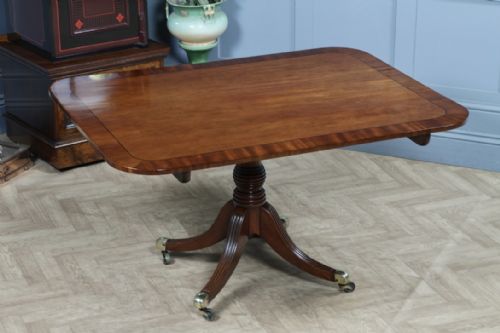
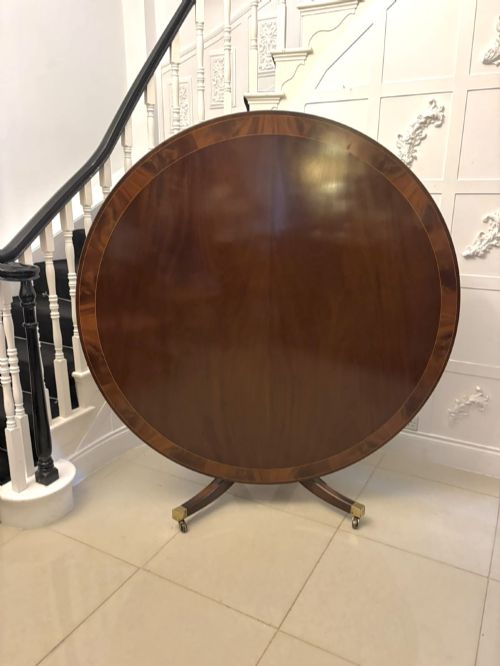
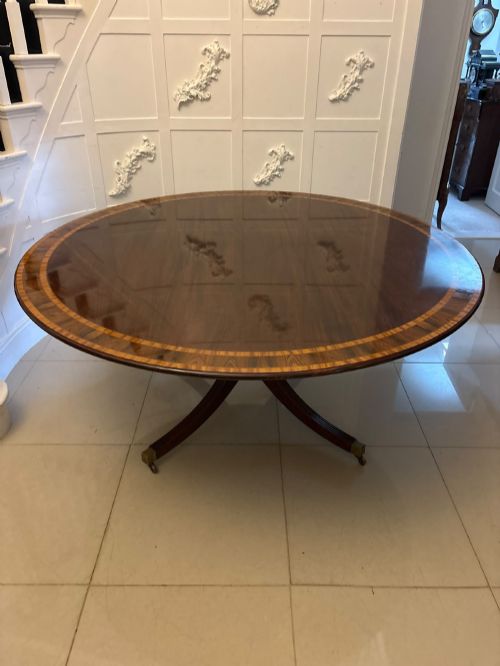
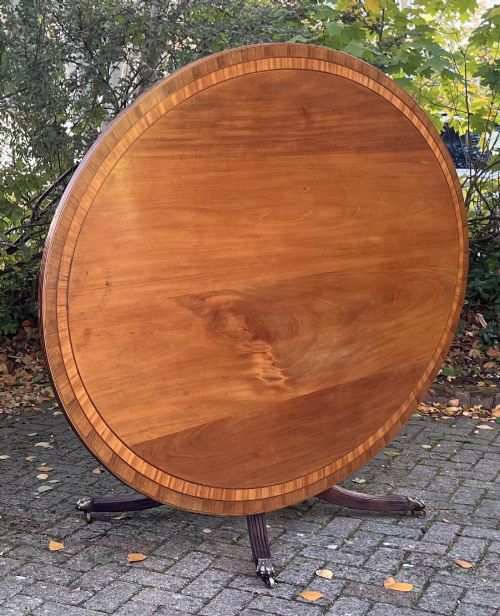
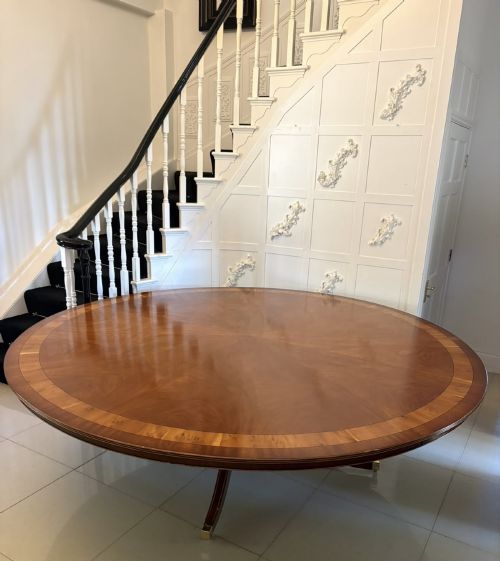
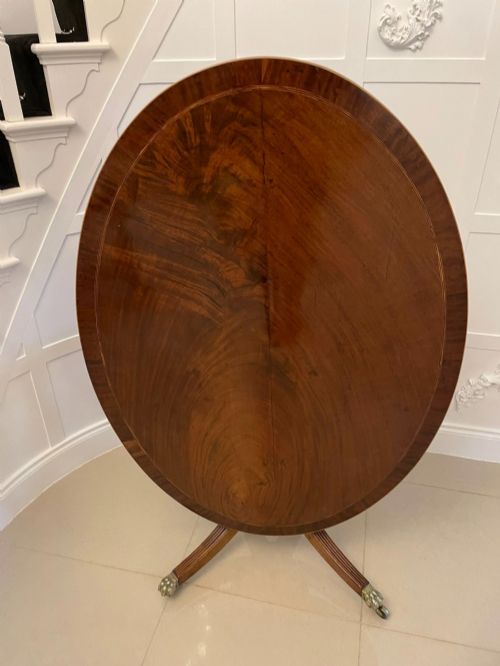
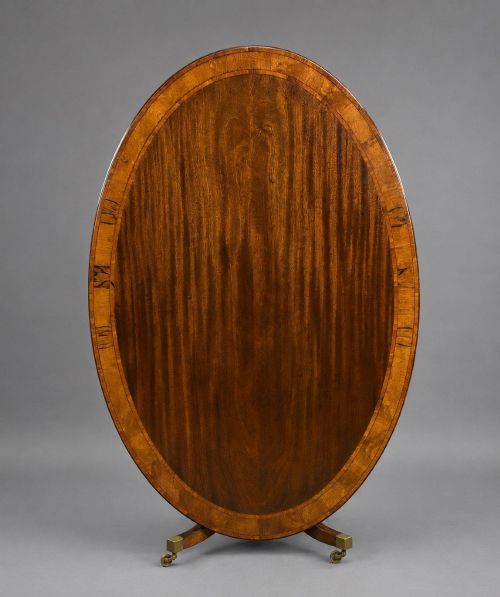
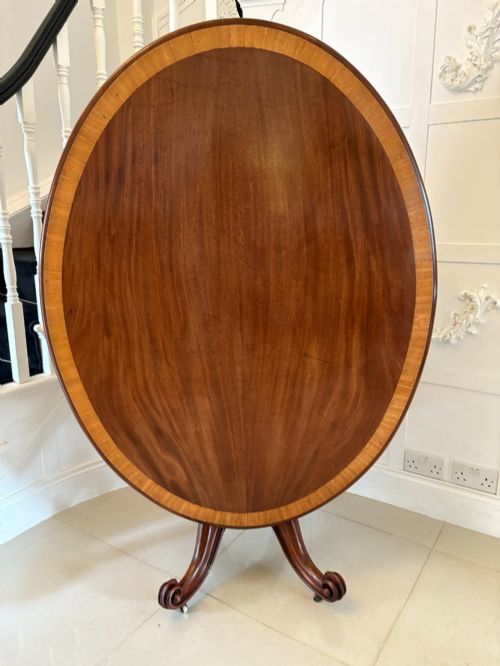
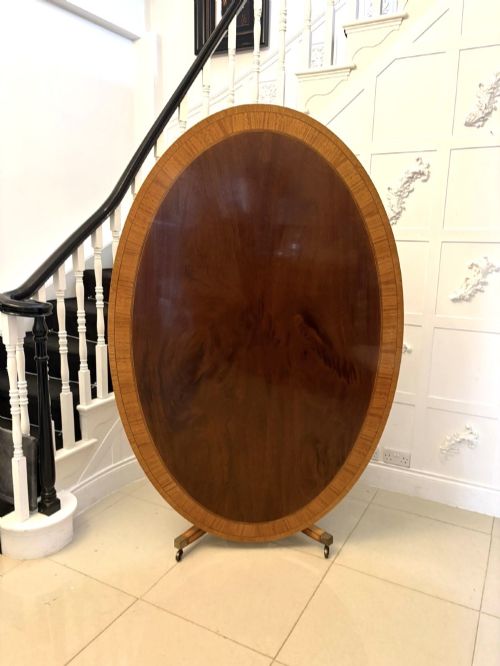
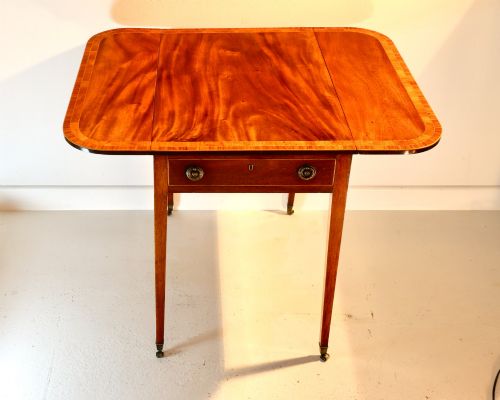


Crossbanded Mahogany Dining Table
A crossbanded mahogany dining table brings rich timber borders and refined period presence to a room.
Crossbanded Mahogany Dining Table
A crossbanded mahogany dining table is a dining surface defined by its distinctive timber borders running perpendicular to the grain of the main top. When searching for a crossbanded mahogany dining table, buyers encounter forms ranging from circular pedestal designs to large rectangular tilt-top pieces.
The pieces seen on this page span the Georgian, Regency, Victorian, and Edwardian periods, alongside later revivals from the early twentieth century. Circular and oval breakfast tables appear frequently, alongside extending formats and occasional centre tables.
Origins stretch from eighteenth-century workshops through to Edwardian interpretations of Sheraton design. The most common format met here is the circular pedestal dining table or the rectangular tilt-top breakfast table featuring contrasting timber borders.
Materials and Construction
Makers built these tables primarily from solid and figured mahogany, often selecting flame mahogany for central panels to create rich visual depth. Timber such as satinwood, rosewood, and yew wood provided contrasting borders and inlay work.
Cabinet makers applied crossbanding by laying narrow strips of veneer so that the grain ran across the width of the border rather than along the length of the table. Brass fittings, castors, and pedestals completed pieces designed for regular domestic dining.
Crossbanded Mahogany Dining Table Retail Price Guide 2026
Typical asking prices for crossbanded mahogany dining table among the pieces listed under this phrase on Sellingantiques today, from the lower quarter to the upper quarter. They describe what is for sale here now, not the wider market.
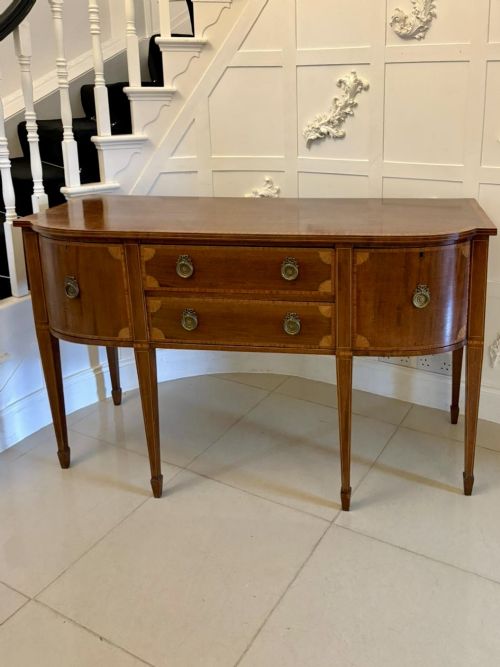
Object forms span dining tables, breakfast tables, occasional tables, sideboards, and Pembroke tables.
Evaluating Quality
Quality rests in the crispness of the timber selection and the precision of the crossbanded borders. Finer examples display highly figured mahogany paired with contrasting satinwood or rosewood inlays that remain flush and tight against the primary wood.
The integrity of the structural frame, the weight and stability of the pedestal base, and the balance of tilt-top mechanisms distinguish standard production from exhibition pieces. Superior execution shows harmony between the proportions of the border work and the central timber panel.
The Crossbanded Mahogany Dining Table Glossary
- Crossbanding
- A border of veneer applied to the edge of a table top so that the grain runs perpendicular to the main panel. This technique frames the primary timber and provides visual contrast.
- Tilt-top
- A hinged table top that pivots to a vertical position when not in use. This mechanism allowed tables to be stored against walls in smaller rooms.
- Flame mahogany
- A highly figured cut of mahogany displaying a distinctive flame-like pattern. Makers reserved this veneer for prominent surfaces.
- Satinwood
- A durable, yellowish timber utilised for contrasting inlay and banding. It provides a bright edge against darker mahogany.
- Breakfast table
- A pedestal table originating in the eighteenth or nineteenth century for morning dining or general use. These pieces often featured circular or oval tilt-tops.
Crossbanded Mahogany Dining Table: Frequently Asked Questions
How do I date a crossbanded mahogany dining table?
Dating relies on examining the construction methods, timber selection, and stylistic details present in the frame and top. Georgian and Regency pieces generally exhibit hand-cut joints and native timbers appropriate to their era.
Later Edwardian and twentieth-century revivals often show standardised fixings or machine-prepared veneers beneath the polished surface.
What is the difference between a breakfast table and a dining table?
Breakfast tables traditionally feature a tilt-top mechanism supported by a single central pillar and tripod or pedestal base. They were designed to be moved easily or tilted aside when the meal concluded.
Standard dining tables generally offer larger fixed surfaces intended to remain stationary in the principal dining room.
How should I care for a mahogany table top?
Maintenance involves keeping the timber away from direct heat sources and strong sunlight to prevent the mahogany and its crossbanded borders from drying out. Regular dusting with a soft, dry cloth preserves the polished finish.
Applying occasional wax appropriate for antique furniture helps nourish the timber grain without building up heavy residues.
Can these tables be used for everyday dining?
Many of these pieces were constructed for active domestic use and remain sturdy enough for regular daily meals. Using protective mats helps guard the polished surface against heat and moisture.
Care should be taken with tilt-top mechanisms to ensure the locking catches remain secure before placing heavy items on the surface.