


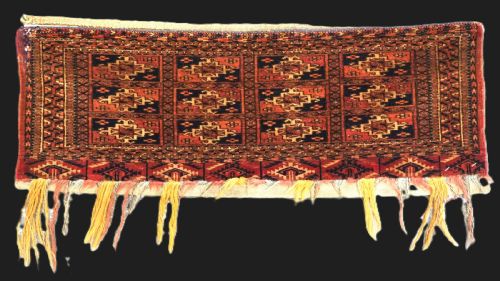
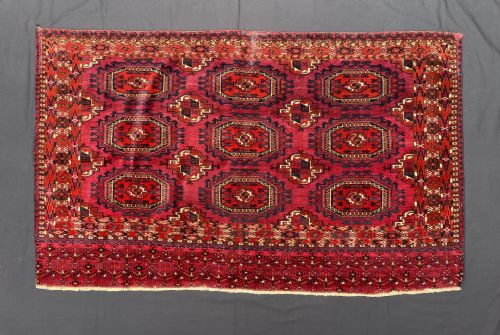


Crimson Turkmen Tribal Rug
A crimson turkmen tribal rug brings deep reds and geometric motifs into a room, forged by nomadic weavers across Central Asia.
Crimson Turkmen Tribal Rug
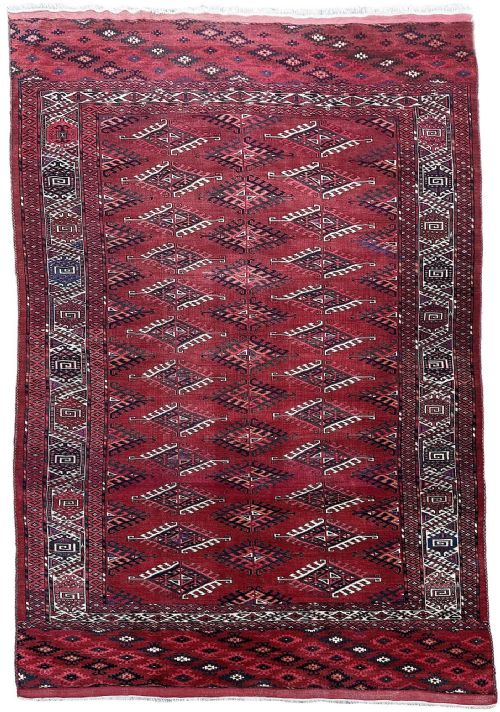
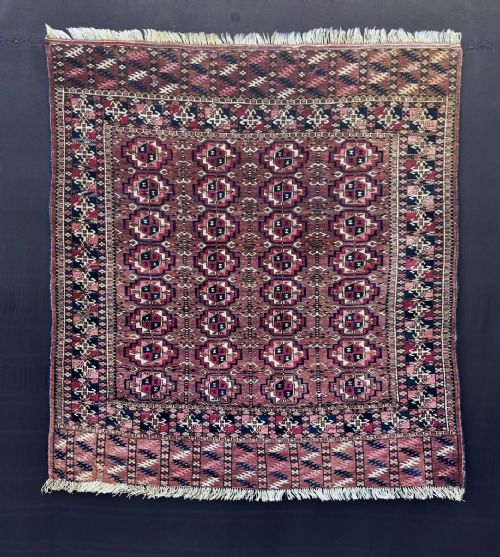
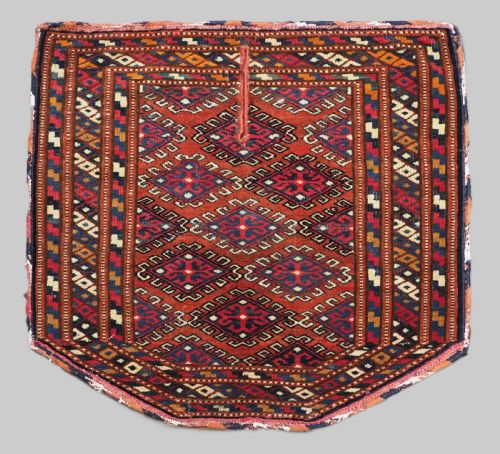
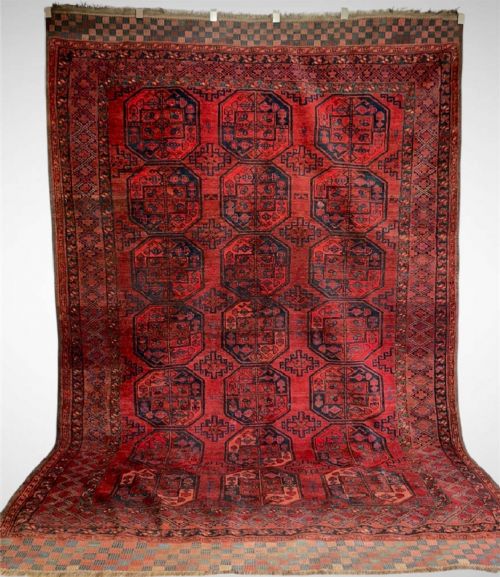
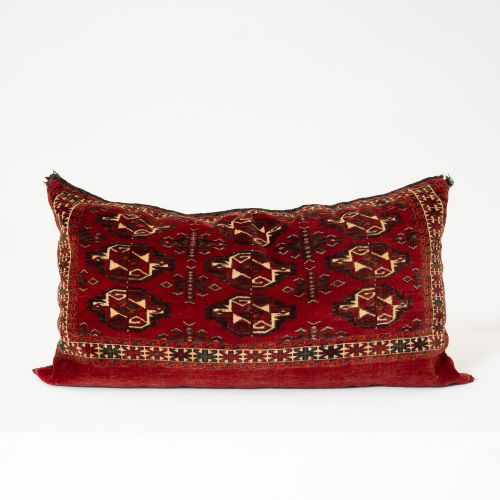
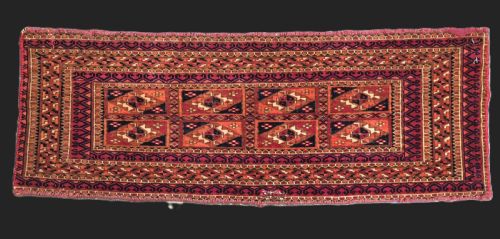
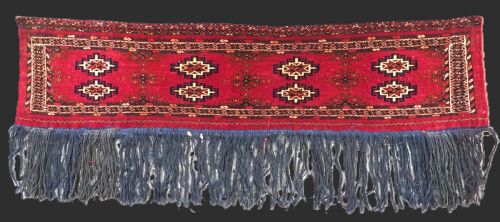
A crimson turkmen tribal rug encompasses pieces created by nomadic and village groups originating from Turkmenistan, Afghanistan, and the wider Trans-Caspian steppes. The selection on this page ranges from large main carpets to smaller domestic objects such as storage bagfaces, torbas, chuvals, and wedding rugs.
Tribal groupings like the Tekke, Yomut, Ersari, Saryk, and Kizyl Ayak define the distinct regional patterns encountered here. Pieces span dates from the mid-eighteenth century through to the early twentieth century, showing traditional formats shaped by Central Asian weaving traditions.
Materials and construction methods
Weavers relied principally on wool, often hand-spun, combined with natural dyes to achieve the characteristic deep crimson and madder red tones. Foundations frequently incorporate cotton, linen, and additional wool elements.
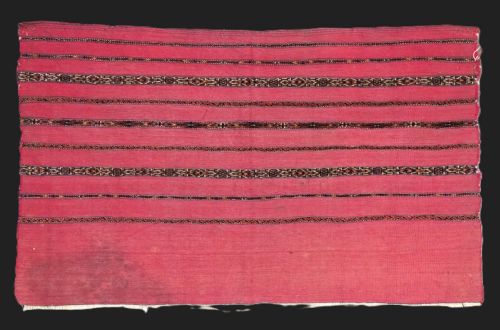
The construction relies on dense knotting techniques designed to create durable floor coverings and heavy-duty storage bags. Many surviving examples retain original plain weave backs, hanging loops, or complete bag structures.
Listings feature pieces spanning from the mid eighteenth century to the early twentieth century, utilising hand-spun wool and natural dyes.
Factors of execution and finesse
Knot density and fineness of weave separate everyday utility pieces from finer dowry or ceremonial examples. A tighter weave allows for sharper geometric drawing within the primary guls and secondary motifs.
The depth, saturation, and variation of the red dyes dictate visual success across the surface. Precision in symmetry and balance of the tribal patterns also distinguish master weavers from standard village production.
The Crimson Turkmen Tribal Rug Glossary
- Gul
- A primary medallion motif repeated across Turkmen carpets, often octagonal in shape and associated with specific tribal groups.
- Torba
- A small horizontal storage bag used in nomadic tent interiors, typically featuring a highly decorated face and a plain weave back.
- Chuval
- A large tent bag utilised for domestic storage, frequently adorned with multiple guls arranged in strict rows.
- Azmalyk
- A richly decorated camel trapping created for wedding processions and festive tribal ceremonies.
- Madder
- A natural plant dye source utilised to produce the enduring crimson and red shades characteristic of these textiles.
Crimson Turkmen Tribal Rug: Frequently Asked Questions
What is a crimson turkmen tribal rug?
These are hand-knotted woolen textiles produced by Central Asian tribal groups, dominated by deep red and crimson colour palettes.
They include utilitarian floor carpets as well as smaller nomadic storage items like torbas and chuvals.
How were these rugs used originally?
Nomadic families utilised them as floor coverings, tent decorations, and functional storage bags for household possessions.
Special pieces were also woven for weddings, camel trappings, and prayer rituals.
How do I live with one?
Place them in low-traffic areas or mount smaller bag faces on walls to protect the older wool pile from excessive wear.
Pair them with simple backgrounds that allow the geometric guls and crimson tones to stand out.
How can I tell the tribes apart?
Different tribal groups such as the Tekke, Yomut, and Ersari utilised distinct structural layouts, secondary motifs, and gul designs.
Examining the border patterns and overall format often reveals the specific regional origin.