



Crimson Turkmen Carpet
A crimson turkmen carpet brings the deep madder tones and geometric geometry of Central Asian nomadic weaving directly into an interior.
Crimson Turkmen Carpet
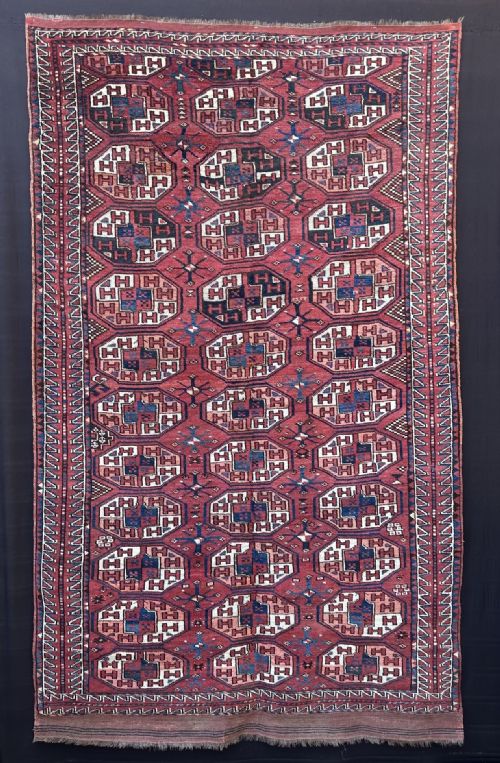
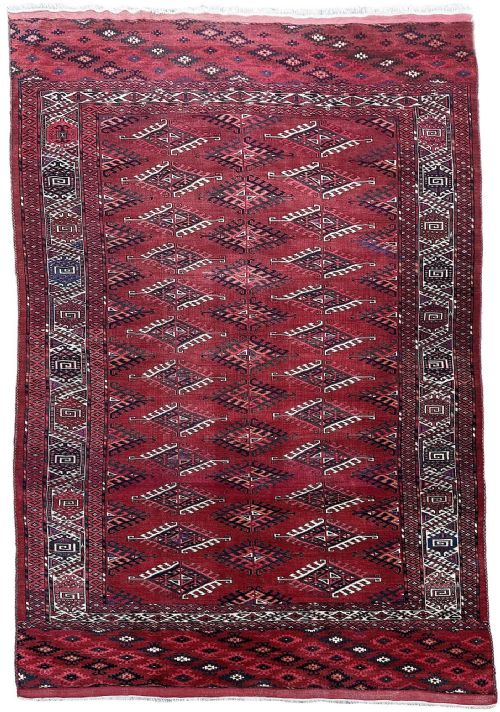
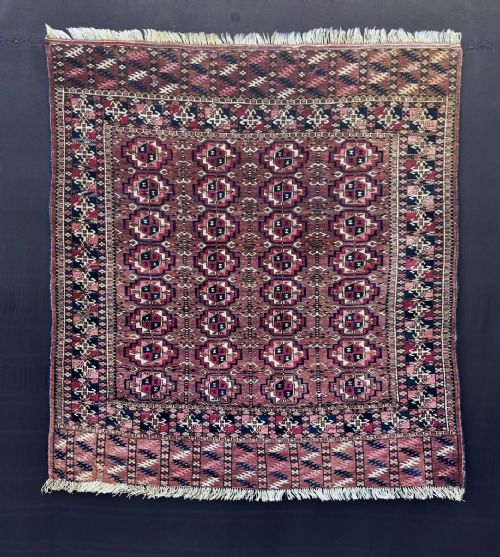
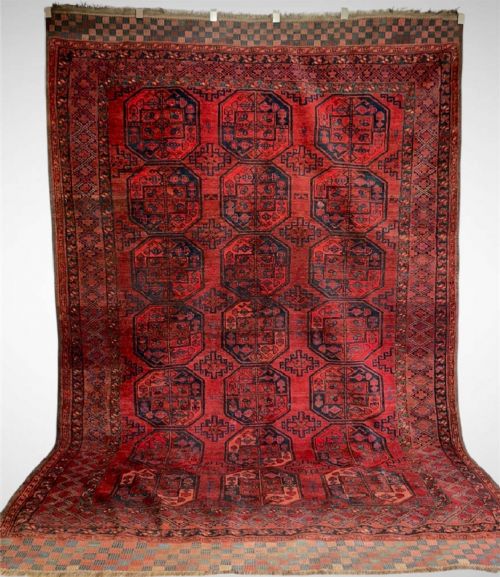
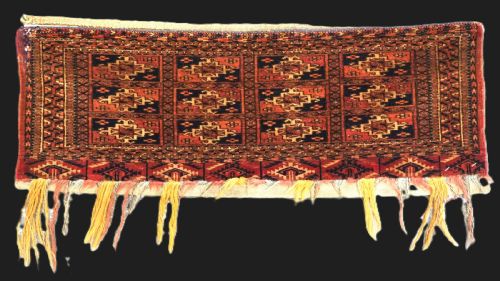
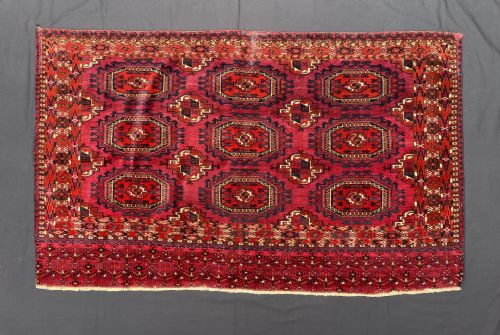
A crimson turkmen carpet encompasses traditional tribal weaving originating from Central Asia, including main carpets, wedding rugs, and smaller utility items like torbas and chuvals. These textiles span periods from the mid nineteenth century through the early twentieth century, reflecting the distinct heritage of tribal groups such as the Tekke, Yomut, Ersari, Saryk, and Kizil Ayak.
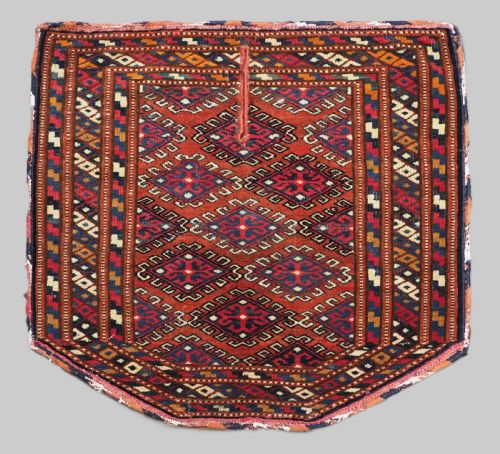
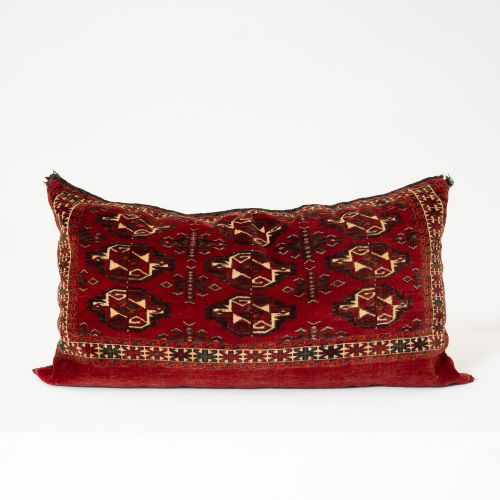
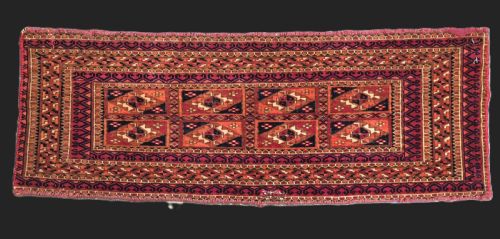
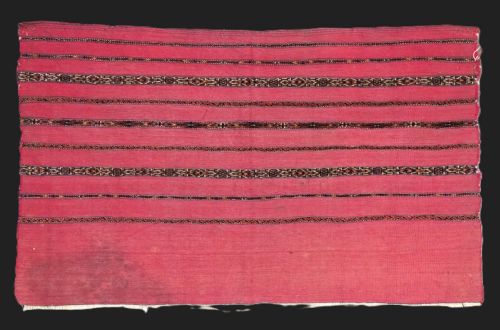
The pieces encountered most frequently on this page include storage bag faces, tent hangings, and smaller rugs created by nomadic and village weavers. While large main carpets appear, smaller format weavings like torbas and chuval faces dominate the selection, showcasing the portable and functional nature of tribal production.
Materials and construction methods
The foundation and pile rely primarily on hand-spun wool, sometimes supported by cotton or linen structural elements in specific formats. Natural dyes provide the characteristic deep crimson and madder red grounds that define the palette of these tribal textiles.
Weavers utilised dense knotting techniques to achieve durable, heavy-duty structures designed for daily nomadic use. The handling of natural dyes results in subtle tonal variations across the wool pile, contributing to the visual depth of each piece.
Crimson Turkmen Carpet Retail Price Guide 2026
Typical asking prices for crimson turkmen carpet among the pieces listed under this phrase on Sellingantiques today, from the lower quarter to the upper quarter. They describe what is for sale here now, not the wider market.
Listings feature wool, natural dyes, and cotton across nineteenth and early twentieth-century formats.
Factors influencing quality
Knot density and fineness of weave distinguish finer examples from standard utility pieces, with high knot counts allowing for sharper execution of complex geometric motifs. The precision of the drawing and the clarity of the primary gul designs further separate superior examples.
The richness, depth, and uniformity of the natural dye colours play a primary role in visual success. Additionally, the survival of original plain-weave backs or complete borders on bag faces contributes significantly to the integrity of the piece.
The Crimson Turkmen Carpet Glossary
- Gul
- The primary octagonal medallion motif repeated across Turkmen carpets and bag faces. Different tribes utilised distinct gul forms to signal identity and heritage.
- Chuval
- A large tent storage bag produced by nomadic tribes for household possessions. Surviving examples often appear as flat bag faces trimmed from their original backs.
- Torba
- A smaller storage bag used within the nomad tent, frequently featuring horizontal rows of guls or intricate subsidiary patterns.
- Mafrash
- A rectangular storage box or bedding bag panel woven in matching technique to smaller tent trappings. These fragments display dense geometric field patterns.
- Madder
- A natural red dye derived from the root of the Rubia plant, forming the foundation of the crimson ground colour. It ages with distinct tonal variation.
Crimson Turkmen Carpet: Frequently Asked Questions
What is a gul on these carpets?
A gul is the repeating octagonal medallion that forms the primary decorative motif across Turkmen and Central Asian weaving. These medallions act as tribal emblems.
Different tribes utilised specific gul designs, such as the Tekke, Salor, or Ersari variations, allowing observers to trace the origin of a particular carpet.
How were these bags originally used?
Nomadic groups utilised chuvals and torbas inside their tents for storing household goods, blankets, and wool. These items formed an essential part of daily domestic life.
Many pieces seen today are bag faces because the original plain weave backs wore away or were removed during centuries of migration and storage.
Are natural dyes standard on these pieces?
Traditional pieces rely on natural dyes derived from plants and minerals to achieve their deep crimson and red shades. These colorants interact with wool over time.
Examination under natural light reveals subtle tonal shifts within the pile, differentiating traditional dye work from later synthetic alternatives.
How do I care for an antique rug?
Gentle vacuuming without a rotating power brush helps remove dust from the wool pile without damaging the foundation threads. Keeping the textile away from direct sunlight preserves the natural red dyes.
Professional cleaning tailored to antique wool textiles ensures the hand-spun fibres remain stable and maintain their structural integrity.