

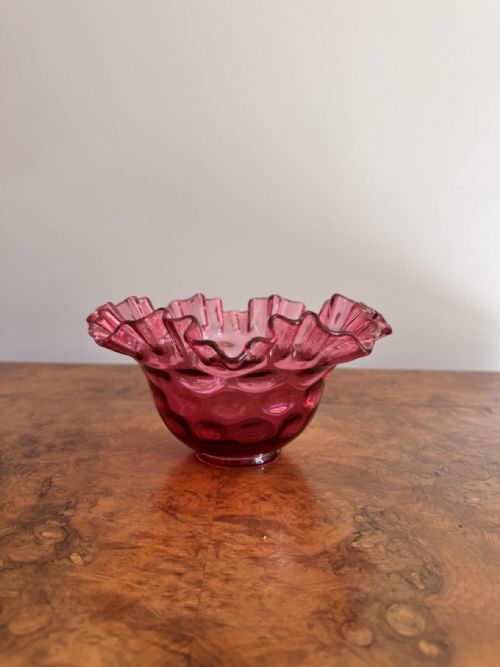


Crimped Glass Dish
These pieces known as a crimped glass dish are tablewares of colour and form, offering a bright touch of Victorian and Edwardian dining.
Crimped Glass Dish
A crimped glass dish is a form of decorative tableware that appears in styles from the Victorian period, the Edwardian era, and Arts and Crafts design. The listings on this page show bowls, preserve dishes, cake stands, and bonbon dishes shaped to serve on the table or sideboard.
The versions you are most likely to meet here span the nineteenth century and the opening years of the twentieth century. Makers fashioned them as decorative bowls and preserve dishes, sometimes mounted in silver plate stands or accompanied by a pierced spoon.
How they were made
Glassmakers worked with cranberry glass, vaseline glass, green glass, clear glass, opalescent glass, and pink opaque glass. They shaped these materials using pressed glass techniques or formed them into fluted and frilled profiles.
Some examples combine glass with silver plate mounts, pairing metal frames with coloured vessels. Others incorporate green cane decoration or pearline finishes to alter the appearance of the surface.
Crimped Glass Dish Retail Price Guide 2026
Typical asking prices for crimped glass dish among the pieces listed under this phrase on Sellingantiques today, from the lower quarter to the upper quarter. They describe what is for sale here now, not the wider market.
Materials documented across the page include cranberry glass, vaseline glass, silver plate, and opalescent glass.
What varies in quality
The distinction between standard examples and finer pieces lies in the crispness of the crimped and frilled edges and the depth of the glass colour, such as rich cranberry or vibrant vaseline. The quality of associated metalwork, including pierced silver plate stands and fitted spoons, also sets individual pieces apart.
Design complexity marks another division, seen in whether a dish stands alone or forms part of a matched twin set with decorative cane or pearline treatments.
Davidson
The Crimped Glass Dish Glossary
- Cranberry glass
- A transparent red-pink glass coloured with gold chloride during production. It is frequently seen in Victorian tableware and preserve dishes.
- Vaseline glass
- A transparent yellow-green glass that contains uranium dioxide, giving it a distinctive hue. It glows under ultraviolet light.
- Opalescent glass
- A glass type featuring milky or translucent highlights along the raised edges and rims. This effect catches the light on fluted bowls.
- Pearline
- A trade name for pressed glass introduced by Davidson, often showing shaded blue or amber tones. It creates a distinctive pearlescent finish.
- Silver plate
- A base metal coated with a thin layer of silver. It provides the shiny mounts and stands that cradle many glass bowls.
Crimped Glass Dish: Frequently Asked Questions
What is a crimped glass dish?
A crimped glass dish is an open bowl or stand featuring a ruffled or fluted rim shaped while hot. They were produced in various glass colours for table service.
They appear across Victorian and Edwardian periods in forms like preserve dishes and bonbon bowls.
How were these dishes used?
These pieces served practical and decorative functions on the dining table or sideboard. They held preserves, jams, sweets, or small cakes during meals.
Some included stands and spoons for serving preserves directly from the bowl.
How do I date a crimped glass dish?
Dating relies on the style of the glass colour, the manufacturing technique, and any accompanying metal stands. Victorian examples often feature deep cranberry or blue pearline finishes.
Edwardian pieces tend toward lighter mount designs and specific frame patterns recorded around nineteen hundred.
What colours do these dishes come in?
The available listings show cranberry, vaseline, green, pink opaque, and clear glass. Some items also incorporate opalescent effects on the moulded rims.
Certain pieces combine these vibrant glass shades with silver plated metal holders.