

Crested Side Chairs
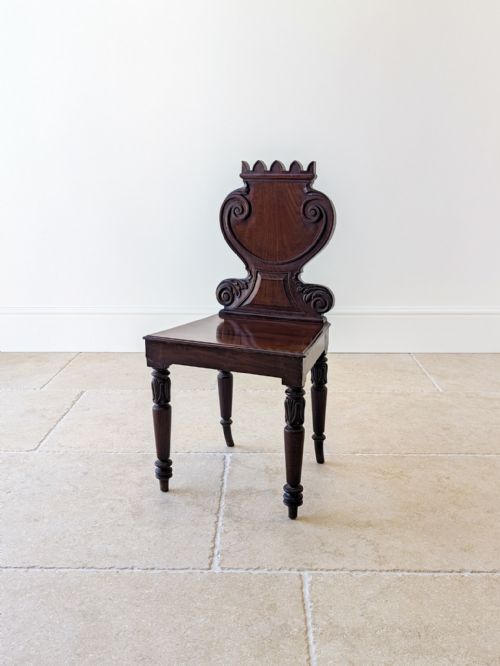
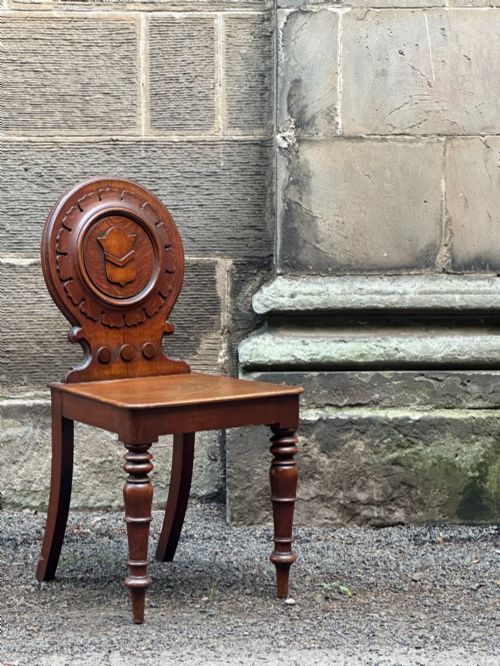
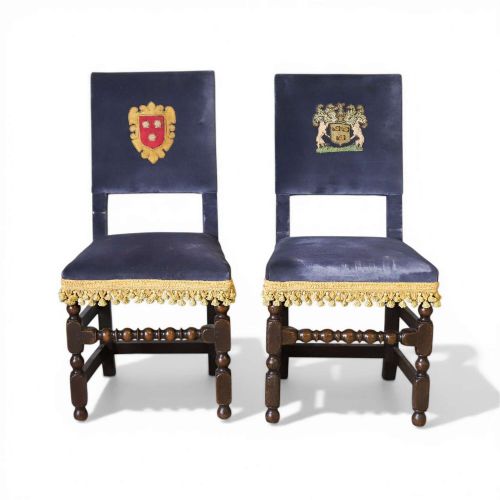
Crested side chairs carry carved armorial bearings or shield backs, bringing architectural presence and lineage into a room.
Crested Side Chairs
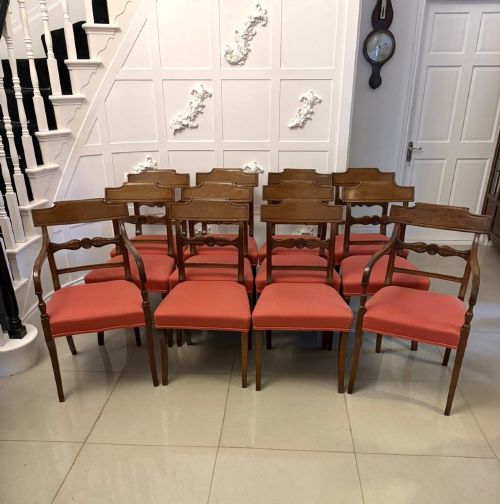
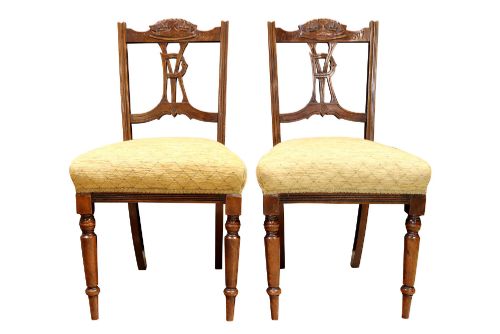
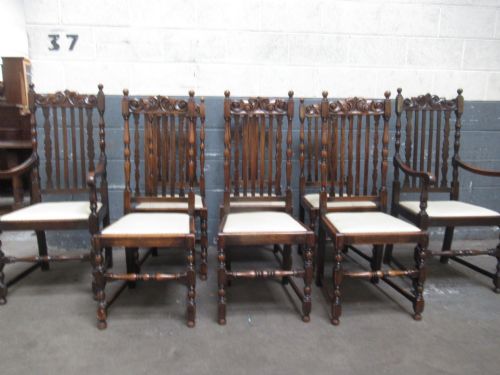
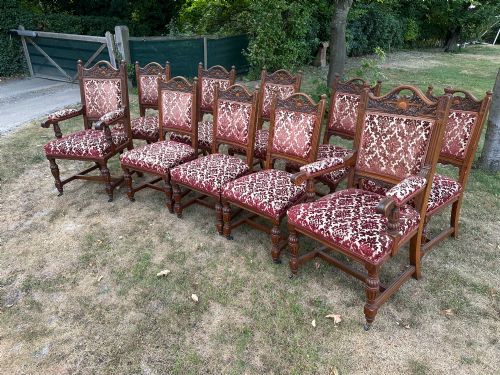
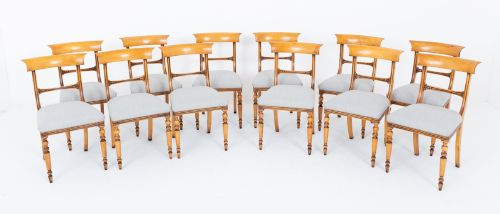
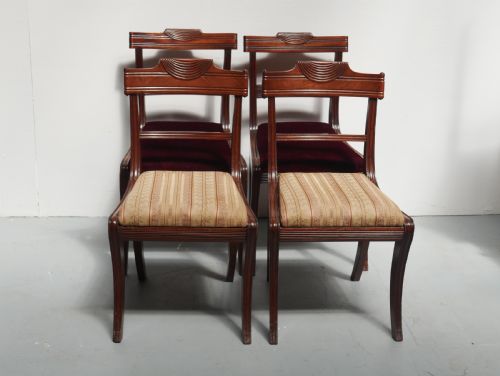
Crested side chairs span centuries of British cabinet making, appearing in formal dining sets, grand hallway pairs, and sturdy single seats. When looking for crested side chairs, buyers encounter sturdy oak and mahogany forms produced across the seventeenth, eighteenth, and nineteenth centuries.
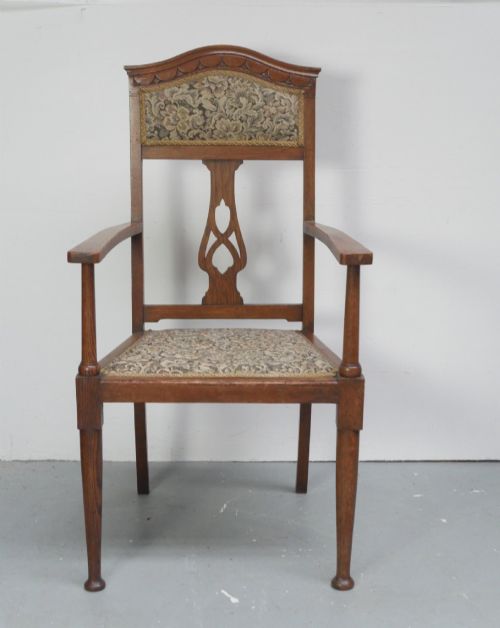
Makers utilised various regional timbers including walnut and satin birch, shaping them into side chairs, armchairs, and occasional seating. Sets vary from single hall chairs to matched groups intended for country houses and formal reception rooms.
Materials and construction
Carpenters constructed these seats primarily from solid oak and rich mahogany, occasionally employing walnut, satin birch, and painted surfaces. Joinery techniques involved pegged mortise and tenon joints, particularly on earlier oak pieces, ensuring long-term structural stability.
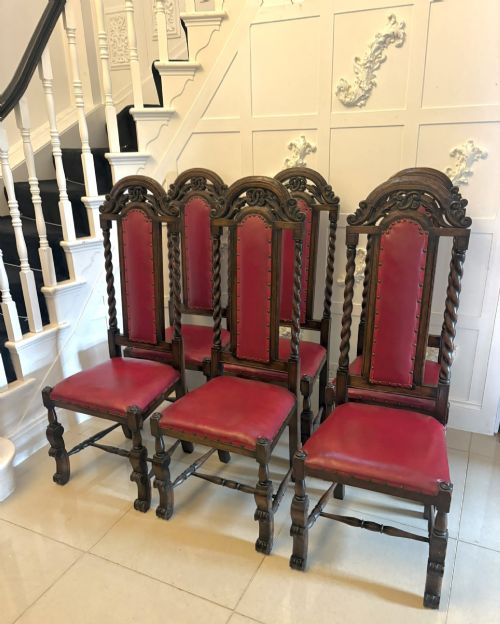
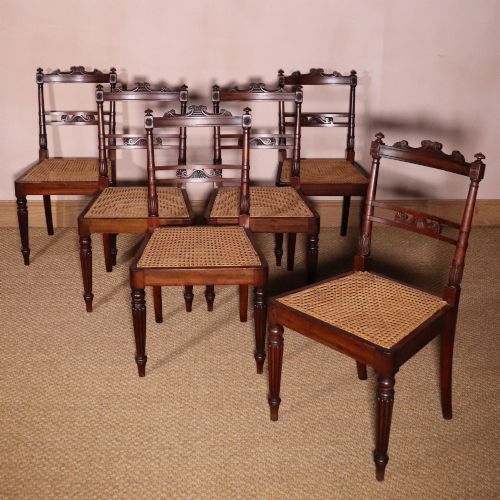
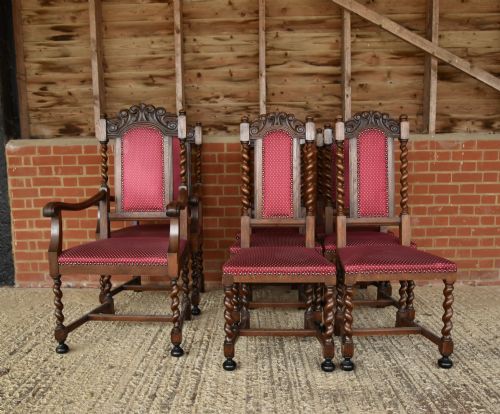
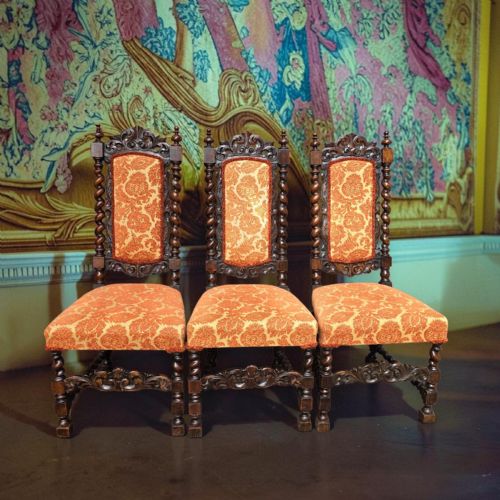
Carving defines the ornamentation, with craftsmen chiselling heraldic crests, shield backs, and barley twist members directly into the timber. Upholstery methods incorporated fabric, velvet, rush, and cane seats, secured with brass tacks or drop-in frames.
Clan chairs preserve Scottish heritage in velvet and oak.
Assessing craftsmanship
Quality rests upon the crispness of the armorial carving and the depth of relief work on the shield backs. Sharp detailing in the wood indicates skilled hand-chiselling rather than mass-produced mechanical stamping.
Timber selection and frame integrity dictate longevity, separating heavy, well-seasoned hardwood structures from later restorations. Original surface patination and intact joinery elevate the standing of a piece significantly.
Gillows·Waring and Gillow
The Crested Side Chairs Glossary
- Armorial
- Bearing heraldic arms or a family crest. These symbols identify the lineage or estate associated with the original commission.
- Backstool
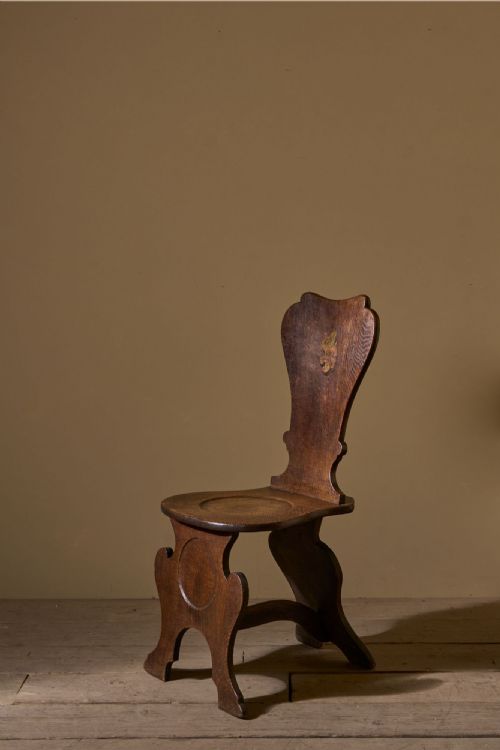
- An early form of chair without arms, possessing an upright wooden back. This term frequently applies to seventeenth-century joined oak seating.
- Shield back
- A chair back shaped like a heraldic shield, often carved centrally with a crest. This design appears frequently on formal hall chairs.
- Barley twist
- A turned wooden furniture leg or stretcher resembling a twisted rope. This decorative turning style is common on seventeenth-century and revival oak pieces.
Crested Side Chairs: Frequently Asked Questions
Where were crested side chairs placed?
Owners positioned hall chairs near entranceways to display family lineage and heraldic achievements to arriving visitors. Dining rooms and reception spaces also accommodated these seats for formal gatherings.
Pairs or sets often lined the perimeter of large rooms until needed at the dining table or assembly area.
How do I date an oak hall chair?
Examine the construction joints, timber grain, and the style of the carved crest or shield back. Early pieces from the seventeenth century show pegged joinery and hand- cleft oak.
Later Victorian interpretations tend to feature heavier machine-finished carving and darker applied finishes.
What is an armorial chair?
An armorial chair displays painted, inlaid, or carved family coats of arms upon the wood or upholstery. Such seating was commissioned by prominent households to reinforce social status.
These pieces frequently served in country houses and institutional law chambers.
Are these chairs suitable for daily use?
Solid hardwood construction ensures these chairs remain structurally robust for regular seating. Selecting pieces with sound joinery prevents wobbling during everyday dining or reception use.
Upholstered variants may require updated padding depending on the condition of the fabric.