
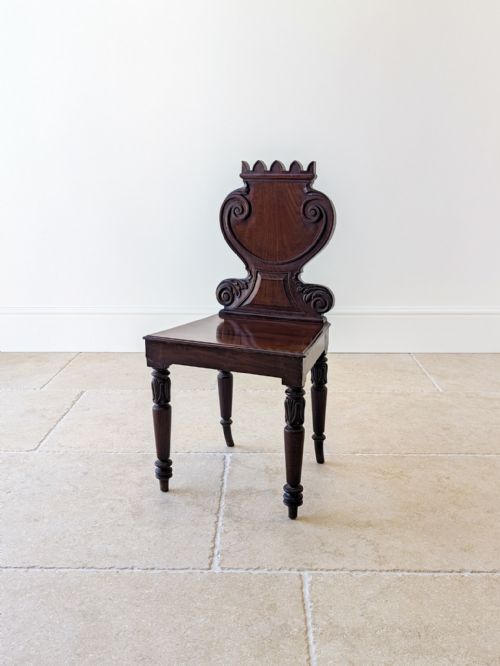
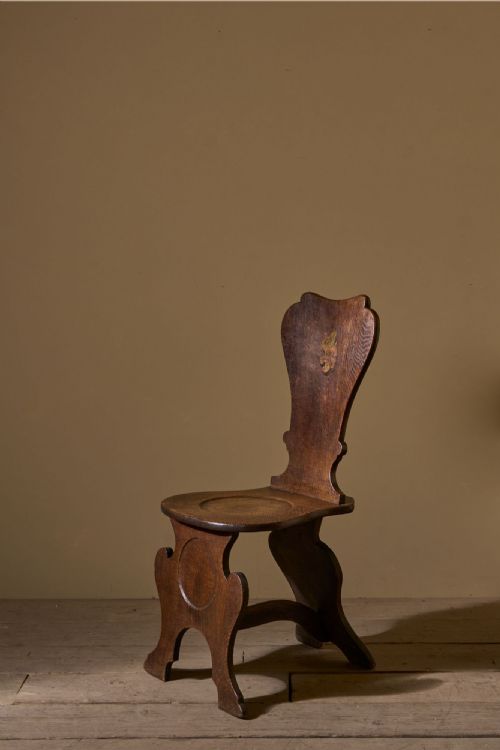
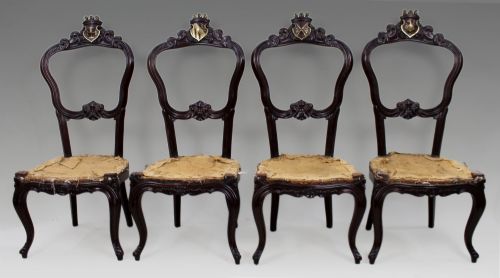
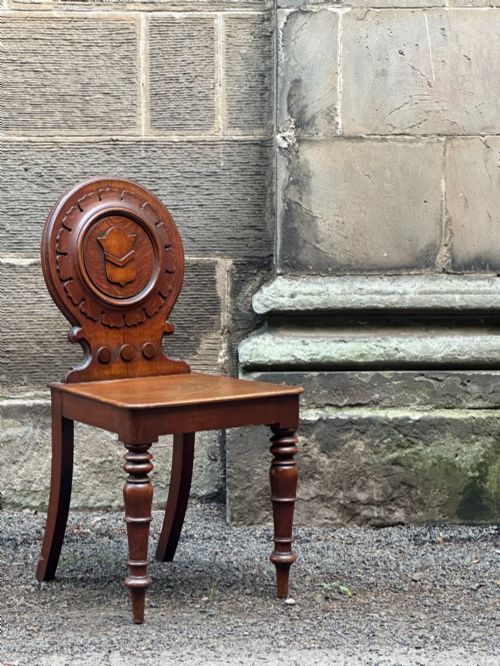
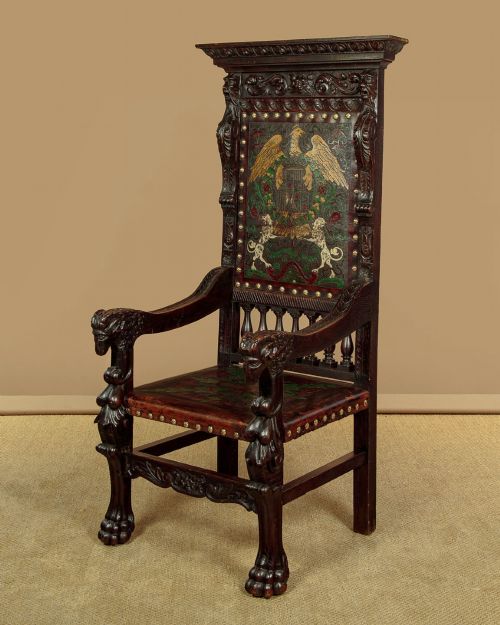

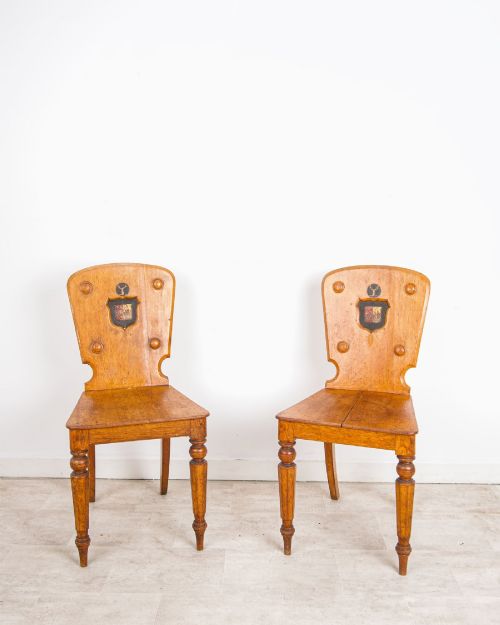
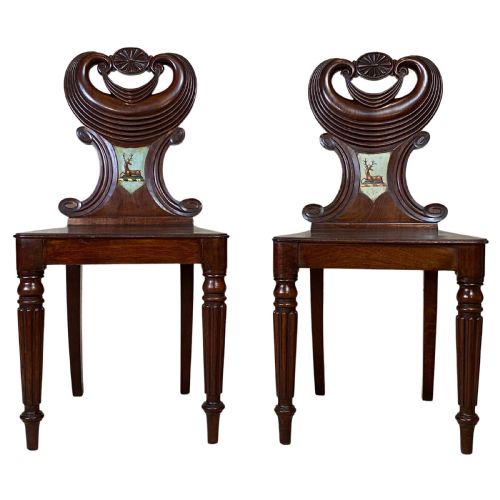


Crest Back Hall Chairs
Crest back hall chairs are statement seating bearing heraldic badges, built to impress visitors in grand entranceways.
Crest Back Hall Chairs
Crest back hall chairs encompass timber seating designed primarily for grand entryways and reception rooms, frequently featuring carved armorial shields or heraldic motifs upon the wooden backrest. The pieces available span multiple centuries and stylistic revivals, capturing formal British reception seating from the seventeenth century through to the Edwardian era.
The selection ranges from sturdy oak and mahogany examples bearing carved armorial bearings to walnut designs influenced by earlier Carolean and Regency fashions. Buyers will encounter single seats, matched pairs, and larger matched sets created for domestic halls and law chambers.
Beyond standard hall chairs, the inventory includes related forms such as side chairs, armchairs, benches, and high-backed reception seats. These items demonstrate how domestic seating evolved from heavy seventeenth-century oak formats towards lighter Regency and Victorian interpretations.
How they were made
Carpenters and cabinetmakers utilised dense native hardwoods, predominantly oak and mahogany, alongside walnut for finer revival and period commissions. These timbers provided the structural integrity required for upright hall seating intended for occasional use rather than lounging.
Carving serves as the defining decorative technique, shaping solid wood into heraldic shields, crests, and elaborate foliate patterns. Secondary materials such as cane, brass, paint, fabric, and hessian appear across specific seating types to provide structural backing or upholstery.
Joinery methods range from traditional mortise and tenon joints in earlier oak pieces to precise cabinet construction in later mahogany and walnut examples. Surface treatments vary from natural wax finishes on oak to painted accents and carved leather panels on revival pieces.
Law chamber seats allowed Victorian barristers to ponder weighty legal arguments upon suitably austere carved wood.
What varies in quality
The distinction between standard examples and superior pieces rests on the depth, crispness, and artistic execution of the carved crests and shield backs. Master workshops achieved sharper relief and more balanced proportions in their armorial carvings, whereas lesser pieces display shallower or repetitive ornamentation.
Timber selection and grain figure dictate the underlying grade of the furniture, with well-figured mahogany and richly patinated seventeenth-century oak commanding greater visual presence. The integrity of the original construction, including the tightness of the joints and the preservation of the carved wooden backrest, determines the lasting quality of the chair.
Gillows·Waring and Gillow
The Crest Back Hall Chairs Glossary
- Armorial
- Relating to heraldic arms or crests displayed on shields. These carvings indicate family lineage or institutional identity.
- Shield back
- A chair back shaped like a heraldic shield. This form provides a flat surface for prominent armorial carving.
- Carolean
- A style spanning the reign of Charles II, marked by rich carving, barley-twist turnings, and cane inserts. Pieces from this era lean heavily on baroque influences.
- Regency
- A period of British design defined by classical restraint and neoclassical motifs. Furniture from this era often utilises dark mahogany with clean architectural lines.
- Cane
- Woven rattan material utilised for chair seats and back panels. It offers lightweight flexibility while maintaining structural support.
Crest Back Hall Chairs: Frequently Asked Questions
Where were crest back hall chairs placed?
These chairs were positioned in the main entrance halls of large houses and public reception rooms. They served as formal seating for visitors waiting to be announced.
Because they stood in hallways, they were built to be upright and imposing rather than comfortable for long periods.
How do I identify the period of a hall chair?
Dating relies on combining timber choice with the style of the carving and the turning on the legs. Oak typically points to seventeenth or eighteenth-century pieces or later revivals, while mahogany is common in Georgian and Victorian examples.
Stylistic details like shield backs and armorial crests evolved over time, reflecting the design preferences of each respective century.
Are these chairs comfortable for daily seating?
Crest back hall chairs were designed primarily for visual impact and brief waiting periods rather than relaxation. Their rigid wooden backs and upright posture encourage proper deportment.
Placing them in a hallway or using them as accent pieces in a dining room suits their original purpose best.