


Cream Wooden Mirror
A cream wooden mirror brings architectural grace and painted warmth to an interior, offering practical reflection within a period frame.
Cream Wooden Mirror
Buyers seeking a cream wooden mirror encounter wall mirrors, overmantel mirrors, and dressing mirrors spanning the nineteenth century through the early twentieth century. The selection includes French trumeau mirrors, Victorian arched designs, and Edwardian ovals, alongside console tables and hall mirrors.
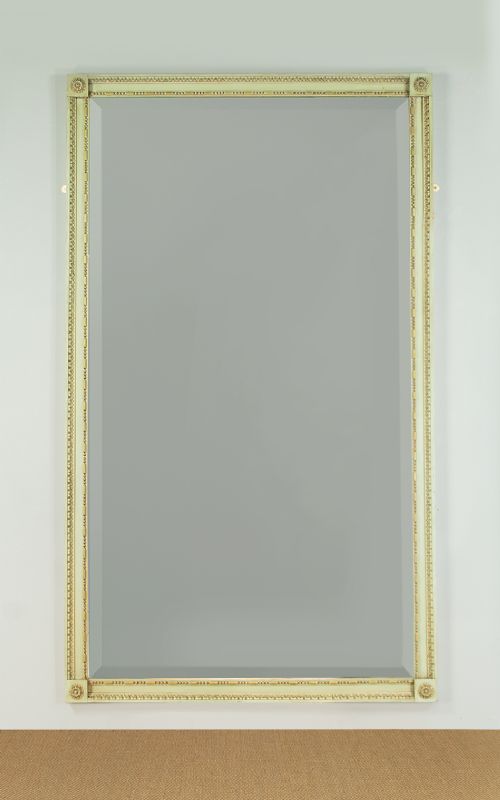
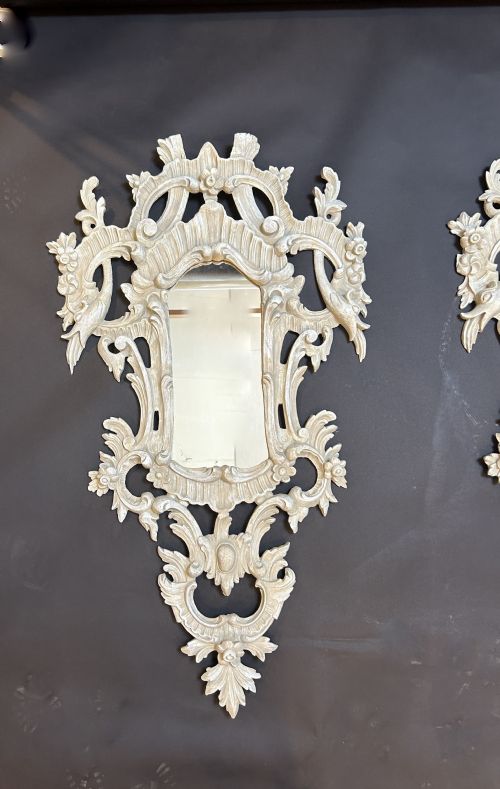
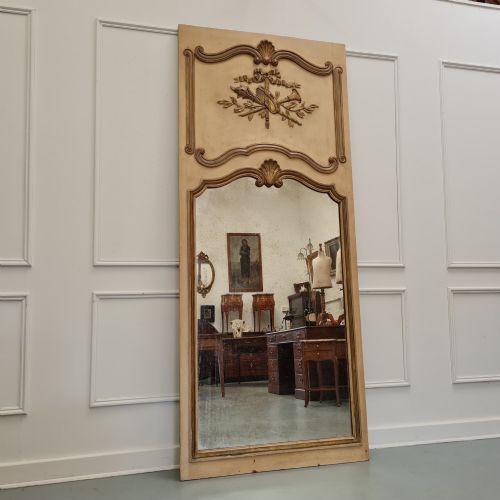
The version most commonly met on this page is the large painted overmantle mirror or French carved mirror from the nineteenth century. These pieces combine painted wooden frames with mirror glass, frequently showing layers of overpainting on earlier gilt or gesso surfaces.
Materials and construction
Frames are constructed from wood, often enhanced with carved wooden details or moulded gesso layers beneath the paint. Artisans applied paint directly to wood or over original gilt surfaces, creating the layered cream finishes seen across nineteenth-century and Edwardian examples.
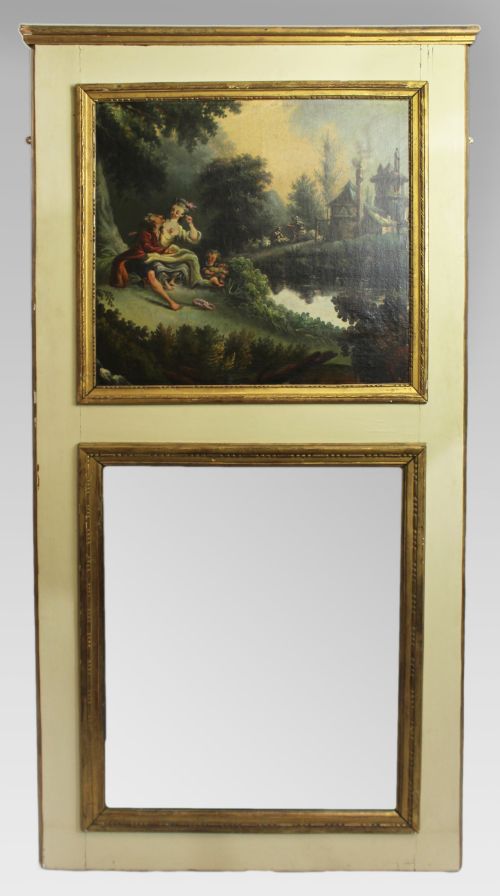
Reflecting surfaces consist of traditional mirror glass set within heavy wooden structures, sometimes incorporating oil paintings in the manner of French trumeau pieces.
A haberdashery shop mirror shares display space with delicate French chateau trumeaus, proving mirrors have worked in retail and boudoirs alike.
Distinctions in quality
Quality rests in the depth of the original carving and the crispness of the gesso mouldings beneath the paint layers. Superior examples display substantial wooden frames with well-defined architectural scrolls or carved motifs rather than simple flat boards.
The character of the painted surface also dictates the standing of a piece, distinguishing intentional historic patination from later industrial repainting. Heavier overmantel formats require robust internal construction to support large sheets of glass safely.
The Cream Wooden Mirror Glossary
- Trumeau mirror
- A decorative wall mirror featuring an upper panel that often contains an oil painting or carving, originating in eighteenth- and nineteenth-century interior design. These tall pieces were designed to hang between windows or above a fireplace mantel.
- Overmantel mirror
- A large horizontal or arched mirror created specifically to be hung above a fireplace mantelpiece. Victorian and Edwardian examples frequently incorporate architectural frames to anchor large wall spaces.
- Gesso
- A plaster-like mixture applied to wood frames to create a smooth surface for gilding or painting. Carved gesso details allow for crisp decorative mouldings.
- Louis Philippe
- A mid-nineteenth-century French style characterised by restrained classical proportions and often featuring a rounded upper arch. These mirrors offer understated elegance compared to heavily ornamented Rococo designs.
Cream Wooden Mirror: Frequently Asked Questions
Where should I hang a cream wooden mirror?
These mirrors suit placement above a drawing room fireplace, in a hallway to reflect light, or in a bedroom as a dressing mirror. Larger overmantel formats anchor empty wall spaces effectively.
Ensure the wall construction supports the weight of substantial wood and glass frames, particularly for nineteenth-century wall pieces.
How do I date a painted mirror?
Dating relies on examining the frame construction, wood types, and the composition of the glass and backing boards. Nineteenth-century examples often feature hand-carved details and heavy timber frames.
Later Edwardian and twentieth-century pieces tend to show lighter construction methods and distinct paint layering techniques.
Are the paint finishes original?
Many nineteenth-century pieces have endured overpainting, where later cream paint layers were applied over original gilt or earlier finishes. This cumulative layering creates the patinated texture valued by collectors.
Close inspection of the surface reveals whether the cream paint is an antique application or a recent decorative addition.
What is a trumeau mirror?
A trumeau is a traditional French wall mirror that incorporates a painted panel or carved artwork directly above the glass plate. They were designed to fit specific architectural wall panels in period rooms.
Pastoral oil paintings or decorative motifs are frequently integrated into the upper wooden section of these tall mirrors.