


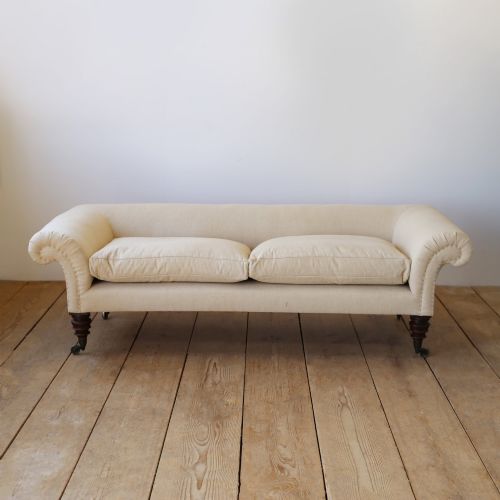


Cream Upholstered Mahogany Bench
A cream upholstered mahogany bench brings traditional warmth to an interior through solid timber frames and soft textile seating.
Cream Upholstered Mahogany Bench
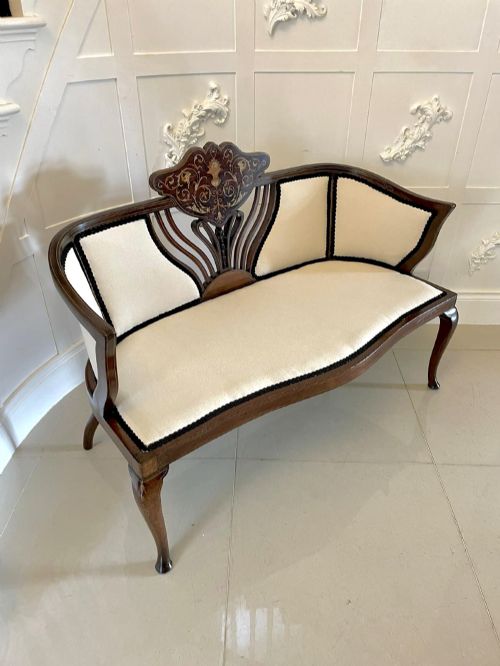
Makers often shaped these pieces in specific revivals, producing Chippendale style carvings, French Empire details, and simple cabriole leg supports. The inventory relies heavily on Victorian and Edwardian examples alongside earlier Regency and William IV iterations.
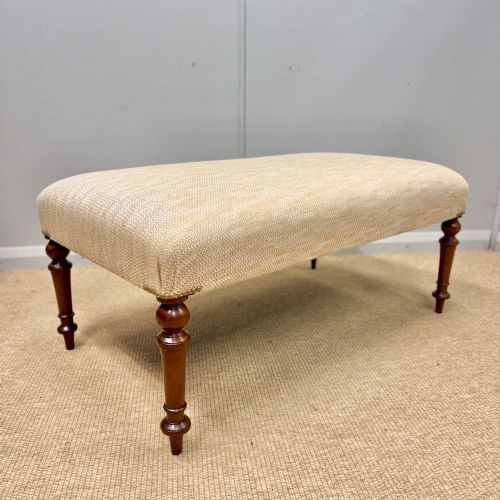
Most entries combine sturdy mahogany structures with neutral textile elements, offering practical seating solutions for bedrooms, hallways, and formal reception rooms. The forms vary from low dressing stools to expansive double ended settees.
Materials and construction methods
Workshops utilised solid mahogany for structural frames, sometimes adding satinwood inlay or brass mountings for decorative effect. Timber components were carved into cabriole legs, scroll ends, and X framed supports.
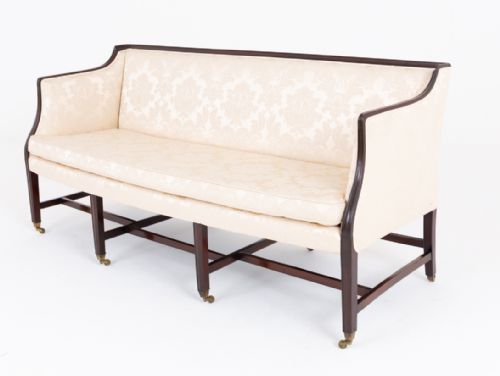
Upholstery departments applied traditional padding beneath cream coloured fabrics, including damask, linen, and buttoned textiles. Individual makers integrated castors for mobility and incorporated decorative elements like ormolu mounts and ball and claw details.
Several items double as revolving piano stools, allowing musicians to spin comfortably while practicing their scales.
Assessing quality in construction and design
Excellence in these items rests upon the depth of the mahogany carving, the crispness of inlaid satinwood details, and the integrity of the frame joints. Superior examples exhibit balanced proportions, particularly on revival window seats and substantial double ended settees.
The refinement of the upholstery work also dictates standard, where hand buttoning and appropriate fabric selection complement the underlying timber architecture. Pieces carrying workshop attributions or specific maker signatures demonstrate heightened craftsmanship.
C. Hindley & Sons·Butlers of Dublin·Hampton & Sons Pall Mall
The Cream Upholstered Mahogany Bench Glossary
- Mahogany
- A dense tropical hardwood known for its rich reddish brown colour and strength. It serves as the primary structural material for these frames.
- Cabriole leg
- A furniture leg that curves outward and then tapers inward, mimicking animal limbs. This design appears frequently on 19th century stools and window seats.
- Damask
- A reversible figured fabric traditionally woven on a jacquard loom. It provides a textured pattern suitable for formal seating upholstery.
- Window seat
- A long, narrow bench designed to fit into a window recess. These forms often feature open frames or carved mahogany ends.
- Ormolu
- Gilded bronze ornamentation applied to furniture. This technique appears on French Empire revival pieces to highlight neoclassical motifs.
Cream Upholstered Mahogany Bench: Frequently Asked Questions
Where should I place a window seat?
A window seat fits well beneath a large bay window or along a narrow hallway wall. Its shallow profile provides practical seating without blocking walkways or natural light.
These pieces also function effectively at the foot of a bed or within a dressing room setting, echoing the arrangement of traditional bedroom seating.
How do I identify a Victorian piece?
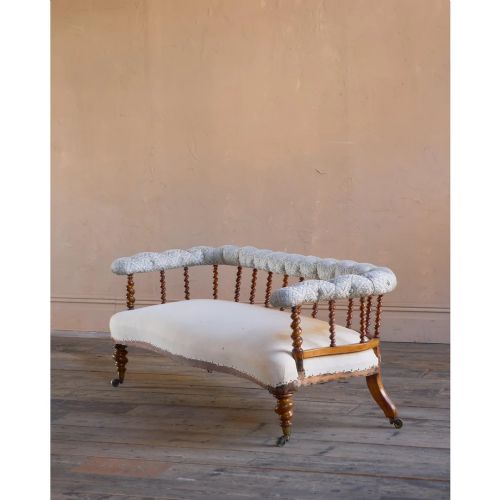
Victorian items often display deep buttoned upholstery, heavy mahogany framing, and robust proportions. Many incorporate castors for ease of movement across carpeted rooms.
Comparing the decorative carving styles and structural joints helps separate these mid to late 19th century examples from lighter Edwardian alternatives.
What is the difference between a settee and a stool?
A settee functions as a two seater sofa with a supportive backrest and upholstered arms. It is built for extended sitting in a salon or drawing room.
A stool lacks a backrest entirely, serving instead as a footrest, dressing seat, or piano bench designed for shorter periods of use.
How do I care for mahogany frames?
Mahogany requires minimal maintenance beyond occasional dusting with a soft, dry cloth. Avoiding direct sunlight prevents the rich timber tones from fading over time.
Applying wax polish periodically helps nourish the wood grain and preserves the natural lustre of the polished surface.