




18th Century Style Settee
An 18th century style settee brings timeless seating to a room, offering deep comfort and classical design derived from Georgian and continental traditions.
18th Century Style Settee
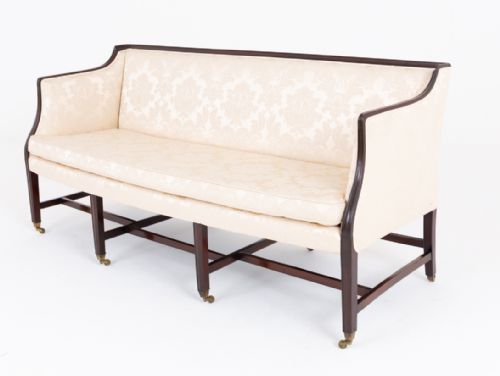
An 18th century style settee typically spans forms from the Georgian period through later revivals, offering double or triple seating capacity. These pieces draw on classical proportion and vernacular design, ranging from straightforward mahogany frames to elaborate giltwood creations.
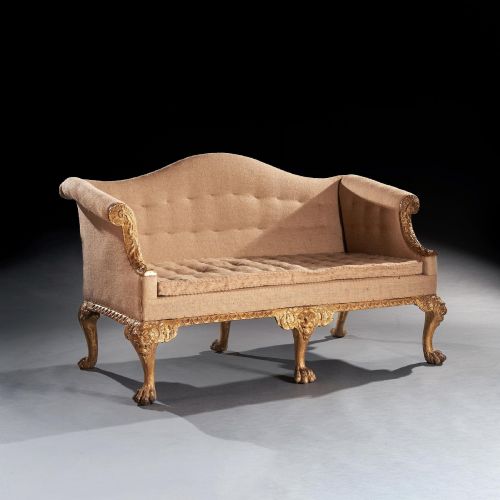
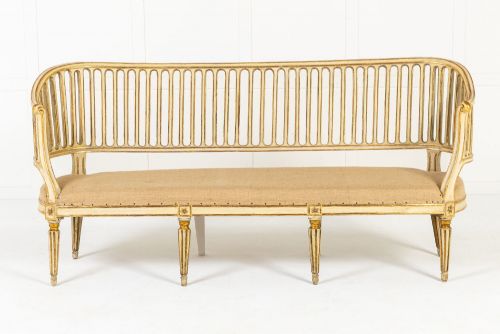
The versions most commonly met on this page include serpentine front camel back sofas, chairback forms, and continental interpretations. Buyers encounter genuine period examples alongside later 19th and 20th century revivals built in the established idioms.
Makers working across the 18th century and subsequent revival eras utilised distinct regional characteristics, from Dutch walnut rococo flourishes to Swedish Gustavian restraint. Each piece reflects the enduring appeal of centuries past adapted for contemporary domestic use.
Materials and Construction
Frames are constructed from solid timbers such as mahogany, oak, and walnut, frequently shaped with carved details and finished with painted or giltwood surfaces. Joinery relies on traditional carpentry methods to ensure structural integrity across the expansive spans of two-seat and triple-back forms.
Upholstery involves traditional textile application over internal webbing and padding, utilising fabric, damask, and specialised upholstery fabrics. Brass hardware appears as decorative accents or foot details, complementing the carved wooden elements found on George II and George III iterations.
Listings feature mahogany, oak, walnut, painted wood, and giltwood frames spanning the Georgian, Edwardian, and mid-20th century periods.
Assessing Quality and Execution
The distinction between standard examples and finer works rests upon the crispness of the carving and the selection of timber. Superior frames display deeply articulated details, such as lion mask hairy paw feet or precise serpentine lines, executed with confident hand tools.
Proportion and structural harmony separate accomplished pieces from simpler reproductions. A well-executed settee maintains balanced proportions across its back and arms, ensuring that decorative elements enhance rather than crowd the primary wooden structure.
Giles Grendey
The 18th Century Style Settee Glossary
- Camel back
- A sofa or settee featuring a graceful, undulating crest rail that rises in a central hump before sloping down to the arms. This silhouette gained popularity during the Georgian period.
- Serpentine front
- A furniture front characterised by a central convex curve flanked by two concave curves, creating a fluid, wave-like contour. It requires advanced woodworking skill to execute properly.
- Giltwood
- Timber that has been coated with a thin layer of gold leaf or gold paint for decorative effect. This finish appears frequently on high-status continental and British seating.
- Chairback settee
- A form of seating where the back is constructed to resemble two or three joined chair backs placed side by side. These pieces often feature open splats and distinct upright supports.
- Gustavian
- The Swedish interpretation of neoclassical design, prominent during the late 18th century and later revived. It is known for restrained carving, pale painted finishes, and functional elegance.
18th Century Style Settee: Frequently Asked Questions
How do I date an 18th century style settee?
Dating relies on examining the construction methods, timber choice, and stylistic markers present in the frame. Secondary woods and tool marks often reveal whether a piece originates in the 18th century or represents a later 19th or 20th century revival.
Comparing the upholstery support and decorative carving against known period examples helps clarify the exact era of manufacture. Revival pieces frequently incorporate hints of their own period's manufacturing techniques alongside historical motifs.
What is the difference between a settee and a sofa?
Historically, a settee referred to a wide wooden or upholstered seat designed for multiple people, often featuring an exposed wooden frame. Sofas traditionally offered fuller upholstery and more deeply padded lounging surfaces.
Over time, the terms became largely interchangeable in marketplace descriptions. Both designations apply to the multi-seat furniture forms listed here.
How should I care for antique upholstery and wood?
Maintain wooden frames by dusting regularly with a soft cloth and avoiding direct sunlight or excessive heat fluctuations. This prevents the timber and any giltwood finishes from drying out or cracking.
Protect upholstered surfaces by professional cleaning tailored to the specific fabric type, whether damask or standard textile. Gentle handling ensures the delicate internal structures remain stable over time.
Can I use an antique settee in a modern room?
These settees integrate successfully into contemporary interiors by providing a strong focal point with classical proportions. Their historical designs contrast effectively with minimalist settings or complement traditional decor.
Consider the scale of the room and the seating height when placing the piece. A well-chosen settee serves as functional seating while introducing architectural character.