


Traditional Upholstered Wooden Settee
A traditional upholstered wooden settee brings warmth and historic seating character to a room through exposed timber frames and classic fabric covers.
Traditional Upholstered Wooden Settee
A traditional upholstered wooden settee combines a visible timber structure with padded seating surfaces, appearing frequently in forms influenced by Georgian, Regency, and Victorian aesthetics. Buyers encounter pieces spanning the nineteenth century alongside revival interpretations from the early twentieth century.
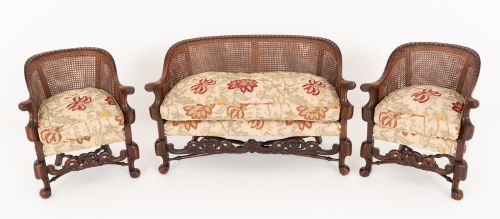
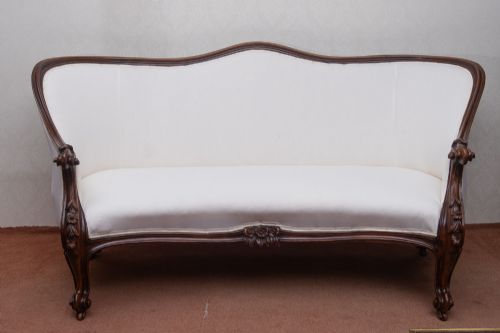
The category encompasses chair-back settees, scroll-end sofas, and carved wooden frames upholstered in varied textiles. These seating forms served formal reception rooms and country house interiors, functioning as both decorative focal points and practical long seats.
Materials and construction methods
Frames rely primarily on solid mahogany, walnut, and oak, often shaped through carving, turning, or ebonising to achieve distinct period styles. Timber selection dictated the structural strength needed to support extended seating spans.
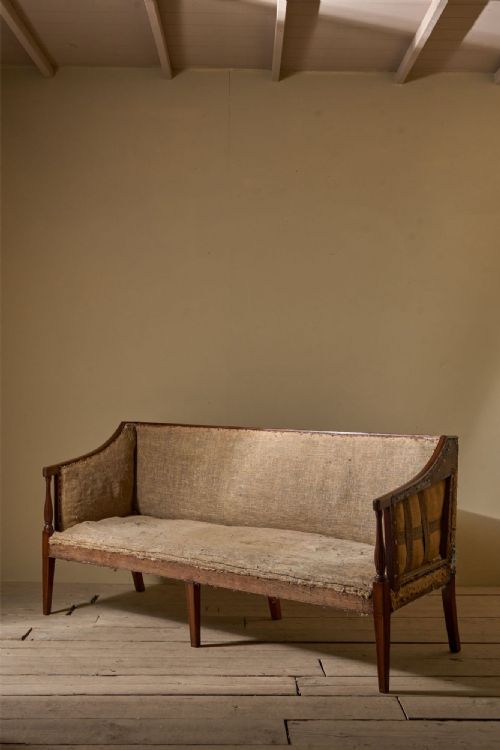
Upholstered elements incorporate traditional textiles such as velvet, hessian, and standard woven fabrics.
Distinguishing quality in wooden frame settees
Quality rests upon the crispness of the timber carving and the architectural proportion of the wooden frame. Finer examples display deeply sculpted details, balanced chair-back structures, and well-seasoned woods that resist warping over generations.
The integrity of the joinery and the selection of primary timbers determine the overall durability of the piece. Superior construction ensures the exposed wooden elements remain stable while supporting the upholstered body.
The Traditional Upholstered Wooden Settee Glossary
- Chair-back settee
- A wooden settee featuring a backrest constructed to resemble multiple joined chair backs. This design reflects eighteenth-century modular seating traditions.
- Scroll-end sofa
- A couch featuring outward-curving wooden or upholstered arms resembling architectural scrolls. Regency and nineteenth-century makers favoured this sweeping profile.
- Ebonised wood
- Timber treated to imitate the dark appearance of ebony. Victorian craftsmen utilised this finish to create dramatic contrast against colourful upholstery.
- Hessian
- A coarse woven fabric traditionally used as an internal scrim or foundation layer in upholstery. It provides stable support beneath visible top covers.
Traditional Upholstered Wooden Settee: Frequently Asked Questions
Where did people place these settees?
These settees traditionally occupied formal reception rooms, parlours, and large hallways within substantial residences.
They provided ample seating for guests while displaying the social status and taste of the household through carved woodwork.
How do I date a wooden settee?
Dating relies on examining the timber species, carved decorative motifs, and structural framing techniques.
Nineteenth-century pieces often combine machine-assisted turning with hand carving, whereas earlier examples show entirely hand-shaped joinery and distinct revival styles.
Are these settees comfortable for daily use?
Most period wooden settees offer firm seating supported by traditional internal stuffing and heavy timber frames.
They function well in modern living spaces when paired with supportive cushions suited to contemporary relaxation habits.
What maintenance do wooden frames require?
Wooden frames benefit from occasional application of appropriate furniture wax to nourish polished mahogany, walnut, or oak surfaces.
Keeping the timber away from direct heat sources prevents the wood from drying out and maintains the finish.