

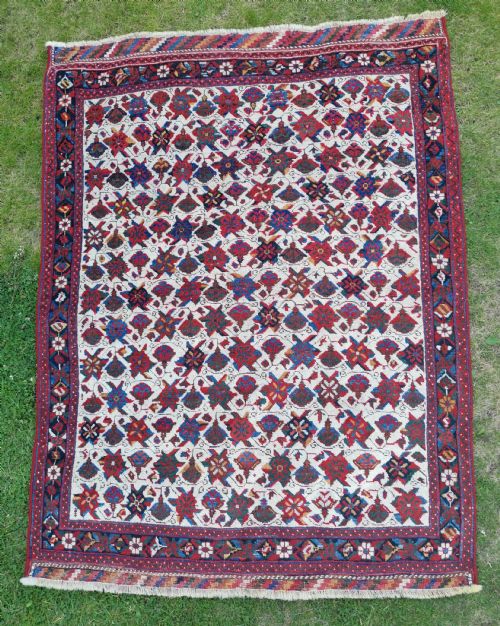
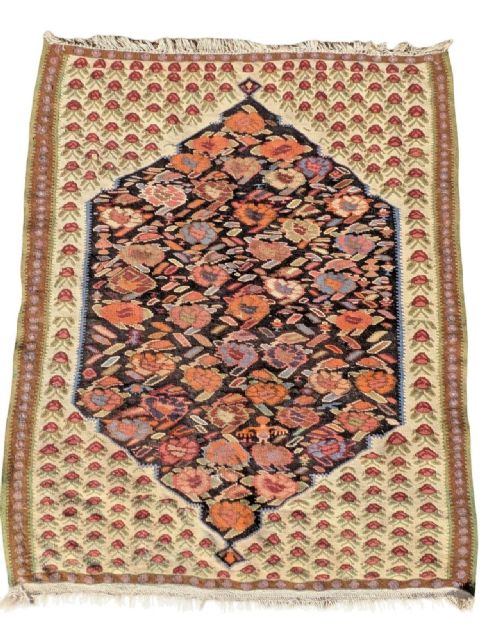
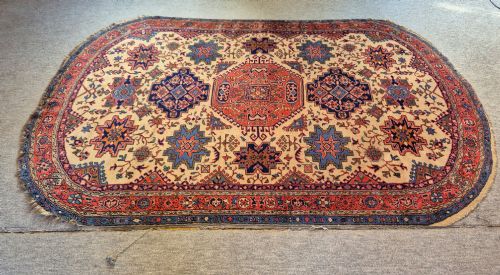
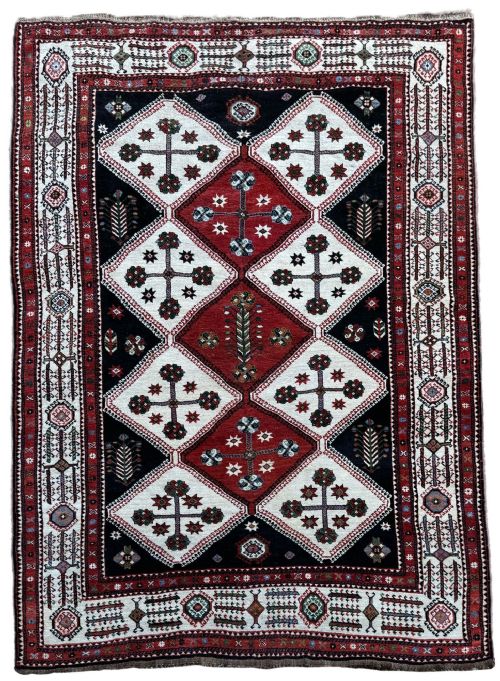
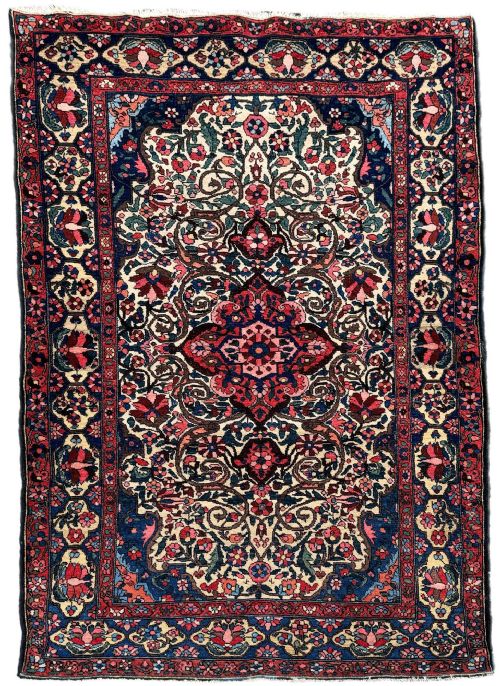
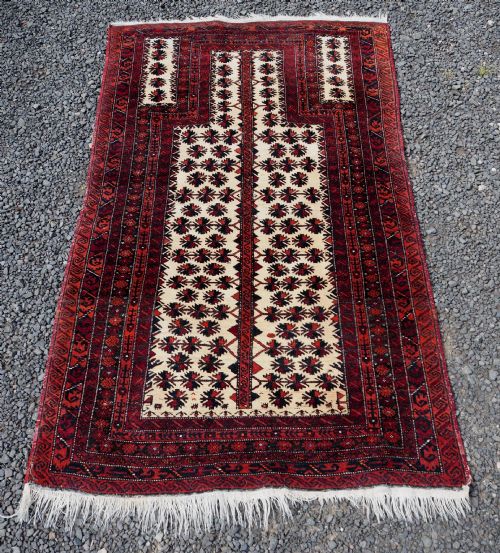
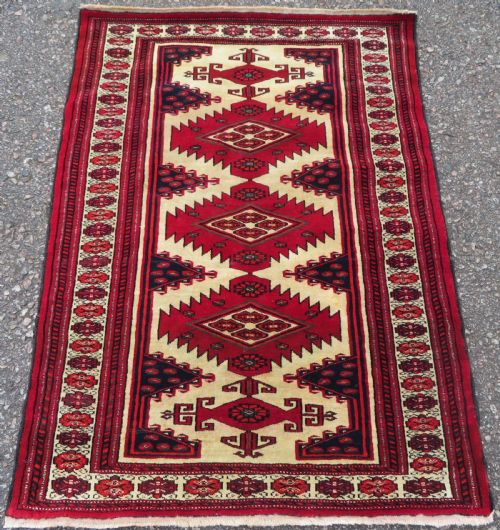
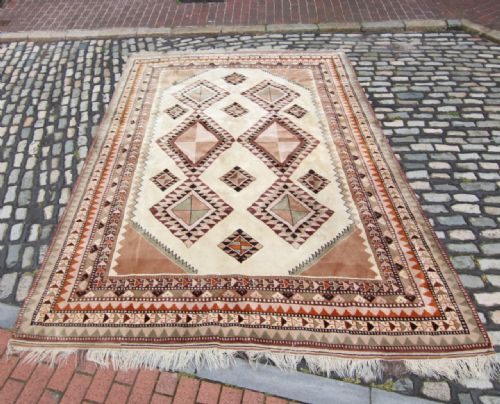


Cream Tribal Area Rug
A cream tribal area rug brings grounded pattern and tactile warmth to a room through centuries-old village and nomadic weaving traditions.
Cream Tribal Area Rug
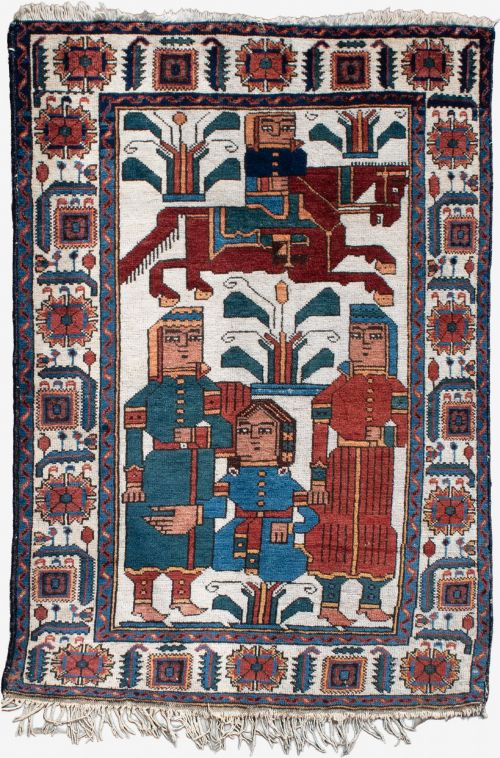
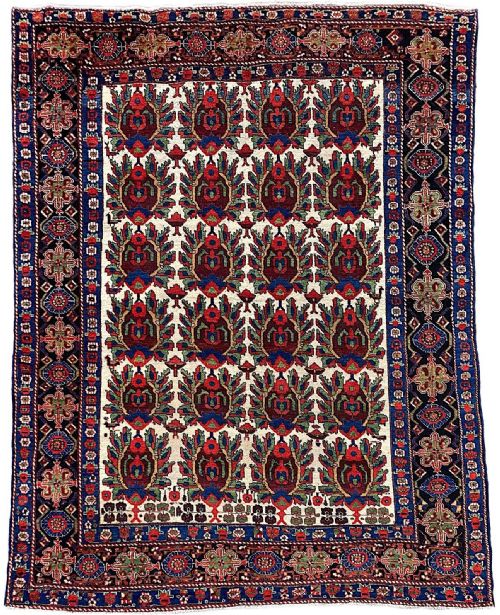
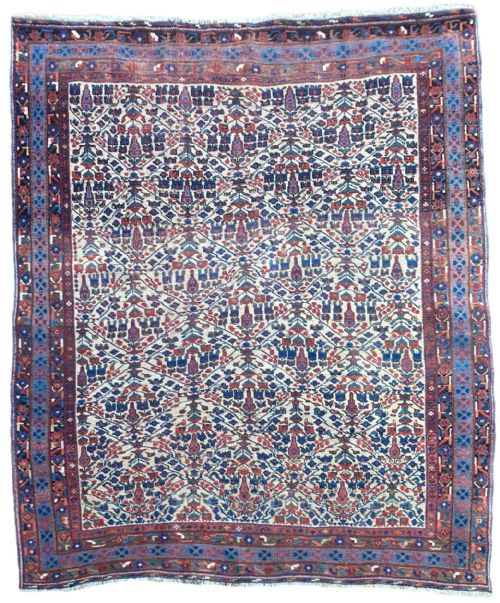
A cream tribal area rug is a hand-knotted or flat-woven floor covering originating from village and nomadic workshops across Persia, Anatolia, the Caucasus, and Central Asia. These pieces display traditional geometric motifs, medallion layouts, and prayer designs rooted in specific regional weaving heritage.
Buyers searching for this style most frequently encounter antique pieces dating from the mid-nineteenth century through the early twentieth century, including examples from Bakhtiar, Afshar, Malayer, and Shirvan traditions. The light neutral ground provides a versatile canvas that anchors modern and traditional spaces alike.
The format ranges from compact mats and prayer rugs to room-sized carpets, though medium area formats dominate the available selection. Each textile reflects the distinct tribal iconography and structural habits of the weavers who produced them on vertical or horizontal looms.
How they were made
These rugs rely upon hand-spun wool for the pile and structure, combined with cotton foundations in specific Persian and Anatolian workshops. The natural wool absorbs organic dyes with deep variation, resulting in the creamy ivory and pale grounds characteristic of these weaves.
Weavers employ asymmetric or symmetric knots tied firmly onto warp and weft threads, creating a dense pile designed for heavy domestic use. Flat-woven kilim varieties utilise supplementary weft-patterning techniques to achieve crisp geometric designs without a raised pile.
Current listings feature hand-spun wool and cotton textiles originating from Persian, Anatolian, and Caucasian traditions dating between 1850 and 1930.
What varies in quality
Quality in these textiles rests upon knot density, the clarity of the drawing, and the integrity of the wool. Tighter knotting allows complex medallion and floral lattice designs to resolve with sharp definition.
The choice of dyestuffs dictates the depth of the cream ground and secondary colours. Superior examples display subtle abrash where tone shifts naturally across the field, reflecting sequential dyeing batches and hand-spun inconsistency.
The Cream Tribal Area Rug Glossary
- Abrash
- Natural tonal variation within a single field of colour caused by changes in dye batches or hand-spun wool. This horizontal striping adds visual depth to antique tribal carpets.
- Warp
- The vertical foundation threads stretched lengthwise on the loom before knotting begins. Fringe ends typically emerge from these structural cords.
- Weft
- Horizontal threads passed across the warp strands after each row of knots to secure the pile in place. They are beaten down firmly with a comb during construction.
- Kilim
- A flat-woven carpet or rug produced without a pile by tightly interweaving warp and weft threads. These pieces offer lightweight durability and sharp geometric patterning.
- Prayer rug
- A small format textile featuring a characteristic mihrab or arch design indicating the direction of prayer. Historically utilised for personal devotion in nomadic and village settings.
Cream Tribal Area Rug: Frequently Asked Questions
How do I clean an antique rug?
Gentle surface brushing and professional specialist washing preserve the natural lanolin in antique wool. Avoid harsh chemical immersion.
Regular low-suction vacuuming without a rotating beater bar prevents dust accumulation in the pile foundation.
Where were these rugs made?
Production centres span traditional weaving regions including Persia, Anatolia, the Caucasus, and Central Asia. Individual tribes and villages developed distinct regional palettes and geometric vocabularies.
Nomadic groups and sedentary village workshops each contributed specific structural techniques that identify their origin.
Are these rugs durable for hallways?
Dense wool pile and sturdy cotton or wool foundations provide robust natural resilience for domestic traffic. Heavy village weaves withstand everyday friction remarkably well.
Using a quality underlay prevents slippage and cushions the foundation against hard flooring surfaces.
What causes ivory wool to yellow?
Age, exposure to sunlight, and historical atmospheric soot naturally patina untreated sheep wool over decades of existence. This subtle darkening is an organic characteristic of genuine age.
Professional washing can mitigate surface grime while retaining the warm character accumulated through generations.