






Cream Porcelain Floral Urn
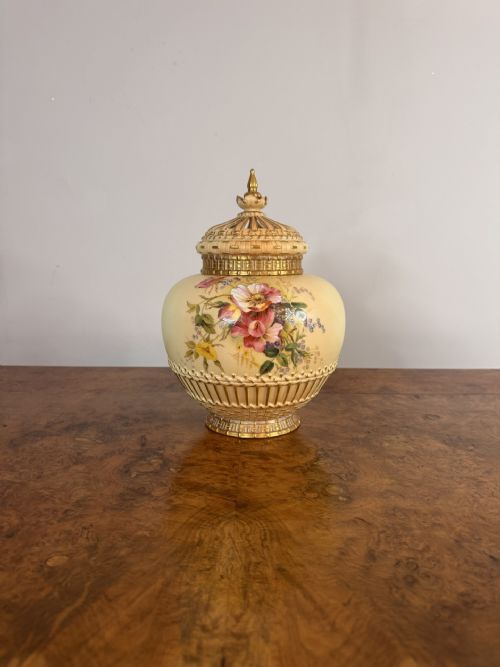
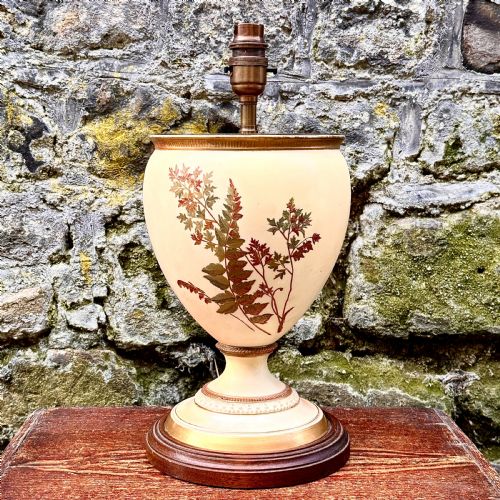
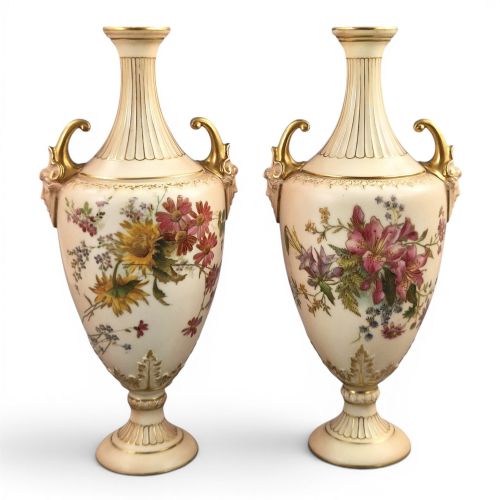
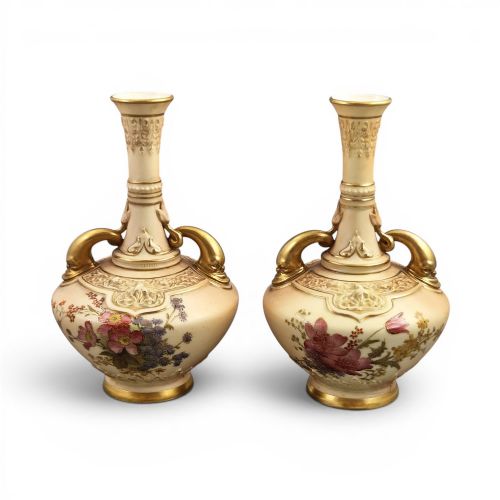
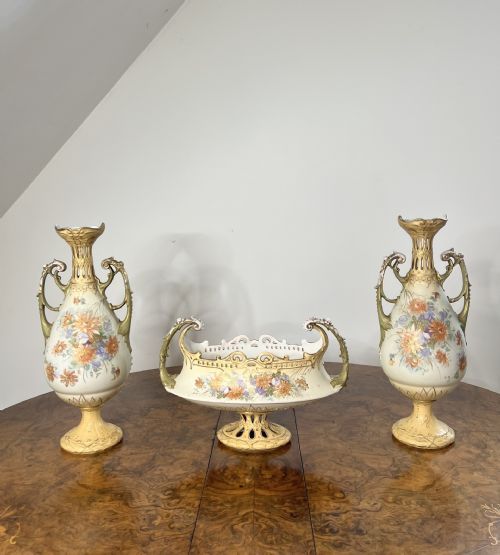
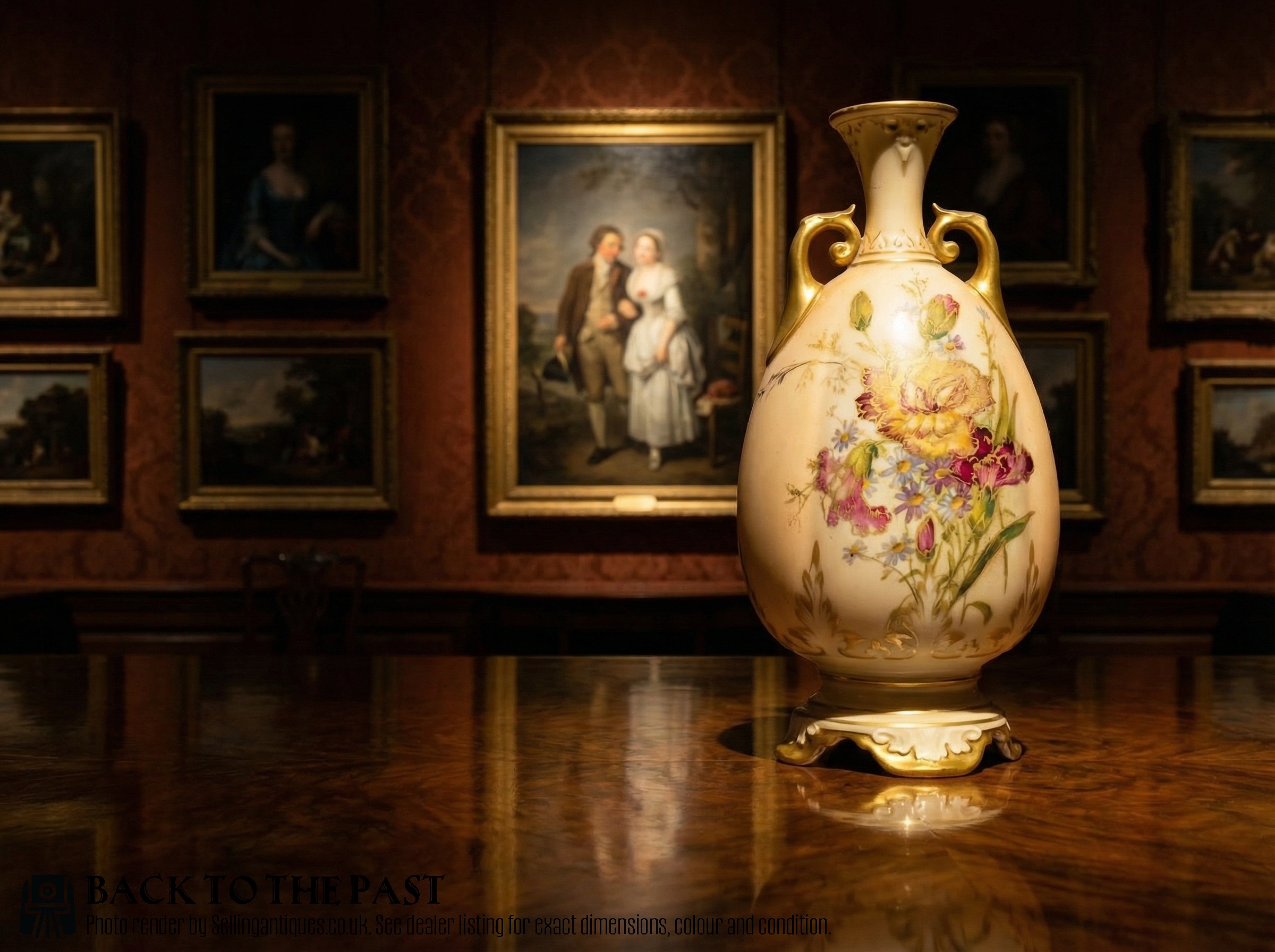
These pieces of cream porcelain floral urn display delicate painted botanicals and gilt accents from the nineteenth and early twentieth centuries.
Cream Porcelain Floral Urn
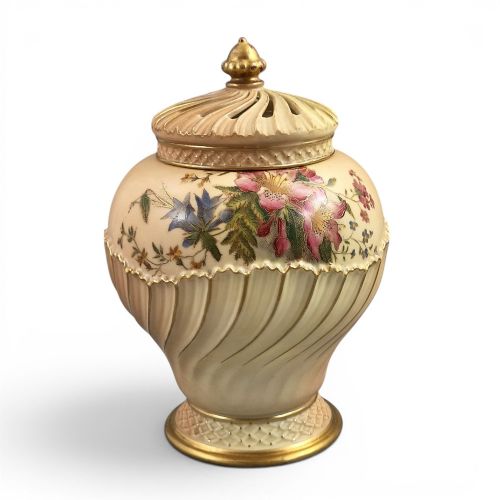
A cream porcelain floral urn encompasses decorative vessels, pot-pourri jars, and centrepieces produced during the nineteenth century and the Edwardian era. These items bridge the gap between ornamental display objects and functional mantel garnitures.
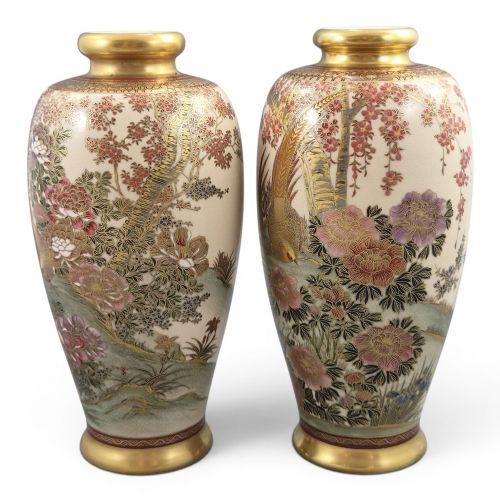
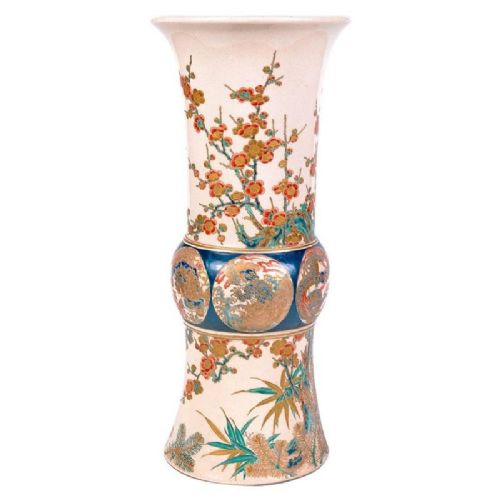
The version most commonly met on this page is the blush ivory vase originating from English potteries, particularly Royal Worcester, alongside Japanese Satsuma earthenware vessels. Forms range from ovoid and pedestal shapes to twin-handled urns and ewers decorated with chrysanthemums, wisteria, and blackberry motifs.
Makers utilised various stylistic influences spanning Victorian revivals, Art Nouveau, and Meiji period aesthetics. Buyers encounter everything from miniature cabinet vases to large exhibition pieces with dolphin handles and pierced gilt mounts.
Materials and construction
Makers relied on porcelain and earthenware bodies, finished with specialised glazes to create the characteristic soft cream or blush ivory ground. Artisans applied hand-painted enamel botanical scenes directly onto the prepared surface.
Decoration involved the application of gold leaf, gilt details, and gilding to handles, rims, and borders. Certain pieces incorporate brass mounts or three-dolphin bases cast to support the ceramic bodies.
Cream Porcelain Floral Urn Retail Price Guide 2026
Typical asking prices for cream porcelain floral urn among the pieces listed under this phrase on Sellingantiques today, from the lower quarter to the upper quarter. They describe what is for sale here now, not the wider market.
Several pieces feature surprisingly cheerful dolphins pressed into service as handles and pedestals to support heavy floral urns.
Distinctions in execution
Quality separates through the finesse of the hand-painted enamels and the precision of the gilt work. Master decorators achieved depth and subtlety in floral arrangements, whereas standard pieces display more repetitive patterns.
The crispness of moulded details, such as pierced handles and animal forms, distinguishes high-tier studio output from ordinary production wares.
Royal Worcester·Royal Vienna·Doulton Burslem·Ernst Wahliss·Kinkozan
The Cream Porcelain Floral Urn Glossary
- Blush ivory
- A soft, matte cream porcelain glaze developed by English potteries to emulate unglazed parian ware while providing a warm ground for floral enamel painting.
- Garniture
- A set of matching vases or ornamental urns designed to be displayed together on a mantelpiece or sideboard.
- Satsuma
- Japanese earthenware pottery featuring a crackle-glaze cream ground decorated with enamels and intricate gilt work, produced extensively during the Meiji period.
- Pot-pourri jar
- A covered ceramic vessel pierced to allow the release of dried scented flower petals kept within the body.
- Ewer
- A large jug with a wide spout and handle, adapted in these periods into a purely decorative urn or vase.
Cream Porcelain Floral Urn: Frequently Asked Questions
How do I clean an antique porcelain urn?
Dust the surface gently with a soft, dry brush to prevent accumulation in crevices and around gilt handles.
Avoid liquid cleaners, as moisture can damage delicate hand-painted enamel details and nineteenth-century gilding.
Were these urns made for display or use?
These pieces served primarily as decorative garnitures, centrepieces, and mantel ornaments in period interiors.
Certain lidded forms held scented dried flowers, but most functioned purely to showcase artistic ceramics.
How can I tell Edwardian pieces from Victorian ones?
Victorian examples often favour heavier Rococo revival curves, bolder colours, and ornate structural gilding.
Edwardian pieces tend toward the softer blush ivory palette and restrained naturalistic floral painting.
What does blush ivory mean?
Blush ivory refers to a specialised matte cream ceramic finish introduced in the late nineteenth century.
It provides a muted backdrop that enhances hand-painted botanical subjects without competing with the enamel colours.