
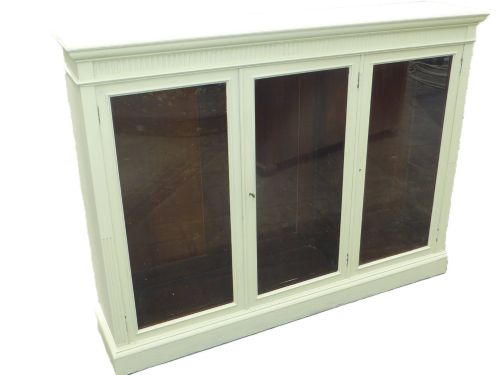


Cream Painted Display Cabinet
A cream painted display cabinet brings architectural presence and soft luminosity to a room, framing cherished objects behind glass panels with understated charm.
Cream Painted Display Cabinet
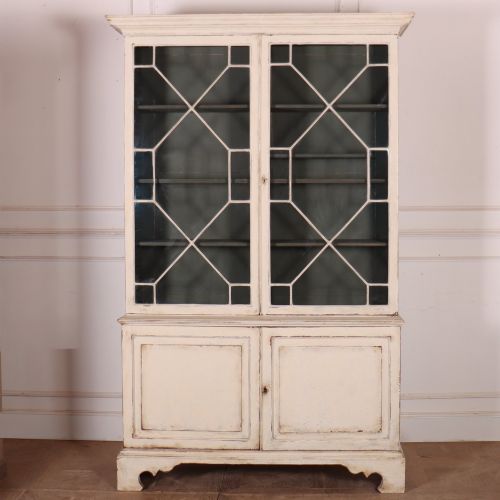
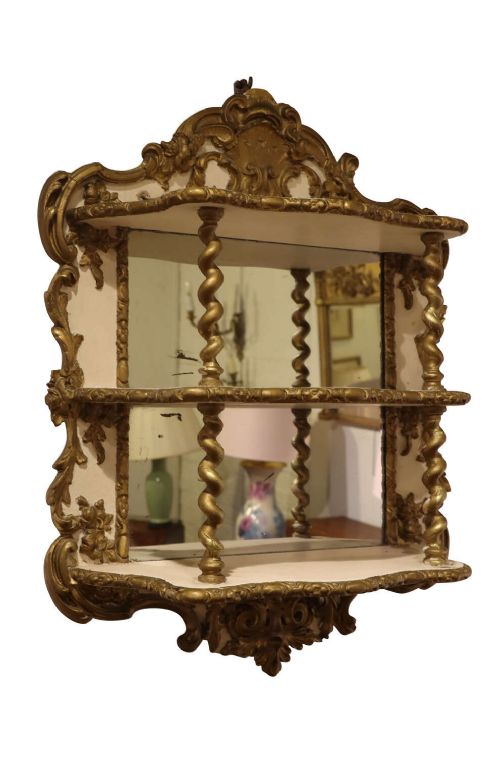
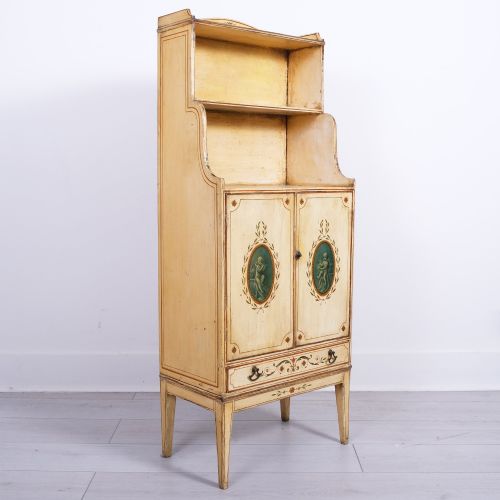
A cream painted display cabinet is primarily encountered here through bookcases, vitrines, and corner cupboards spanning the Georgian and Victorian eras, alongside later French provincial pieces. These items serve to exhibit ceramics, books, and decorative wares while introducing a muted, lighter tone to traditional dark wood interiors.
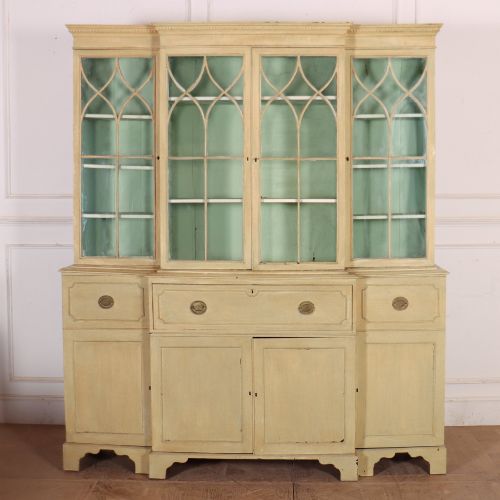
The selection ranges from tall breakfront library bookcases and two-part corner cupboards to wall-hanging vitrines and concave glass cabinets. English and French workshops dominate the origins, utilising glazed doors and adjustable shelving to combine practical storage with visual lightness.
Materials and Construction
Hardware incorporates brass for hinges, escutcheons, and keyplates, while specialised elements such as majolica panels or porcelain inserts occasionally decorate the facades. Surface treatments rely on hand-painted applications that age naturally over time.
Listings feature pieces spanning the 18th, 19th, and early 20th centuries, utilising painted wood, glass, brass, and gold leaf across English and French styles.
Distinguishing Quality
Quality reveals itself in the architectural proportions and the subtlety of the painted finish, where hand-applied layers create depth rather than flat uniformity. Superior examples integrate original glass, well-fitted adjustable shelving, and refined brass hardware that operate harmoniously.
The distinction between standard utility furniture and finer pieces rests on cabinetry joinery, such as the construction of breakfront cornices and the seamless integration of decorative elements like gilt highlights or carved mouldings.
James Rouse Jnr.·Copeland·Masons·Royal Worcester·Stinton
The Cream Painted Display Cabinet Glossary
- Breakfront
- A cabinet design where the central section projects forward from the flanking wings. This creates visual depth and architectural interest.
- Vitrine
- A glass-fronted display cabinet or showcase designed specifically for exhibiting porcelain, curiosities, and small decorative objects. The glazed panels maximise visibility from multiple angles.
- Étagère
- An open piece of furniture with shelves arranged in tiers for displaying ornaments. These wall-hanging or freestanding items emphasise lightness and decorative display.
- Majolica
- A type of earthenware decorated with opaque coloured glazes over a tin-enamelled base. It provides vibrant pictorial panels on nineteenth-century cabinetry.
- Parcel Gilt
- A decorative technique where selected portions of an object are highlighted with gold leaf or gold paint. This adds subtle contrast against the cream painted background.
Cream Painted Display Cabinet: Frequently Asked Questions
What is a cream painted display cabinet used for?
These cabinets serve as functional storage for books, porcelain, and collectibles while keeping dust away from delicate items. The glass doors allow for continuous visual display within living spaces.
They function equally well in dining rooms for dinnerware or in libraries for book collections, adding a bright focal point to the room.
How do I date an antique display cabinet?
Dating relies upon examining construction methods, timber types, and stylistic indicators such as cornice moulding and hardware design. Georgian pieces exhibit different proportions and joinery compared to later Victorian or Edwardian interpretations.
Secondary woods at the back and drawer construction methods also provide clear clues to the manufacturing period.
Are the shelves adjustable in these cabinets?
Many period cabinets feature adjustable shelving supported by traditional wooden racks or metal pins, accommodating items of varying heights. This flexibility was common in libraries and breakfront bookcases designed for practical use.
Fixed shelving is typically found in older corner cupboards and smaller wall-hanging vitrines.
How should I care for a painted antique cabinet?
Maintenance involves dusting with a soft, dry cloth and avoiding harsh chemical cleaning products that might compromise the painted surface. Keeping the cabinet away from direct sunlight and excessive humidity preserves the timber and paint.
Wax polish should be used sparingly and only on unpainted wooden elements if present.