
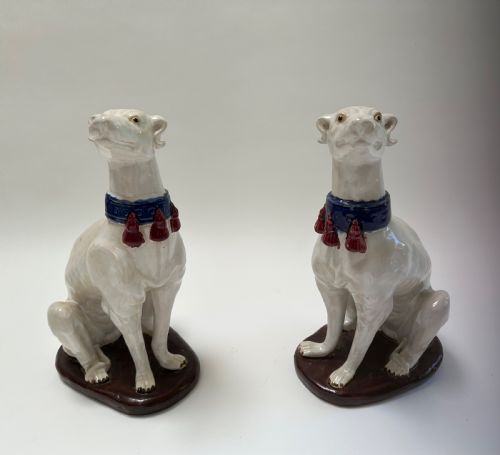


Cream Glazed Figurine
A cream glazed figurine offers a smooth, neutral surface that highlights sculptural detail from the Victorian and Art Deco eras.
Cream Glazed Figurine
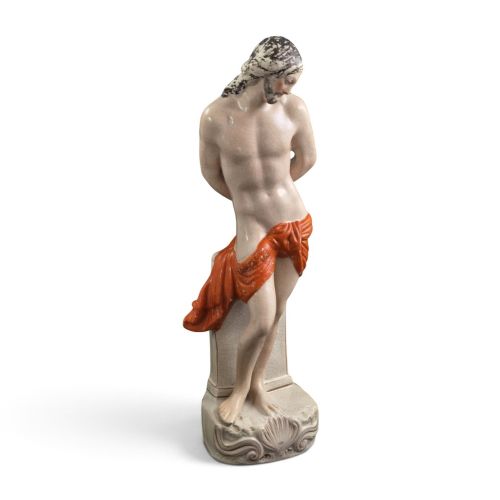
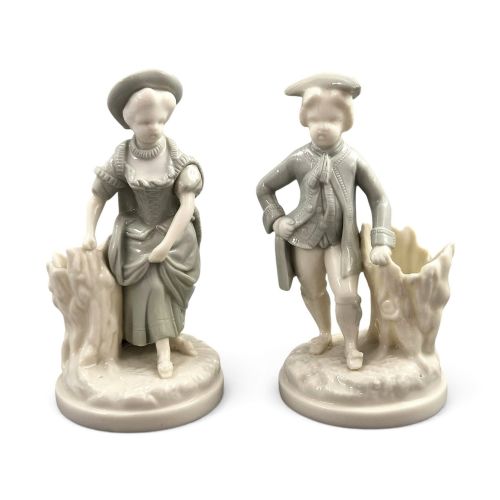
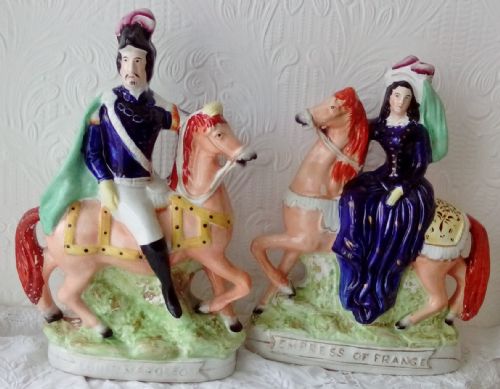
A cream glazed figurine brings sculptural presence to a room through subjects ranging from Staffordshire animals and historical figures to Japanese Satsuma okimono and European porcelain dancers. These pieces span the Georgian period, the Victorian era, and the 1930s, reflecting diverse international traditions in ceramic art.
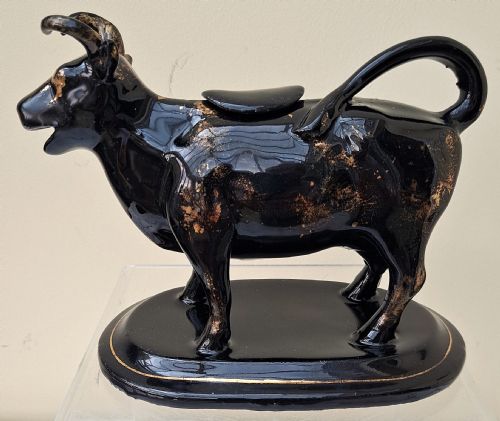
The selection on this page demonstrates the wide variety of forms that fall under this description, including figural salt cellars, cow creamers, table lamps, and traditional pottery figures. English earthenware and European porcelain dominate the available examples, alongside pieces influenced by Italian Renaissance Revival, Rococo, and Art Deco styles.
Materials and technique
Makers shaped the clay through moulding and hand-modeling before kiln-firing the pieces to set the glaze. The smooth cream surfaces often serve as a uniform background for subtle painted or gilded embellishments applied during secondary firings.
Cow creamers demonstrate that practical kitchenware has long benefited from a cheerful, sculptural animal presence on the tea table.
Assessing quality
Quality in these figures rests on the crispness of the moulding and the smooth application of the glaze across complex surfaces. Superior examples retain fine facial expressions and distinct hand-painted or gilt details without blurring the underlying ceramic form.
The distinction between standard production pieces and finer works involves the delicacy of the modeling and the purity of the glaze tone. Well-preserved surfaces and precise detailing separate masterworks from simpler utilitarian or decorative objects.
Royal Worcester·Royal Dux·Fasold & Stuach
The Cream Glazed Figurine Glossary
- Earthenware
- A porous pottery type fired at relatively low temperatures, requiring a glaze to hold liquids and provide a smooth decorative surface.
- Okimono
- A Japanese freestanding carving or figurine intended for display in a traditional interior setting.
- Soft-paste
- A ceramic composition made from clay mixed with ground glass and other materials, fired at lower temperatures than hard-paste porcelain.
- Enamel
- Opaque vitreous material fused to the surface of ceramics or metals to add colour and pattern.
- Gilt
- A thin layer of gold or gold leaf applied to the surface of ceramic figures to highlight specific decorative elements.
Cream Glazed Figurine: Frequently Asked Questions
What periods do these figures come from?
The listings span from the Georgian period through the Victorian era and into the Art Deco style of the 1930s. Each era utilises distinct manufacturing techniques and aesthetic conventions.
Victorian pieces often feature robust earthenware forms, while 1930s examples lean toward streamlined porcelain and glazed ceramic designs.
Are these figures purely decorative?
Most items serve primarily as decorative ornaments or sculptures designed for display on mantelpieces, tables, and cabinets. Some pieces, however, combine utility with sculpture by functioning as cream jugs, salt cellars, or table lamps.
Even functional items like cow creamers prioritize sculptural presence alongside their practical use.
How can I tell Victorian pieces apart from later ones?
Victorian figures frequently employ heavy earthenware and stylistic references like Rococo or Victorian Neoclassical motifs. They often depict historical subjects, animals, or domestic scenes with hand-painted details.
Later 1930s pieces typically showcase Art Deco styling, smooth porcelain bodies, and simplified geometric forms associated with twentieth-century design.