


Cream Gilded Wall Mirror
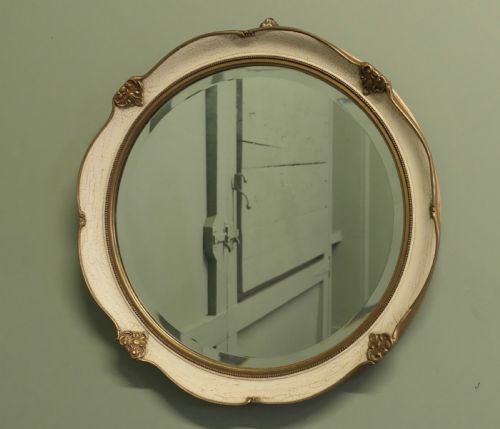
A cream gilded wall mirror brings light and classic proportion to a room, ranging from grand overmantels to round convex pieces.
Cream Gilded Wall Mirror
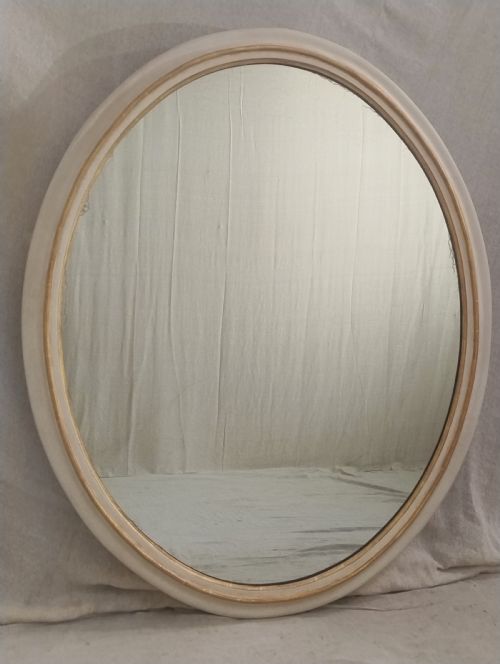
When you search for a cream gilded wall mirror, you encounter a variety of forms including overmantel mirrors, pier mirrors, and trumeau panels. These pieces date across the nineteenth and early twentieth centuries, spanning Victorian, Regency, and French Rococo Revival styles.
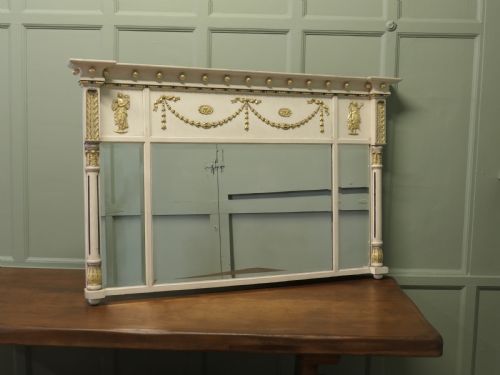
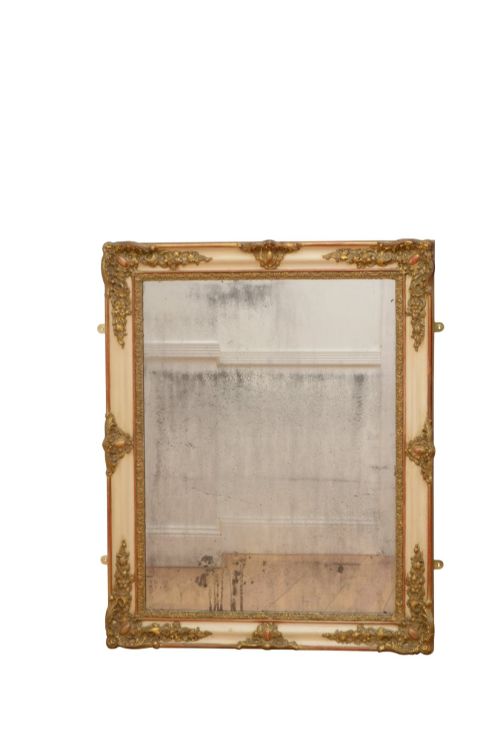
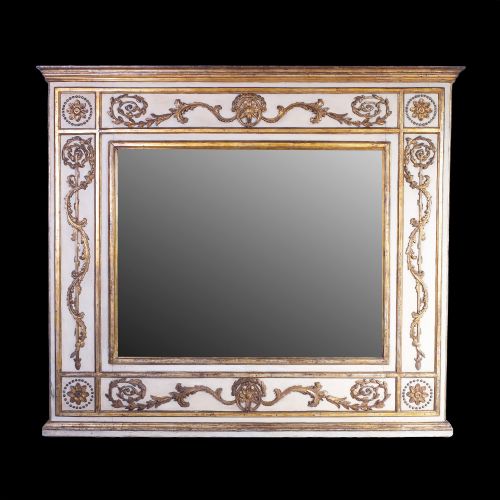
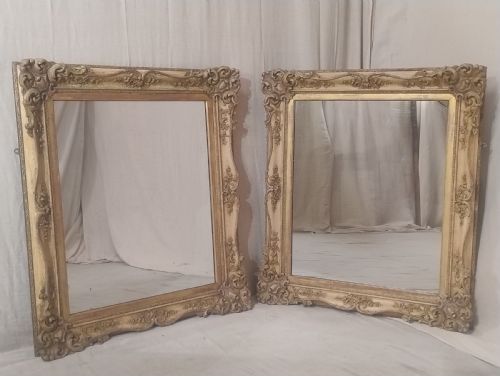
You are most likely to meet large painted and gilt overmantel mirrors designed to sit above a fireplace. These frames often feature arched tops, crests, or scrollwork finished in cream paint alongside gold leaf or parcel gilt highlights.
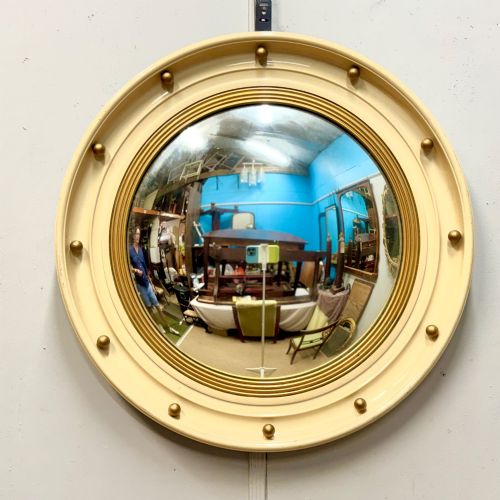
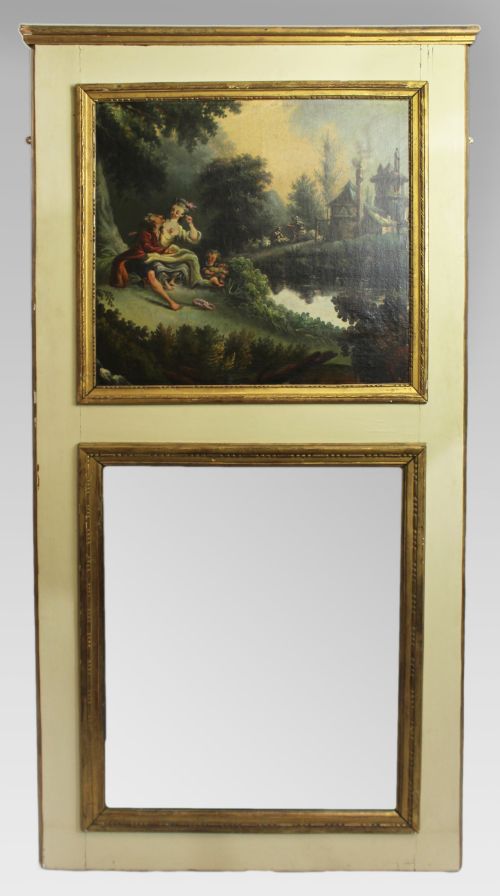
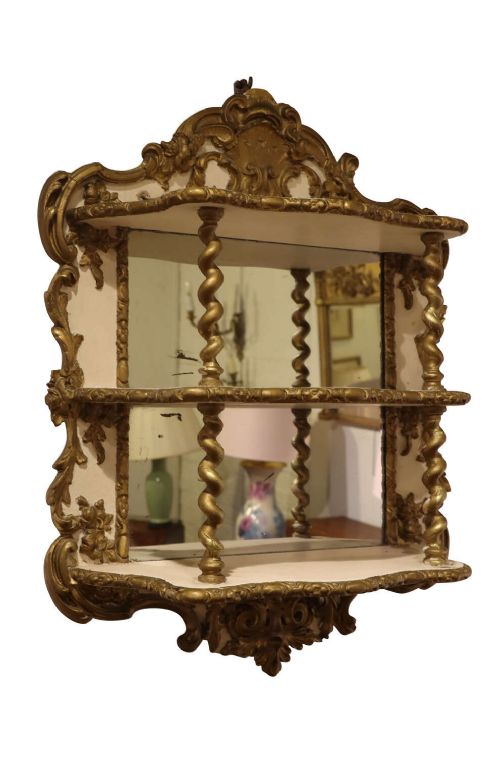
The selection also includes round butler's mirrors with convex glass, tall provincial trumeau mirrors incorporating pastoral oil paintings, and decorative wall étagères. Origins span English workshops and French provincial makers from the eighteen-eighties to nineteen-twenty.
Materials and construction methods
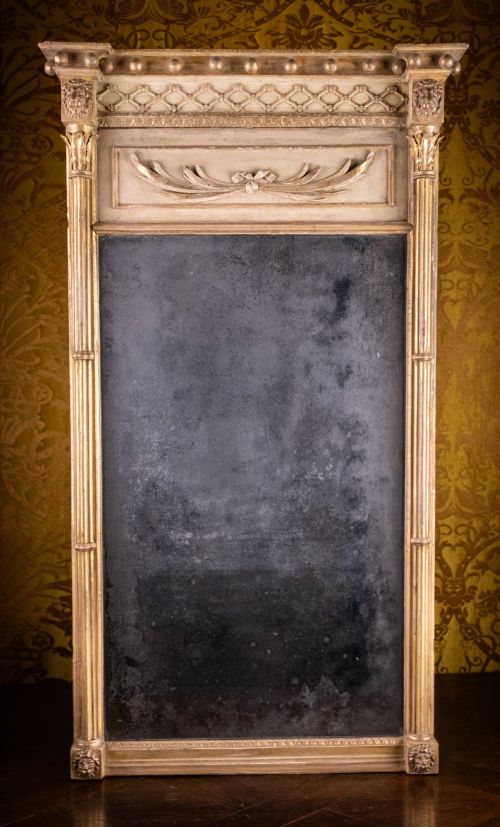
Frames are constructed from wood and gesso, providing the dense foundation necessary for intricate moulding and carving. Artisans applied layers of gesso to shape decorative elements such as lion masks, vitruvian scrolls, and ornate floral crests before finishing the surfaces.
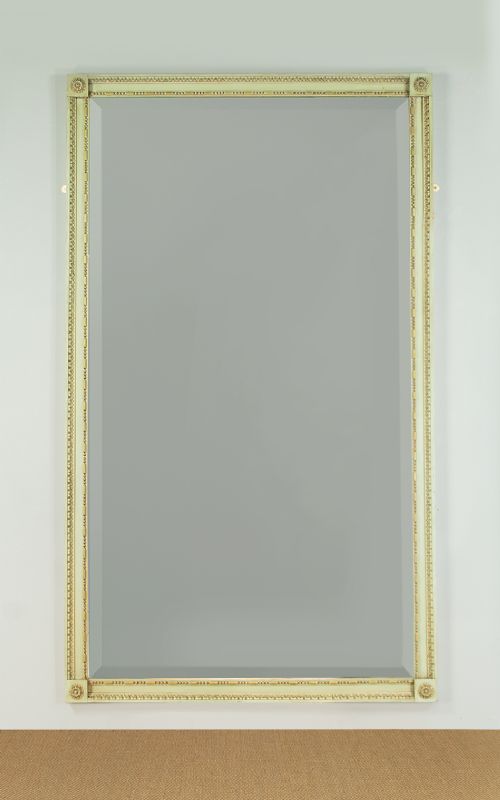
Finishing combined cream paint and gold leaf or parcel gilt detailing to create contrast between the soft painted ground and gleaming metallic highlights. Mirror glass was set within these heavy frames, occasionally featuring bevelled edges or triple plate configurations.
Several mirrors include hidden lion masks keeping watch from the corners of the frame.
Distinctions in quality and execution
The fineness of the hand-carved gesso ornamentation dictates the calibre of a frame, separating mass-produced mouldings from deeply chiselled architectural scrollwork and applied motifs. Crisp detailing around lion masks and crests indicates superior craftsmanship.
The integration of the painted and gilded surfaces affects the overall presence of the object, where skilled layering allows the gold leaf to catch the light harmoniously against the cream ground. Original mirror glass with authentic foxing adds historical depth compared to modern replacements.
The Cream Gilded Wall Mirror Glossary
- Gesso
- A plaster-like material applied to wood frames and carved into decorative relief before gilding. It allows for crisp architectural and floral ornamentation.
- Overmantel mirror
- A large horizontal mirror designed specifically to hang on the wall directly above a fireplace mantelpiece. These pieces frequently anchor the proportions of a reception room.
- Trumeau mirror
- A decorative wall mirror incorporating an oil painting or carved panel within the upper section of the frame. Originating in France, these provincial pieces combine artwork and reflective glass.
- Parcel gilt
- A surface treatment where only specific raised portions of a frame are gilded with gold leaf while the rest remains painted. This technique highlights particular carved details.
- Convex glass
- A curved, outward-bulging mirror plate that captures a wide-angle reflection of the interior space. It is commonly found in round butler's mirrors.
Cream Gilded Wall Mirror: Frequently Asked Questions
How do I hang a heavy overmantel mirror?
Heavy overmantel mirrors require secure anchoring into wall studs using robust brackets and fixings that match the substantial weight of the wood and gesso frame. Professional installation ensures the piece remains stable against the wall.
Because these mirrors were originally built to rest upon a mantelpiece while being secured at the top, contemporary hanging must safely distribute the vertical load across suitable wall supports.
Where should I place a trumeau mirror?
Trumeau mirrors work well in principal reception rooms, hallways, or above sideboards where their vertical proportions and integrated panels can be appreciated fully. They introduce height and reflective light into smaller spaces.
Positioning them opposite a window maximises natural daylight distribution throughout the room.
What is the difference between an overmantel and a pier mirror?
An overmantel mirror is traditionally wider and designed to sit horizontally above a fireplace, whereas a pier mirror is typically tall and narrow. Pier mirrors were historically placed on the wall space between two windows.
Both forms utilise cream and gilt frames across nineteenth-century English and French examples, but their distinct proportions suit different architectural locations.