



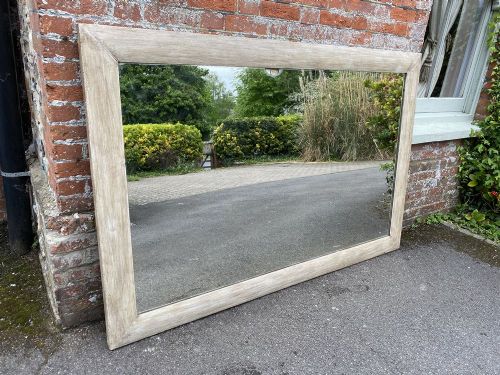


Cream Floor Mirror
These cream floor mirror pieces offer grand proportions and pale finishes, bringing period elegance and vertical light into a room.
Cream Floor Mirror
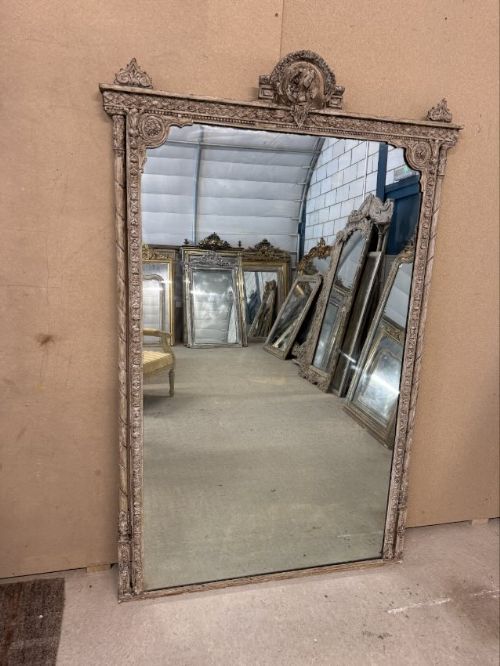
When you search for a cream floor mirror, you find tall reflective panels designed to stand directly on the ground or tilt within a freestanding frame. The selections here lean heavily toward large French and Italian forms, ranging from the mid nineteenth century into the early twentieth century.
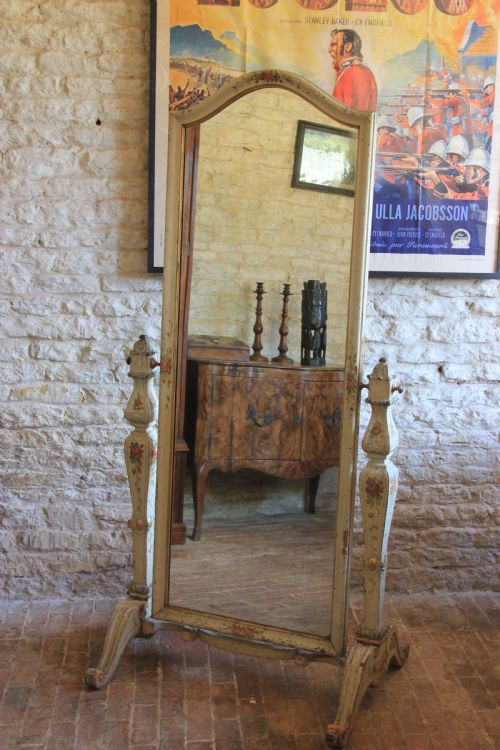
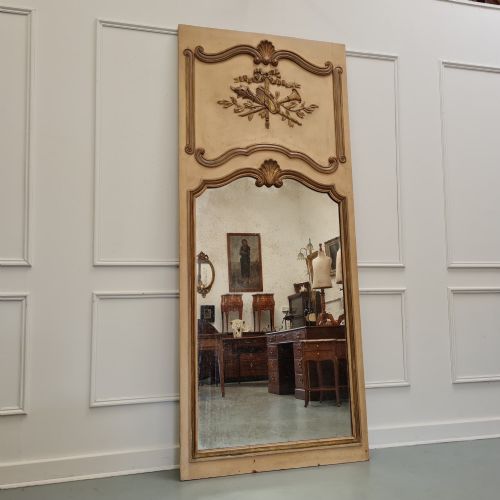
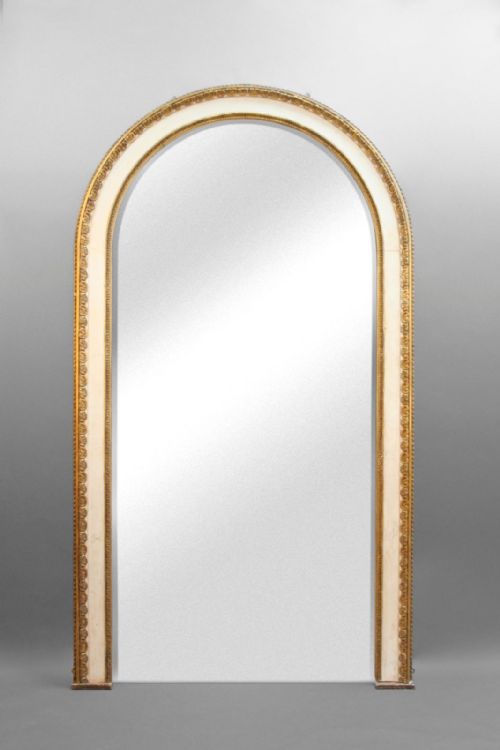
The dominant style on this page is nineteenth century French, encompassing arched tops, column frames, and trumeau designs. Alongside traditional wall mirrors adapted for floor placement, the inventory includes cheval mirrors and even floor standing shelves finished in cream paint and parcel gilt.
How they were made
The makers of these large frames built structural carcasses from solid wood, often utilising carved timber for substantial mouldings and architectural details. Applied gesso provided a smooth preparation layer over the wood, allowing intricate scrollwork and relief decoration to be crisply defined before painting.
Surfaces received traditional coats of paint in pale cream tones, frequently accented with parcel gilding or gold leaf to highlight carved motifs. Heavy cast glass plates were set within the frames, occasionally showing the subtle distortions and thickness variations typical of nineteenth century manufacture.
Cream Floor Mirror Retail Price Guide 2026
Typical asking prices for cream floor mirror among the pieces listed under this phrase on Sellingantiques today, from the lower quarter to the upper quarter. They describe what is for sale here now, not the wider market.
Some nineteenth century mirrors retain the cheerful ghostly shimmer of their original wavy glass.
What varies in quality
Quality in these large looking glasses rests on the ambition of the carver's hand and the depth of the gesso relief beneath the paint. Pieces with deeply undercut carved wood and crisp architectural detailing show a standard well above those with simple, flat mouldings.
The integrity of the original painted surface also defines the upper tier, where genuine age shows through natural craquelure rather than uniform modern refinishing. Proportion plays a role too, as grander formats with balanced proportions command stronger presence in an interior.
The Cream Floor Mirror Glossary
- Gesso
- A plaster mixture applied to wood frames to create a smooth surface for painting or gilding. It allows fine decorative details to be moulded directly onto the timber carcass.
- Parcel gilt
- A decoration technique where selected parts of an object are highlighted with gold leaf while the main body remains painted. On these pieces, gilt accents pick out carved scrolls and mouldings.
- Cheval mirror
- A freestanding full length mirror mounted in a frame that allows the glass to tilt back and forth on pivots. They appear in nineteenth century forms designed to stand independently on the floor.
- Trumeau mirror
- A decorative wall mirror combined with a painted panel or canvas set above the glass. These originate from French interior architecture and often feature pastoral scenes or classical motifs.
- Vitruvian scroll
- A classical ornamental border pattern composed of repeating wave scrolls resembling scrolling water waves. It frequently appears carved along the inner frames of nineteenth century mirrors.
Cream Floor Mirror: Frequently Asked Questions
Where should I place a floor mirror?
These tall pieces work best positioned opposite a window to maximise natural light and create a sense of extended space in a room. They also suit hallways or dressing areas where full length reflection is practical.
Because many of these large examples are heavy, ensure they rest securely against a solid wall or utilise proper wall anchors for stability.
How do I clean an antique mirror glass?
Use a soft microfibre cloth and a mild glass cleaner sprayed onto the cloth rather than directly onto the glass. This prevents moisture from seeping behind the plate and damaging the silvering.
Take care around the edges of antique glass where the original backing may be fragile and susceptible to flaking.
How do I identify a nineteenth century frame?
Nineteenth century frames typically display hand carved wooden elements coated in thick gesso layers rather than modern synthetic resin mouldings. Closer inspection of the joints and the reverse of the timber often reveals period construction methods.
French examples from this era frequently exhibit characteristic neoclassical or rococo revival motifs like scrolled foliage and arched crestings.