


Cream Border Wool Rug
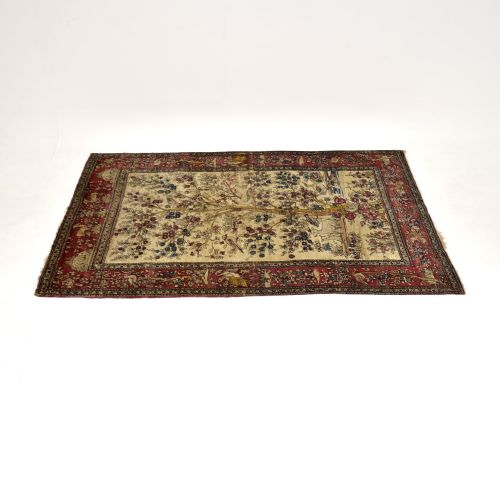
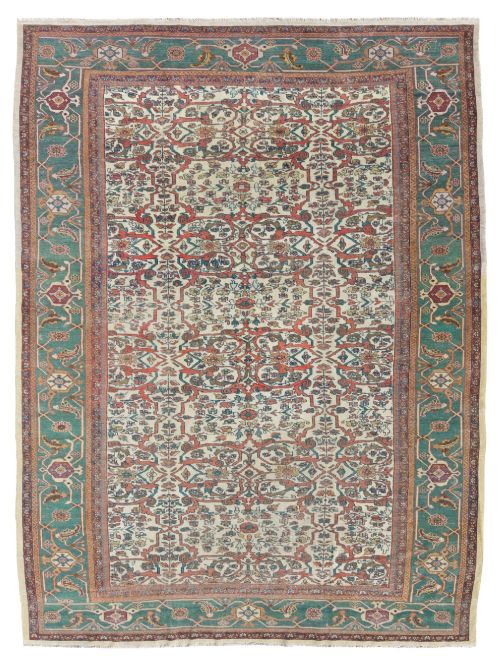
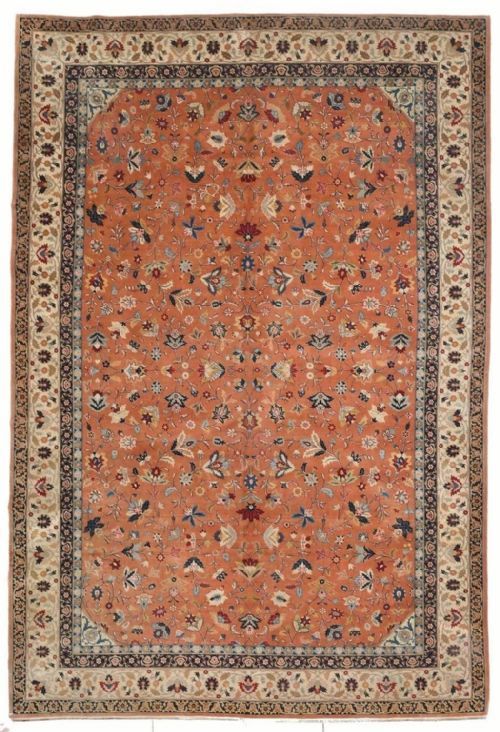
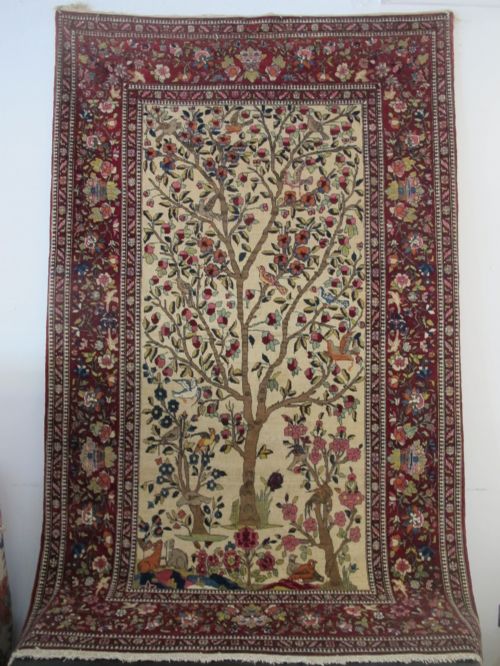
These antique Persian and regional rugs and carpets gathered under cream border wool rug bring warmth and structure to a room.
Cream Border Wool Rug
A cream border wool rug encompasses hand-knotted Persian and regional carpets originating from weaving centres such as Tabriz, Sultanabad, Senneh, and Isfahan, alongside pieces from Bessarabia and Nepal. These floor coverings span the late nineteenth and early twentieth centuries, dating from the eighteen-seventies through to nineteen-thirty.
The selection ranges from small room-size square carpets and corridor runners to large country house carpets and tribal kilims. Buyers seek these textiles for their decorative borders and traditional regional patterns that anchor interior spaces.
Materials and construction
The pieces are constructed predominantly from wool, cotton, and silk, combined in hand-knotted and flatweave techniques depending on the regional origin. Wool provides the durable pile for most room-size carpets and tribal textiles, whilst cotton frequently forms the foundational warp and weft threads.
Weavers utilised natural dyes to achieve the varied colour palettes seen across Persian Ziegler, Sultanabad, and Bakshiash types. Flatweave kilims and tent bands demonstrate alternative textile methods deployed across different tribal communities.
Assessing quality and finish
Knot density and precision of pattern execution distinguish finer room-size carpets from simpler village or tribal weaving. The crispness of drawing within the central fields and the secondary borders indicates the skill of the individual workshop or weaver.
The handling of the wool and the integrity of the structural foundation dictate how well a carpet retains its handle and pile depth over generations of use.
The Cream Border Wool Rug Glossary
- Warp
- The stationary vertical strings stretched on a loom before weaving begins. These foundational threads form the fringe at either end of a finished carpet.
- Weft
- The horizontal strands passed through the warp threads to pack down the knots and bind the structure together. They contribute to the handle and flexibility of the textile.
- Kilim
- A flatweave textile produced without a raised pile. These pieces rely on interlocking weft techniques to create geometric patterns.
- Pile
- The upright cut or looped wool fibres forming the usable surface of a carpet. Its density determines how the textile wears under foot.
Cream Border Wool Rug: Frequently Asked Questions
How do I clean an antique wool rug?
Gentle surface brushing and professional specialist immersion washing preserve the wool pile and natural dyes. Avoid harsh chemical agents that strip the lanolin from the fibres.
Regular light vacuuming without a rotating beater bar prevents dust accumulation within the foundation.
What underlay should I use?
A breathable mesh underlay prevents slipping and protects the cotton foundation from friction against hard flooring. It also provides a cushion that absorbs impact.
Ensure the underlay is slightly smaller than the perimeter of the rug to remain hidden from view.
How do I identify a Tabriz carpet?
Tabriz carpets typically feature intricate floral medallions and detailed corner designs woven with refined wool on sturdy cotton foundations. Their precise knotting reflects the output of established urban workshops.
They span various sizes, from corridor pieces to large country house formats dating from the late nineteenth century onwards.
Where were Ziegler carpets made?
Ziegler carpets were produced primarily in the Sultanabad region of west Persia for European export markets. They adapted traditional Persian designs with softer palettes and more open fields.
These pieces date predominantly from the late nineteenth century and remain popular for contemporary interiors.