

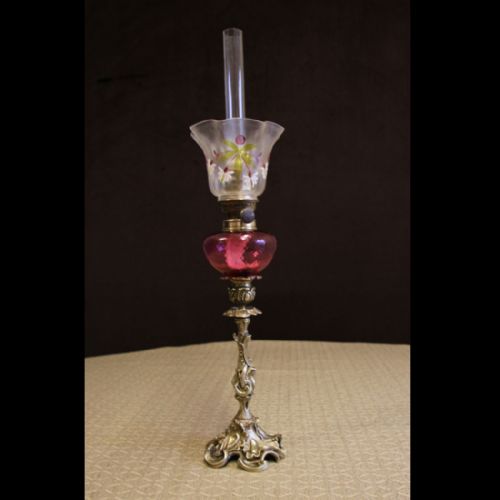
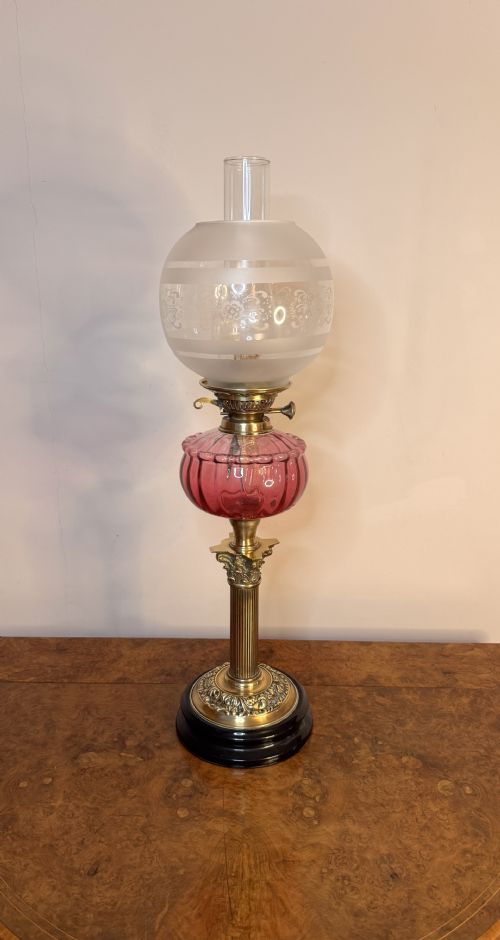
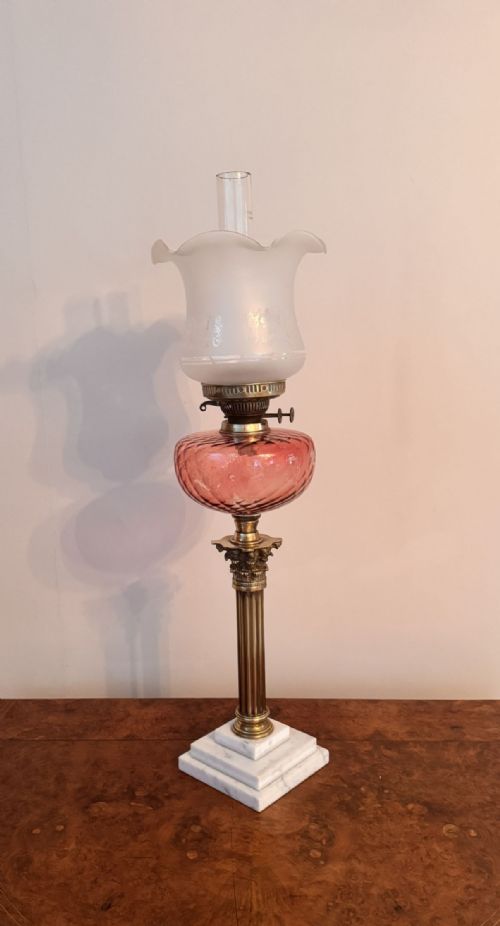
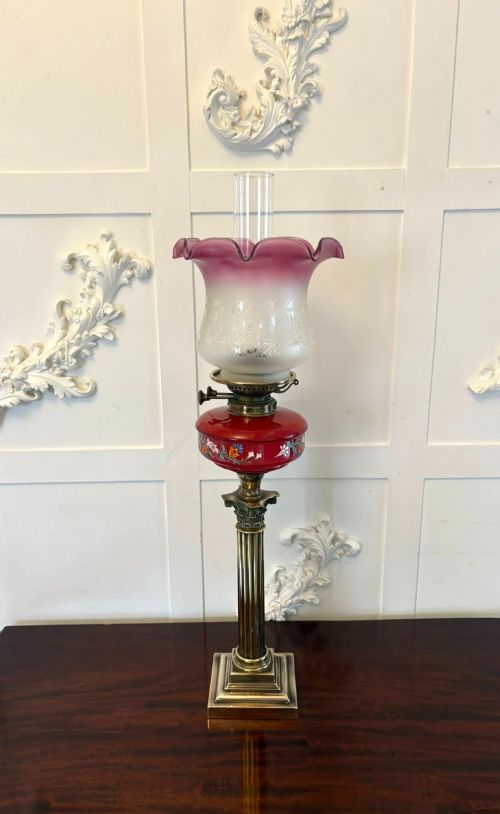
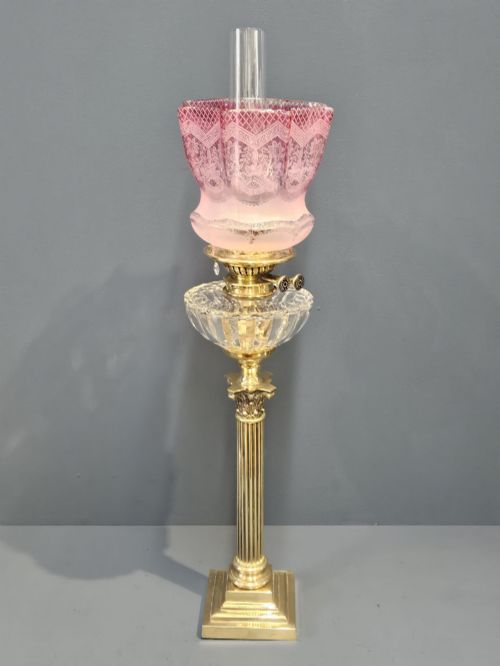
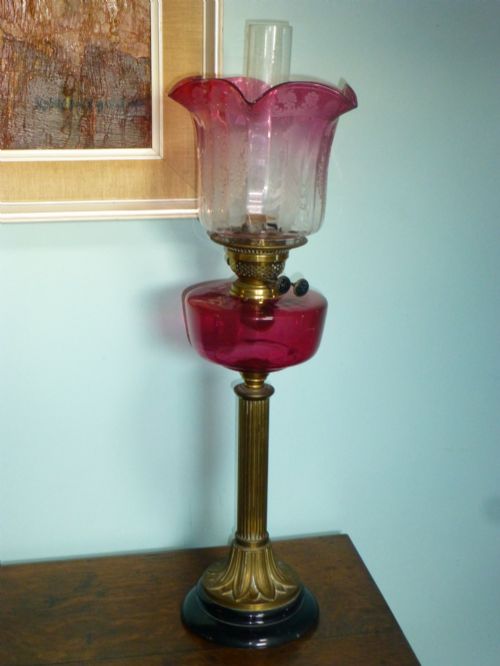
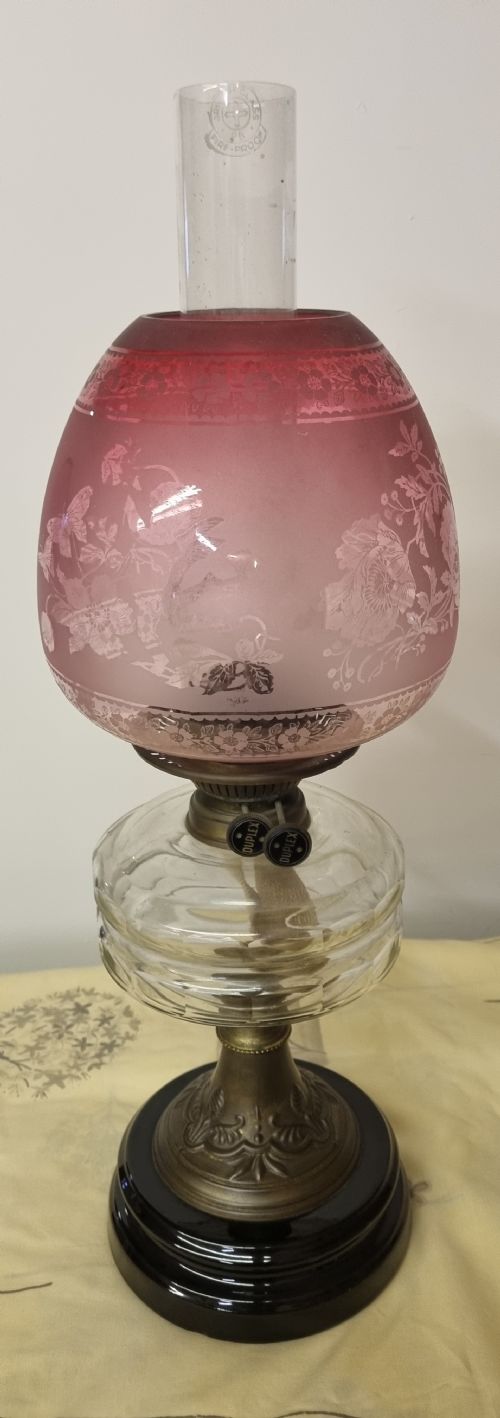
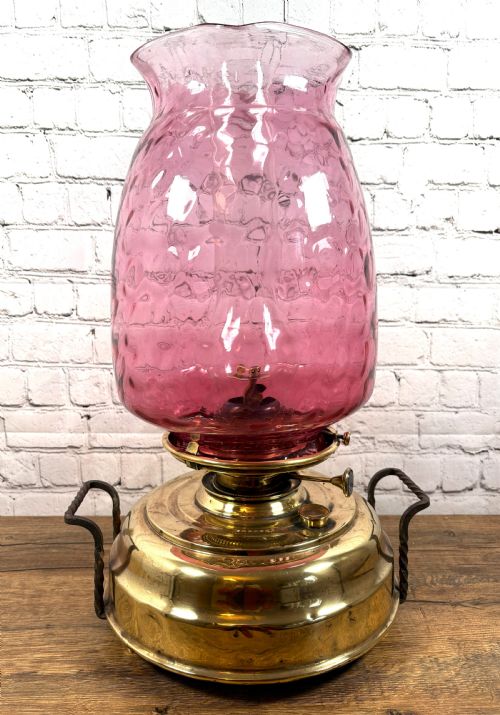


Cranberry Shade Paraffin Lamp
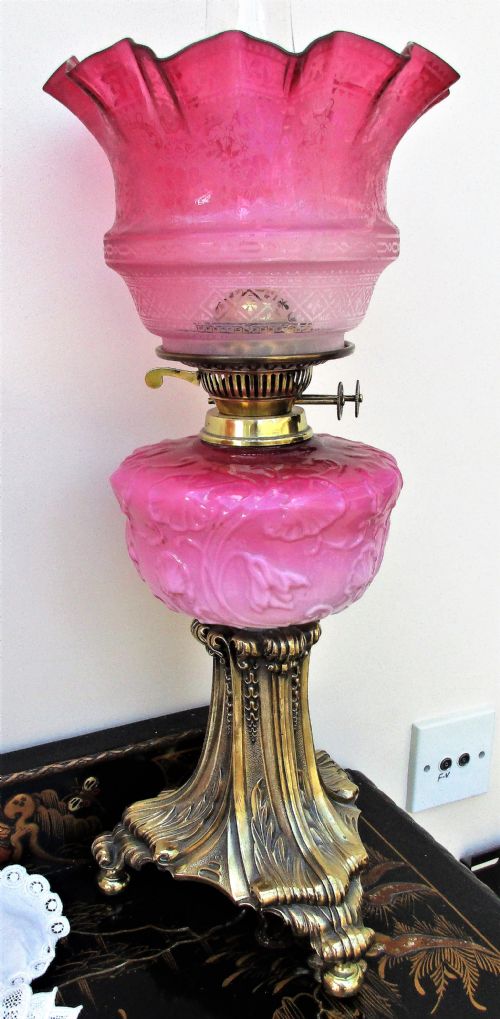
A cranberry shade paraffin lamp brings a warm, ruby glow to a room through its striking coloured glass and heavy metal base.
Cranberry Shade Paraffin Lamp
The cranberry shade paraffin lamp is primarily a Victorian lighting fixture combining a vibrant glass shade with a functional fuel reservoir. Buyers searching for a cranberry shade paraffin lamp will find various nineteenth-century and early twentieth-century examples spanning the Victorian and Edwardian periods.
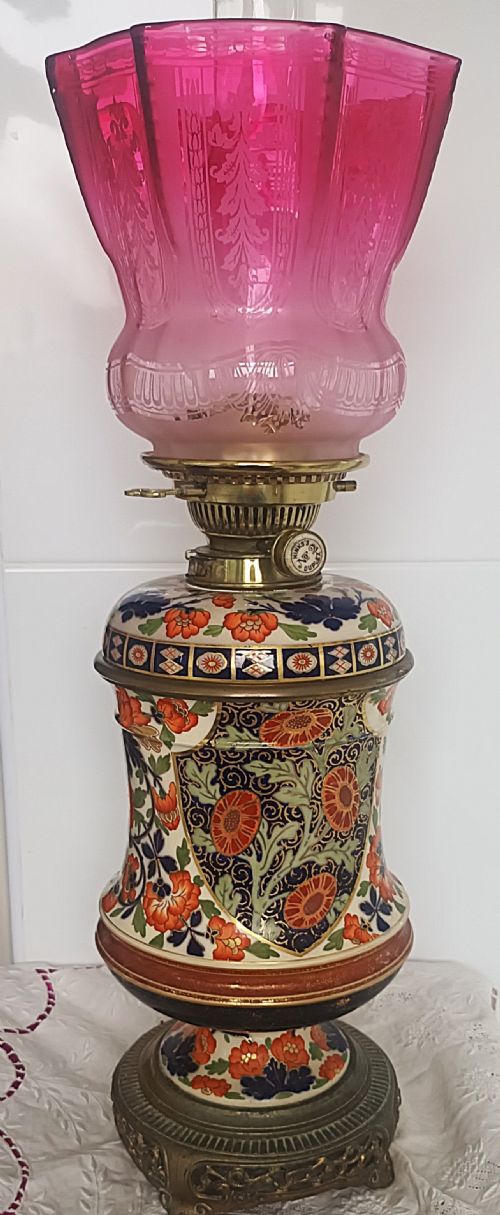
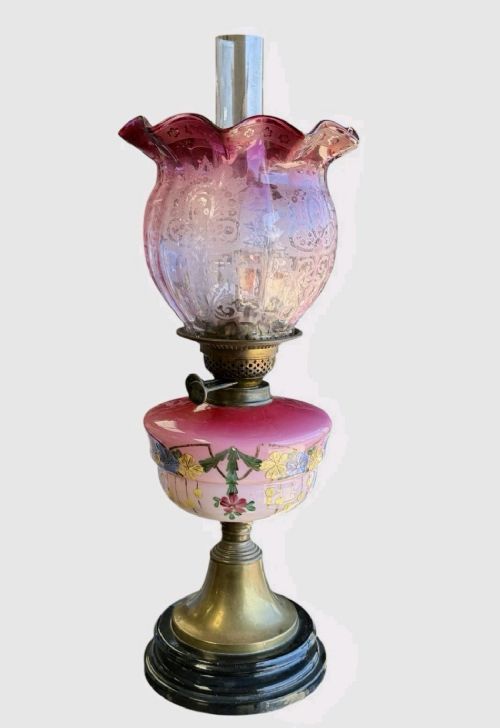
Most pieces encountered on this page pair a rich cranberry glass shade with a brass column, ceramic body, or cut glass font. Forms range from tall Corinthian column designs to hand-painted porcelain table lamps and double burner models.
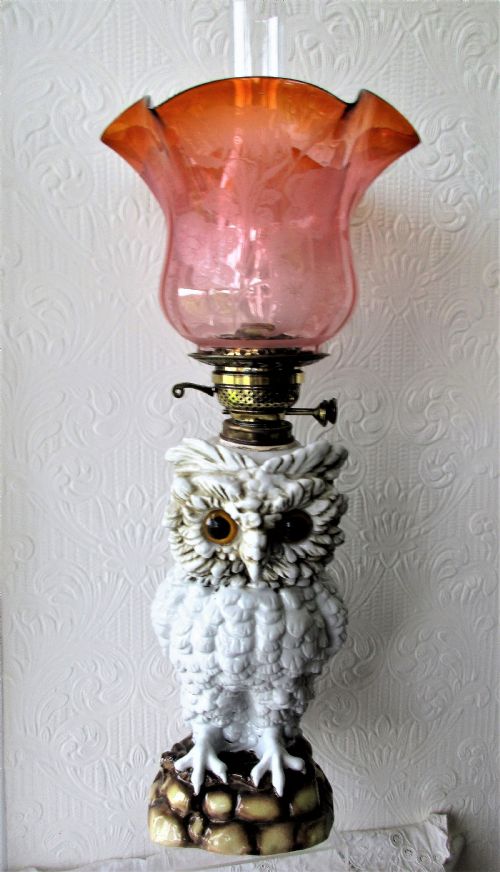
Origins represented in these items include English workshops as well as continental European porcelain manufacturers such as Sitzendorf. The selection focuses heavily on nineteenth-century domestic lighting forms designed for interior illumination.
Materials and construction
Brass and glass form the primary structural components, with brass used for columns, adjustable stands, and burner mechanisms. Cranberry glass is blown and shaped to create the characteristic intense pink or red shades, sometimes complemented by hand-painted details on the font.
Porcelain and ceramic elements appear in specific figural or column bodies, often decorated with botanical motifs or figural subjects like owls. Metal components frequently incorporate double burners, such as those by Hinks, mounted on weighted bases to support the height of the glass.
Cranberry Shade Paraffin Lamp Retail Price Guide 2026
Typical asking prices for cranberry shade paraffin lamp among the pieces listed under this phrase on Sellingantiques today, from the lower quarter to the upper quarter. They describe what is for sale here now, not the wider market.
Listings feature Victorian and Edwardian periods, utilising brass, cranberry glass, porcelain, and cut glass in column and figural forms.
Assessing quality and craftsmanship
Quality separates through the weight and finish of the brass casting, the depth of colour and hand-painting in the cranberry glass, and the complexity of the column design. Corinthian column models with crisp fluting and heavy brass bases sit at the higher end of the range.
The integration of maker-marked hardware, such as Hinks burner mechanisms, alongside undamaged cut or coloured glass fonts and matching shades, defines the finer examples. Simpler ceramic or plain glass variations represent more utilitarian nineteenth-century production.
Hinks·Taylor Tunnicliff·Sitzendorf
The Cranberry Shade Paraffin Lamp Glossary
- Paraffin lamp
- A domestic lighting device that burns liquid paraffin or kerosene through a wick raised by a mechanical burner. These objects were widely used in homes before the widespread adoption of electricity.
- Cranberry glass
- A type of transparent glass coloured with gold chloride to produce shades from pale pink to deep crimson. It is frequently shaped into frilled or fluted lamp shades.
- Font
- The oil reservoir of a lamp, positioned beneath the burner and above the main column or base. Fonts are often made from clear, coloured, or cut glass, as well as decorated ceramic.
- Corinthian column
- An architectural column style featuring ornate acanthus leaves on the capital, frequently adapted for the stems of brass Victorian oil lamps. It adds formal vertical detail to the piece.
- Duplex burner
- A double-wick burner mechanism designed to provide a brighter flame than standard single-wick lamps. Many quality nineteenth-century examples incorporate this fitting.
Cranberry Shade Paraffin Lamp: Frequently Asked Questions
How do I light a paraffin lamp?
Raising the wick slightly above the metal gallery allows you to apply a match while turning the thumbwheel to control the flame height. Once lit, the glass shade or chimney is replaced to steady the draught.
Keeping the wick trimmed flat prevents smoking and ensures an even, bright illumination from the paraffin fuel inside the reservoir.
Are these lamps safe to use?
Most antique lamps are purchased for display and ambient lighting rather than daily primary illumination. Using modern lamp oil and ensuring the burner mechanism functions correctly is essential if you intend to burn fuel.
Checking that the font is free from cracks and the burner sits securely prevents leaks. Many buyers choose to convert them or simply enjoy them as decorative objects.
How do I date a Victorian oil lamp?
Dating relies on examining the burner patents, the style of the metal casting, and the form of the glass or ceramic body. Victorian examples often feature heavy brass Corinthian columns or hand-painted porcelain bodies characteristic of the late nineteenth century.
Maker names stamped onto the brass burner turnkeys provide precise manufacturing attribution. Edwardian and later twentieth-century pieces tend toward simpler adjustable brass stands.
How do I clean cranberry glass shades?
Washing the glass shade in warm water with mild washing-up liquid removes dust and soot safely. A soft cloth prevents scratching the coloured surface.
Avoiding harsh abrasives protects any hand-painted floral motifs or delicate glass textures present on the exterior of the shade.