

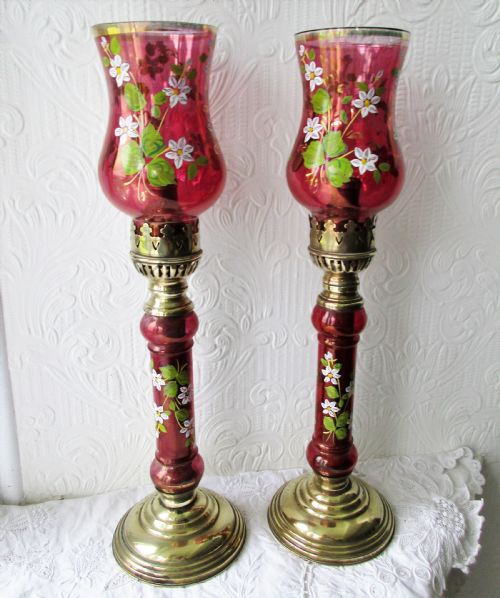


Cranberry Glass Table Lamp
Cranberry glass table lamp pieces combine rich ruby hues with gleaming brass and ceramic mounts to bring warm, atmospheric light into a room.
Cranberry Glass Table Lamp
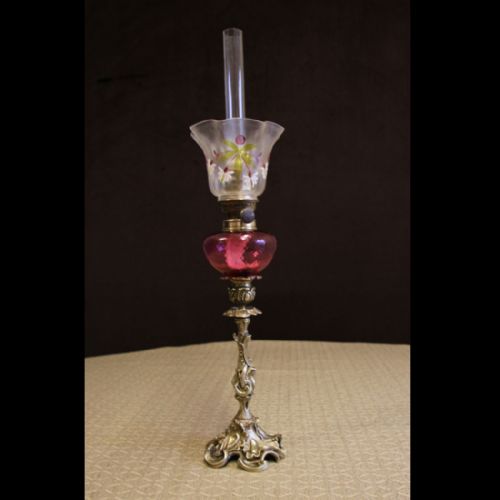
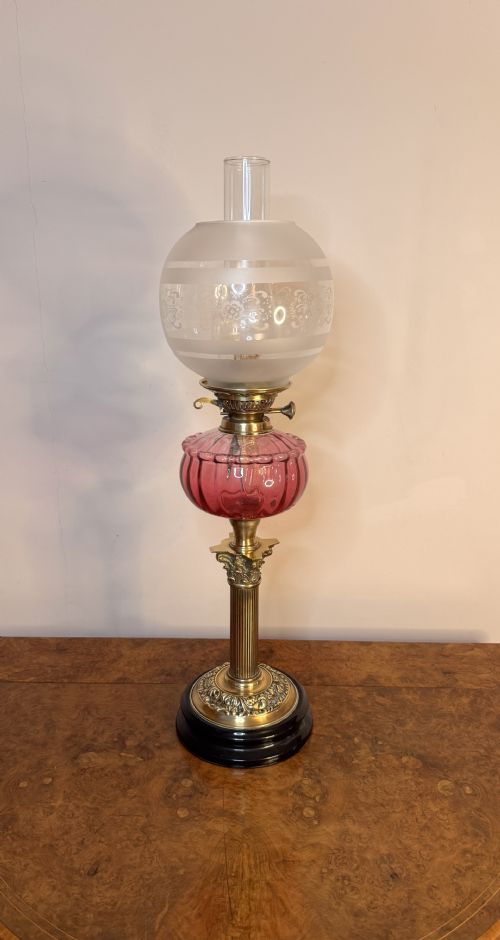
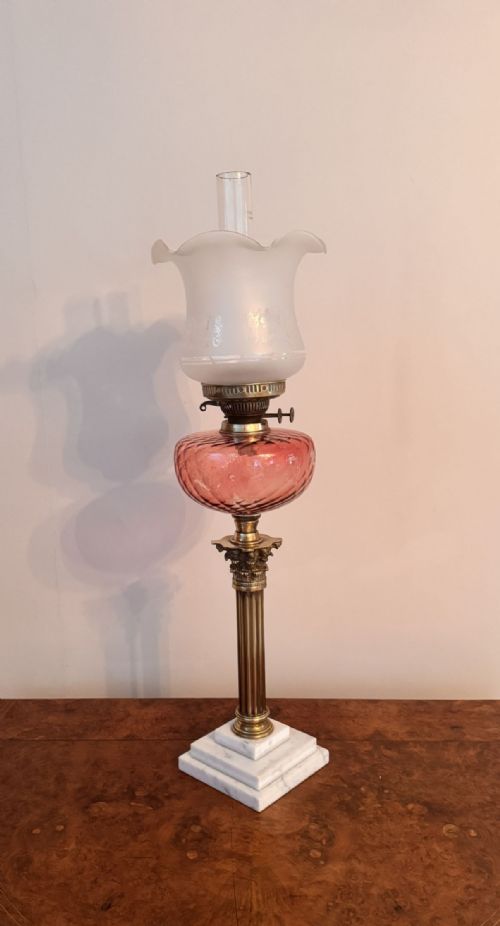
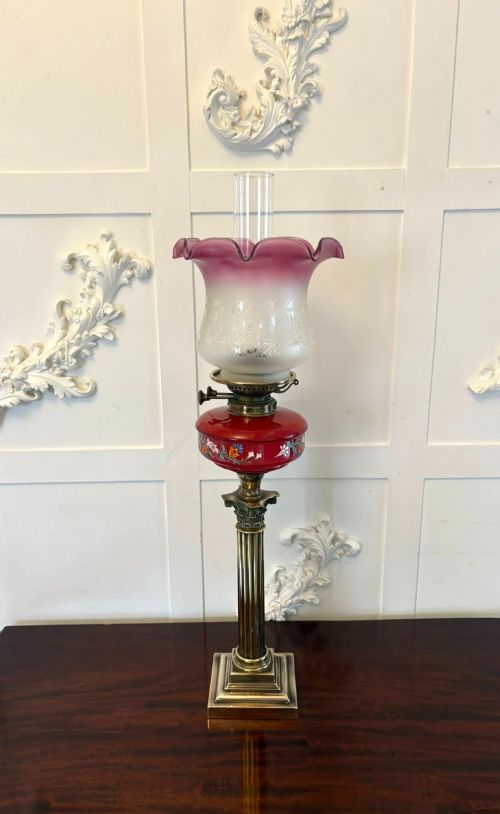
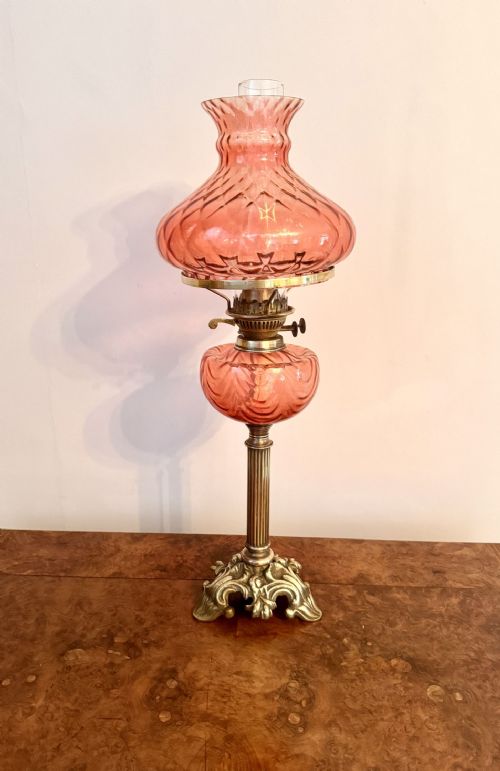
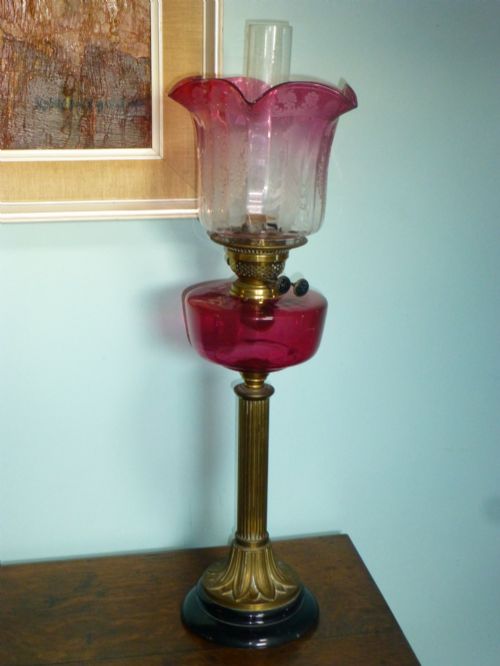
A cranberry glass table lamp brings together the deep, characteristic pink-red tone of tinted glass with period lighting fixtures. When searching for a cranberry glass table lamp, you encounter items predominantly rooted in the Victorian and Edwardian eras, spanning the nineteenth and early twentieth centuries.
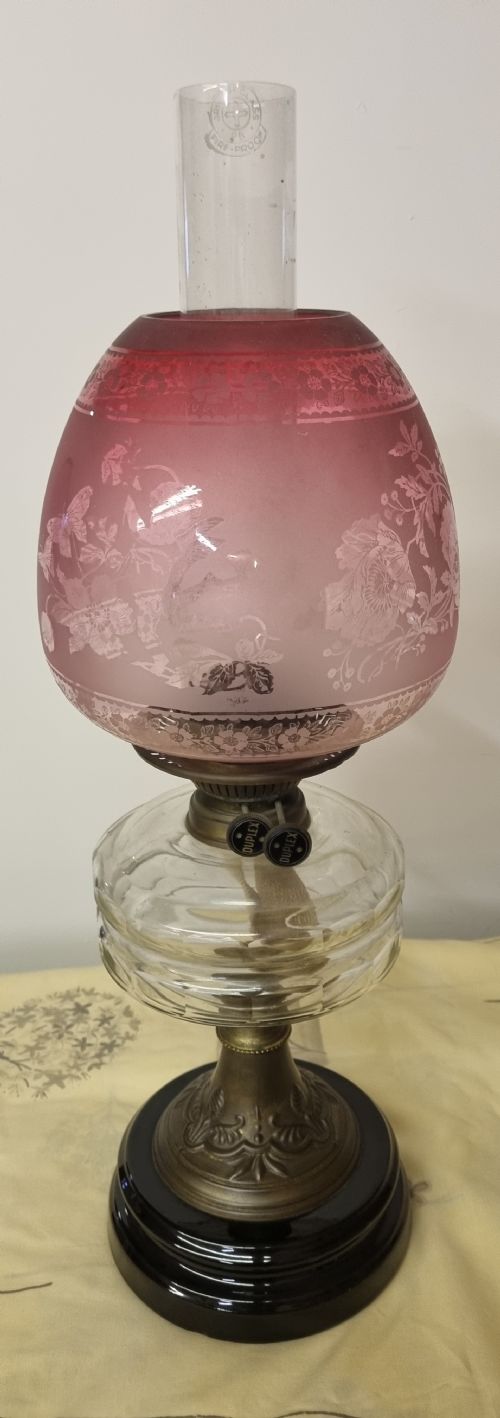
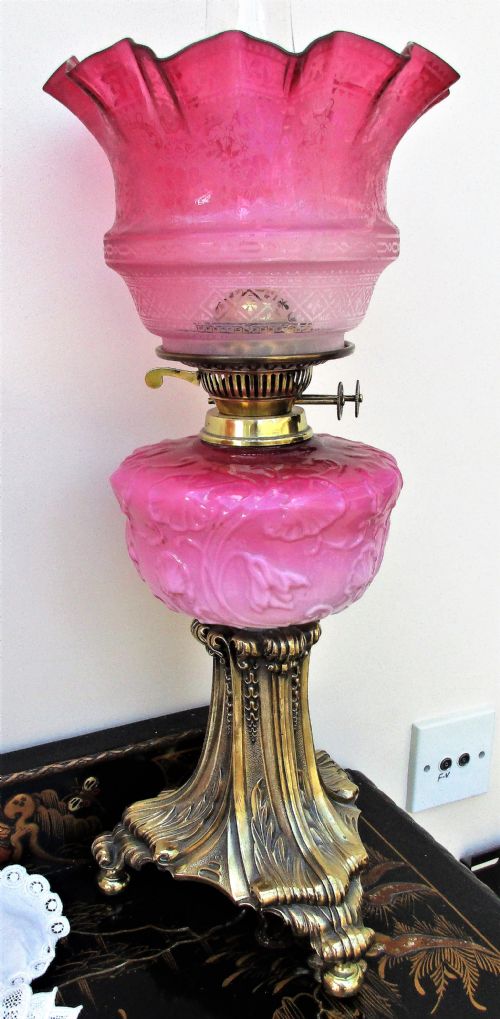
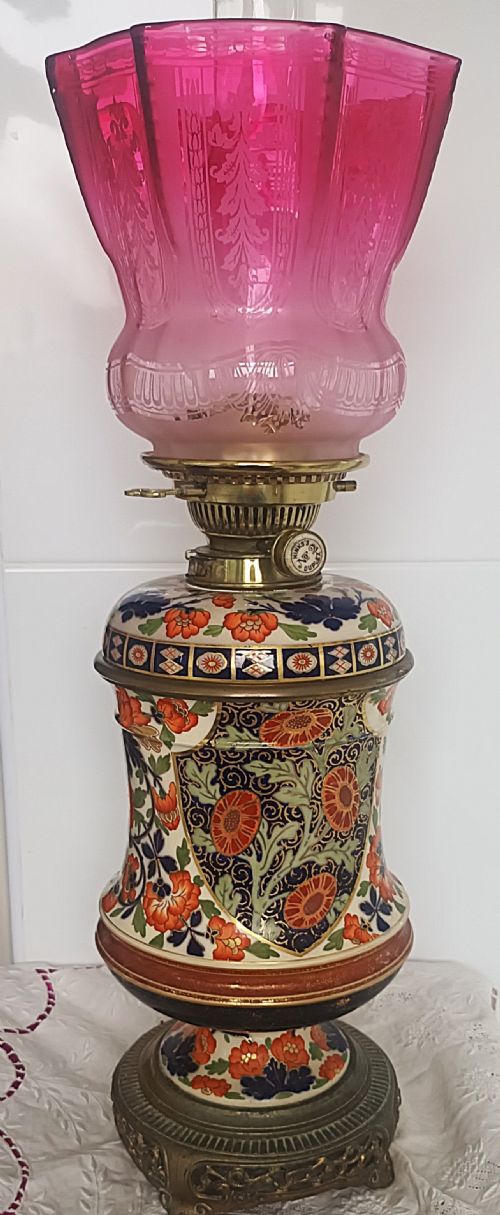
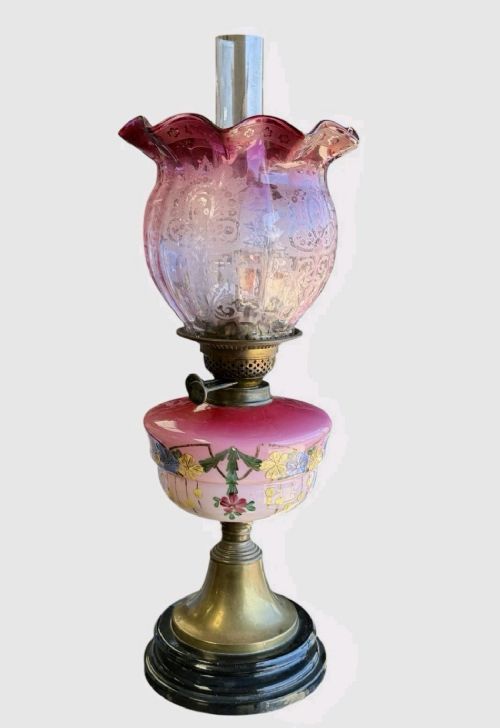
The selections on this page heavily feature oil lamps and converted oil lamps, alongside candle lamps and desk lamps. These pieces frequently pair vibrant glass fonts or shades with sturdy brass columns, ceramic bases, or porcelain figures.
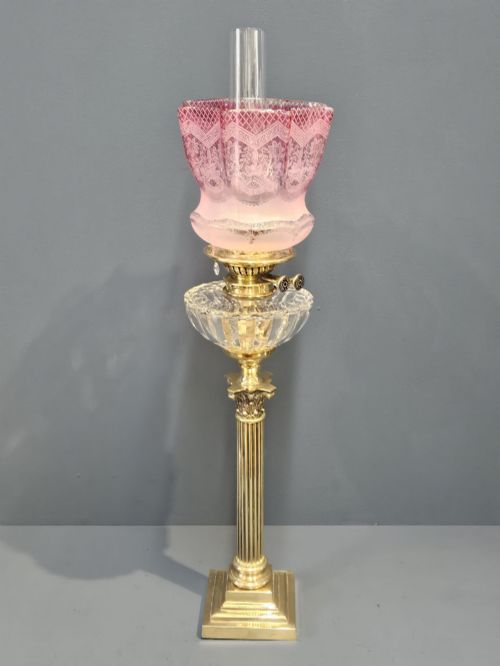
You will see column oil lamps, duplex double burner designs, and hand-painted fonts among the recurring forms. English and continental workshops produced these items, utilising styles ranging from standard Victorian patterns to French Rococo Revival and Corinthian column designs.
How They Were Made
These lamps rely on a combination of blown or moulded glass and cast metal components. Glassmakers achieved the characteristic cranberry colour by adding gold chloride or copper to the molten batch, creating rich pink and ruby shades that could be left plain, etched, or hand-painted.
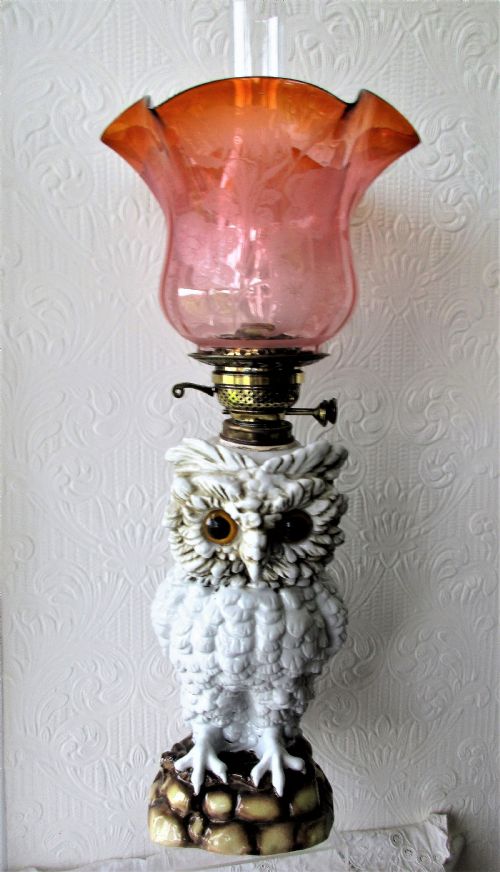
Metalwork forms the structural core of many pieces, with brass used extensively for Corinthian columns, reeded stems, and mounting collars. Heavier examples incorporate ceramic or porcelain bodies, sometimes modelled as figurative subjects like owls or decorated with botanical motifs.
Cranberry Glass Table Lamp Retail Price Guide 2026
Typical asking prices for cranberry glass table lamp among the pieces listed under this phrase on Sellingantiques today, from the lower quarter to the upper quarter. They describe what is for sale here now, not the wider market.
Listings feature items spanning the 19th Century, Victorian, Edwardian, and early 20th Century periods.
What Varies in Quality
Quality in these lamps rests on the weight and crispness of the casting work and the depth of colour in the glass. Superior examples feature sharply defined brass fluting on Corinthian columns, substantial metal bases, and heavy, richly saturated glass components rather than thin, flatly tinted alternatives.
The standard of secondary decoration further distinguishes the range. Hand-painted floral details, intricate etched patterns on shades, and the inclusion of named maker components elevate an item, separating standard utility lighting from more ambitious decorative parlour pieces.
Hinks·Taylor Tunnicliff·Sitzendorf
The Cranberry Glass Table Lamp Glossary
- Cranberry glass
- A type of transparent glass coloured with gold or copper oxide to produce shades ranging from pale pink to deep ruby. It is characteristic of nineteenth-century decorative glassware.
- Duplex burner
- A double-wick lighting mechanism popular on Victorian oil lamps. It produced a brighter flame than single-wick burners and required a wider gallery.
- Corinthian column
- An architectural column style featuring ornate, acanthus-leaf capitals adapted by makers for lamp stems. Brass versions of this form appear frequently in Victorian lighting.
- Font
- The oil reservoir of a lamp, usually positioned above the base and beneath the burner. In these pieces, fonts are frequently formed from coloured or cut glass.
- Candle lamp
- A specialised lighting fixture designed to hold a wax candle rather than burn oil. They often incorporate glass shades to diffuse the light.
Cranberry Glass Table Lamp: Frequently Asked Questions
What periods do these lamps come from?
The pieces available predominantly date from the Victorian and Edwardian eras, spanning the mid-nineteenth century through to the early twentieth century.
Craftsmanship from these periods emphasises durable brass and detailed glass production techniques.
How were original oil lamps powered?
Original oil lamps utilised liquid fuel drawn up through fabric wicks via adjustable burners. Many surviving examples have since been adapted for modern electrical use.
Double burner systems were common on larger tall lamps to generate increased illumination.
What materials are paired with the glass?
Brass forms the primary metal structure for columns, bases, and desk lamp frames. Ceramic, porcelain, and silver-plated elements also appear frequently across the different forms.
Hand-painted decoration and etched designs frequently adorn the glass shades and fonts.
How do I identify a Victorian lamp?
Victorian examples often display heavy brass Corinthian columns, reeded stems, or moulded porcelain bodies, such as figurative owl designs. The presence of oil lamp mechanisms or double burners is a strong indicator of this era.
Stylistic influences from French Rococo Revival also point towards nineteenth-century production.