



Cranberry Glass Wine Glass
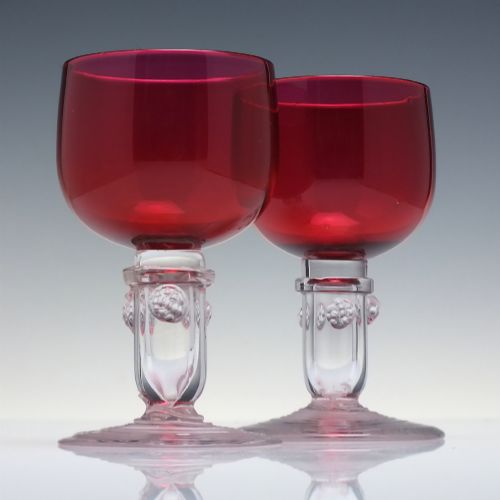
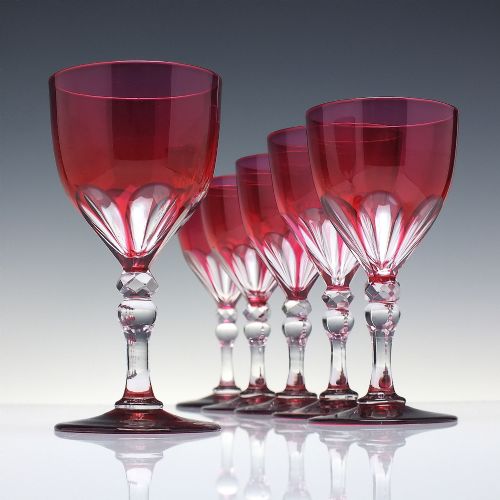
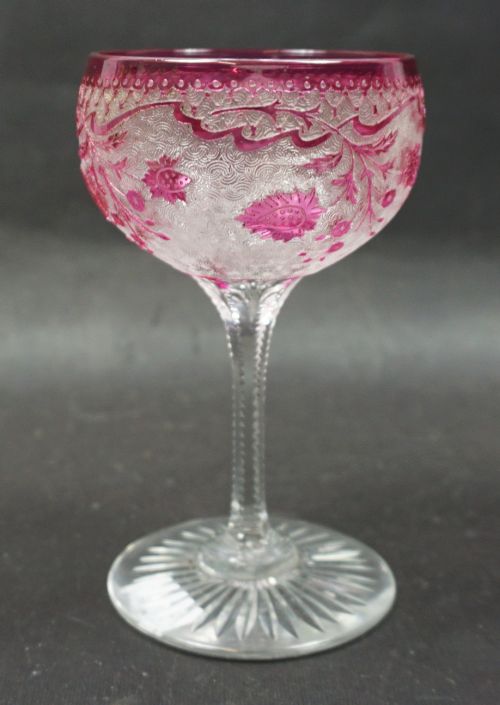
These cranberry glass wine glass pieces bring rich, deep colour to a table, combining intense hues with clear crystal stems or mounts.
Cranberry Glass Wine Glass
A cranberry glass wine glass typically dates from the Victorian and Edwardian eras, spanning the mid-nineteenth century up to the early twentieth century. You will encounter individual stems, pairs, and full matched sets of six or fifteen pieces.
The selection ranges from smaller wine glasses and taller hock glasses to champagne coupes and larger serving decanters. Most examples originate from English and French makers working in distinct nineteenth-century styles.
Alongside standard wine glasses, related glassware includes overlay decanters and engraved jugs featuring botanical or avian motifs. These drinking vessels formed part of larger dining services used for formal entertaining.
Assessing quality and craftsmanship
The depth and uniformity of the cranberry colour distinguish finer examples from standard production. Rich, consistent tones indicate careful control during the gold-infused melting process.
Engraved ornamentation shows varying degrees of skill, with crisp, detailed botanical or vine motifs marking superior work. The weight and clarity of the supporting lead crystal or silver plate mounts also influence the overall standard of a piece.
Cranberry Glass Wine Glass Retail Price Guide 2026
Typical asking prices for cranberry glass wine glass among the pieces listed under this phrase on Sellingantiques today, from the lower quarter to the upper quarter. They describe what is for sale here now, not the wider market.
Some decanters feature finely engraved birds pecking at grapes, proving that even Victorian glassware had a sense of humour about harvest time.
The Cranberry Glass Wine Glass Glossary
- Cranberry Glass
- A type of glass coloured by the addition of gold chloride, producing shades from pale pink to deep red. It became particularly popular during the Victorian period for tableware and decorative items.
- Overlay Glass
- Glass created by casing one layer of coloured glass over a base layer of clear or contrasting glass. Artisans cut through the outer layer to expose the underlying colour, creating patterned designs.
- Hock Decanter
- A tall, slender decanter traditionally used for serving German white wines or hock. These often feature coloured overlay glass and engraved botanical decorations.
- Champagne Coupe
- A shallow, broad-bowled stemmed glass designed for sparkling wines. Victorian examples frequently paired coloured bowls with clear crystal stems and engraved details.
- Lead Crystal
- Glass containing lead oxide, which increases brilliance, weight, and clarity. It is commonly used alongside cranberry glass to form stems, bases, and decanter stoppers.
Cranberry Glass Wine Glass: Frequently Asked Questions
How do I clean antique cranberry glass wine glasses?
Wash these pieces gently by hand in warm, soapy water using a soft cloth. Avoid using abrasive sponges or placing them in a dishwasher, which can damage the delicate glass surface.
Rinse thoroughly and dry with a lint-free cloth to maintain the clarity of the crystal and the richness of the cranberry hue.
Can I use these wine glasses for daily dining?
While these items were originally made for dining, their age and delicate hand-blown nature mean they require careful handling. Many collectors reserve them for special occasions rather than everyday use.
Hand-washing and storing them securely away from heavy tableware will help preserve the glass for years to come.
How can I tell Victorian pieces from Edwardian ones?
Victorian pieces, generally dating from the mid-to-late nineteenth century, often feature heavier engraving and deep, rich cranberry tones. Edwardian items tend to show lighter styling and sometimes incorporate sterling silver mounts.
Examining the pontil mark on the base can also offer clues regarding the manufacturing period and technique.
What is the difference between cranberry glass and ruby glass?
Cranberry glass is coloured specifically using gold chloride, resulting in a distinct pinkish-red hue with bright transparency. Ruby glass often utilises different metallic oxides, such as copper, producing a darker and denser red.
Holding the glass to the light helps reveal the characteristic golden undertones unique to true cranberry pieces.