
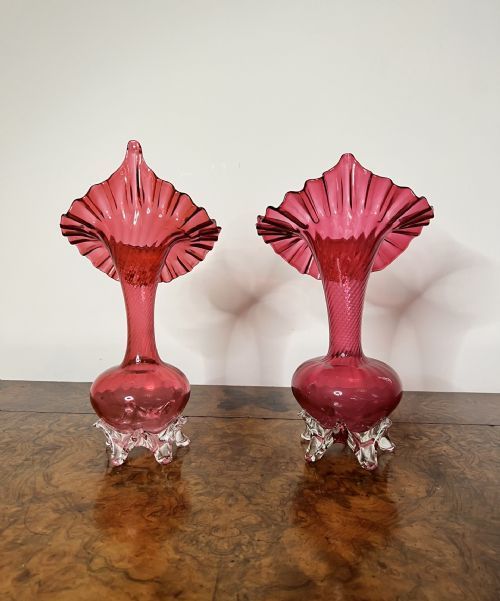


Cranberry Glass Vase
These cranberry glass vase pieces range from trumpet forms to epergnes, bringing intense pink-red colour and Victorian manufacture to any room.
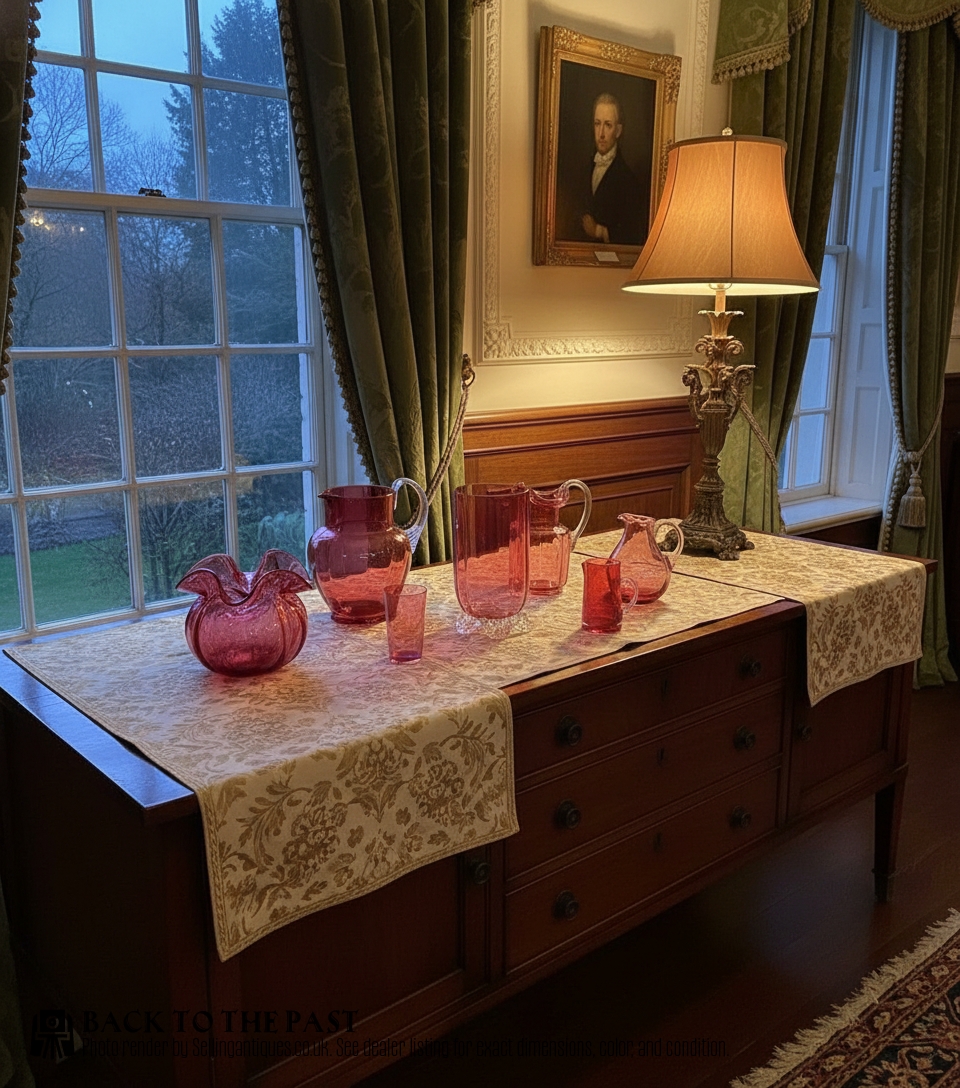
Cranberry Glass Vase
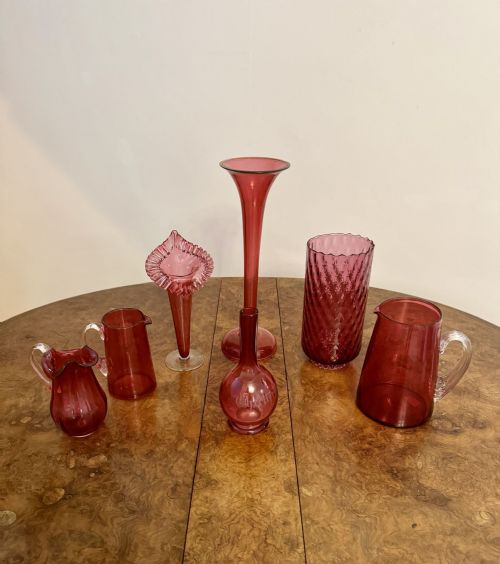
A cranberry glass vase search uncovers items spanning the Victorian era through to the late twentieth century, drawing on English and Bohemian origins. Collectors encounter trumpet shapes, jack in the pulpit forms, and elaborate epergnes alongside mantle lustres and table centrepieces.
The objects frequently originate from the nineteenth century, with Victorian pieces dominating the available forms. Buyers also meet Art Nouveau and Art Deco interpretations alongside items featuring clear glass, gold leaf, and enamel details.
How they were made
Makers achieved the distinctive pink-red hue by adding gold chloride to molten glass, which produced the characteristic cranberry colour upon reheating. Craftsmen then shaped the vessels through blowing and manipulation, often creating crimped and fluted necks or applying clear glass overlays.
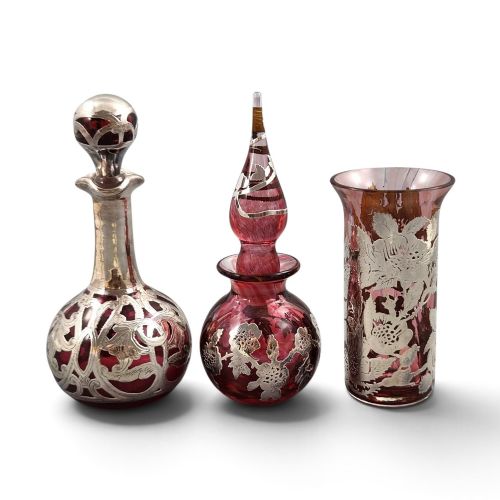
Decoration involved several distinct techniques including hand-painted white enamel figures, cut crystal faceting, and surface gilding. Certain workshops combined the glass with silver mounts, brass fittings, or uranium green glass bases to complete the composition.
Cranberry Glass Vase Retail Price Guide 2026
Typical asking prices for cranberry glass vase among the pieces listed under this phrase on Sellingantiques today, from the lower quarter to the upper quarter. They describe what is for sale here now, not the wider market.
Listings demonstrate that Victorian pieces frequently combine cranberry glass with clear crystal overlays, brass components, and enamel painting.
What varies in quality
Quality rests upon the depth and evenness of the colour distribution within the glass body, alongside the crispness of any cut crystal panels or overlay work. Superior examples display refined proportions in challenging forms like jack in the pulpit or trumpet shapes.
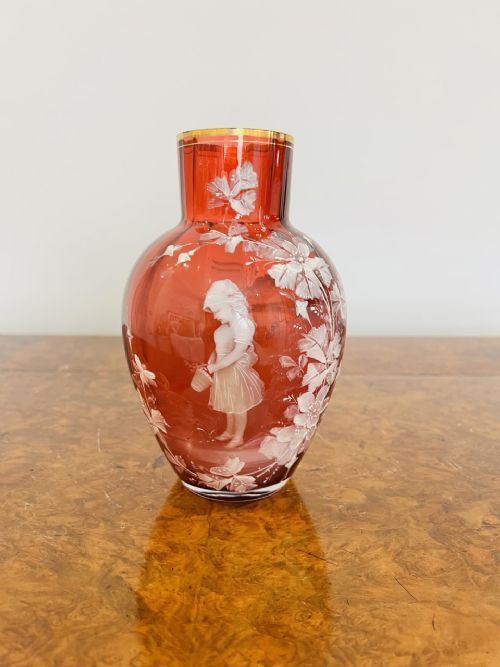
The standard of secondary ornamentation separates ordinary production from finer pieces. Hand-painted enamel detailing, such as Mary Gregory figures, and substantial silver or gilt mounts elevate the execution of the vessel significantly.
Thomas Webb and Sons·Gorham·Stevens and Williams
The Cranberry Glass Vase Glossary
- Cranberry Glass
- A transparent red-pink glass coloured with gold chloride. It became immensely popular during the Victorian period for tableware and decorative vessels.
- Epergne
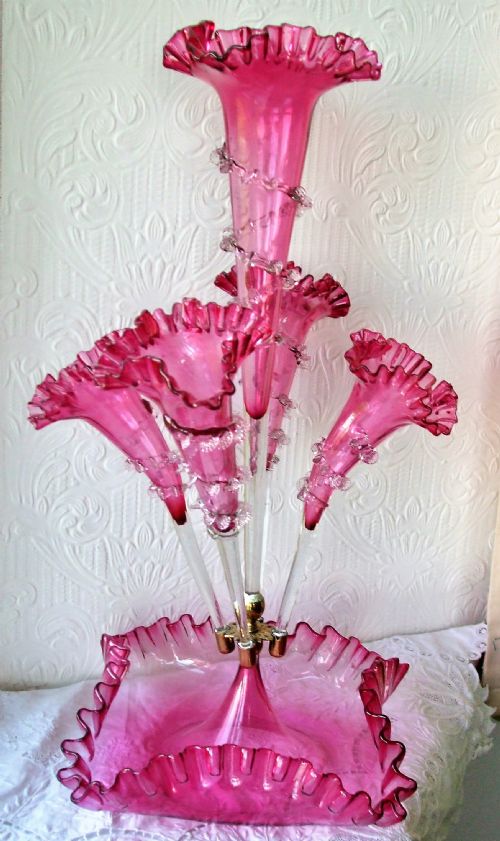
- A large table centrepiece featuring a central bowl with multiple detachable arms and trumpets. These holders typically display matching coloured glass components.
- Jack in the Pulpit
- A decorative glass vase shape featuring a wide, flattened, and swept-back rim resembling a flower blossom. The form required considerable skill from the glassblower to shape correctly.
- Mantle Lustre
- A decorative glass ornament hung with crystal prisms, designed to stand on a fireplace mantle. They frequently incorporate enamel painting and gilt accents.
- Mary Gregory
- A style of glassware decorated with white enamel silhouettes depicting children in pastoral settings. The technique gained widespread favour in the nineteenth century.
Cranberry Glass Vase: Frequently Asked Questions
What is cranberry glass?
Cranberry glass is a translucent red-pink material created by introducing gold into the molten glass batch. Artisans shaped this mixture into decorative vessels during the nineteenth century.
The colour varies from pale rose to deep ruby depending on the gold content and the reheating process. It forms the basis of many Victorian table ornaments and vases.
How do I date a vase?
Dating relies on examining manufacturing techniques, stylistic markers, and any accompanying hallmarks on silver mounts. Victorian pieces often feature hand-blown pontil marks and traditional enamel decoration.
Later productions from the twentieth century show different base finishes and sharper cutting techniques. Comparing the form against known period catalogues helps confirm the era.
What was an epergne used for?
An epergne served as an elaborate table centrepiece for formal dining in the nineteenth century. The central bowl held fruit or flowers while the trumpet vases supported additional blooms.
These pieces brought height and colour to dining tables during Victorian gatherings. They were dismantled carefully for cleaning and storage between uses.
How should I display them?
Display these vases where natural light can pass through the glass to highlight the colour intensity. Placing them near a window or on a well-lit mantle enhances the visual depth.
Keep them away from direct heat sources and handle epergne arms with care when arranging flowers. Gentle washing in warm soapy water maintains the finish without harming any gilding.