


White Enamel Glass Vase
White enamel glass vase selections bring Victorian and Art Nouveau floral work into modern rooms through opaline and coloured glass.
White Enamel Glass Vase
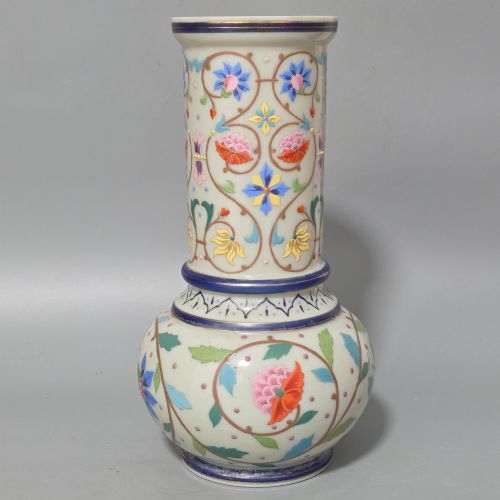
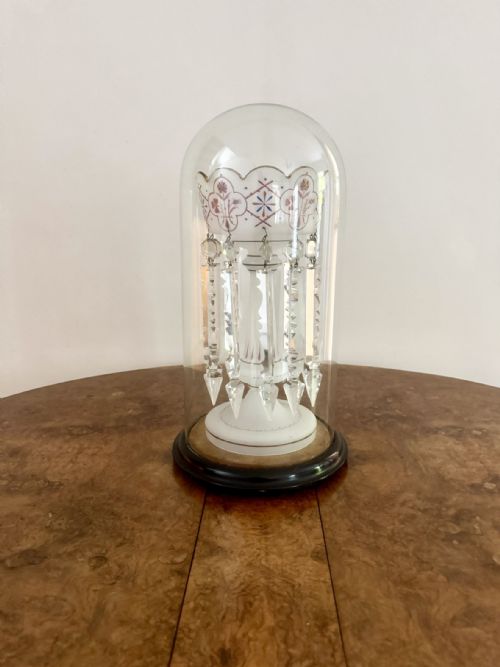
A white enamel glass vase search uncovers nineteenth-century decorative items produced in Victorian and Art Nouveau styles, spanning dates from eighteen fifty to nineteen ten. These vessels include mantel lustres and bulb vases formed from opaline, cranberry, and blue glass.
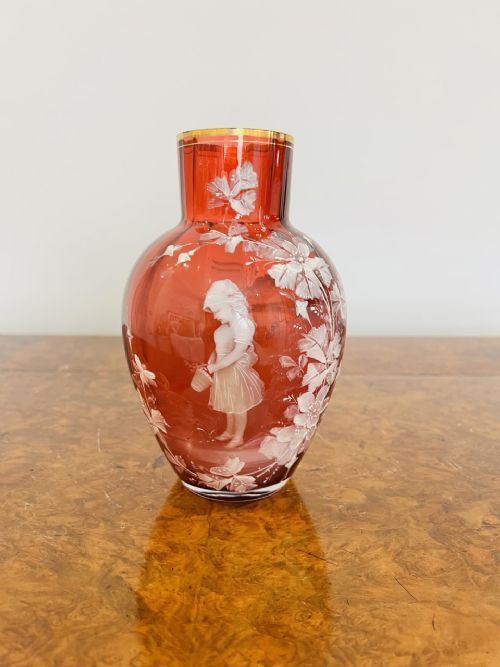
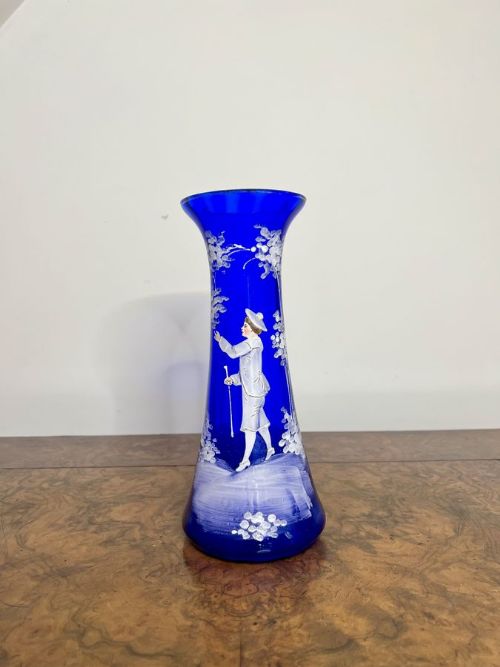
The objects appearing most frequently on this page combine white enamel decoration with contrasting glass bodies, often featuring painted floral motifs or gilt work. Makers and designers of the period utilised techniques associated with Thomas Webb and Mary Gregory styles to ornament the surfaces.
Buyers encounter various forms ranging from small cabinet vases to large decorative mantel lustres paired with glass domes. The structural varieties show influences from the Victorian Aesthetic Movement alongside later Art Nouveau curved lines.
Materials and construction
Makers formed these vessels using opaline glass, cranberry glass, and blue glass as foundational bodies, sometimes applying gold leaf highlights to enrich the surface. The primary manufacturing technique relied on hand-blowing glass into moulds or free-forming shapes before applying opaque enamel paint.
Artisans painted floral and figural scenes directly onto the glass using white enamel, which required careful firing to bond the pigment to the curved surface. Overlay methods were also utilised, particularly in Bohemian production, to create layered glass effects before final enamelling.
Tiny painted children amidst white enamel foliage continue to smile from nineteenth-century glass.
Judging quality and execution
The refinement of the hand-painted white enamel work dictates the visual success of each piece, distinguishing delicate floral brushwork from heavier, hurried application. Finer examples display precise control over the enamel thickness and shading, particularly in pieces attributed to skilled glasshouses.
The integration of the enamel with the underlying opaline or coloured glass body determines the durability and depth of the decoration. Superior specimens maintain crisp details in the gilt and enamel elements without excessive rubbing or loss to the raised surfaces.
Thomas Webb·Mary Gregory·Bohemian Overlay
The White Enamel Glass Vase Glossary
- Opaline glass
- A type of semi-opaque glass with a delicate, milky appearance that takes white enamel painting particularly well. It became widely popular during the nineteenth century for decorative table wares.
- Mantel lustre
- A decorative vase fitted with hanging glass prisms around the rim, designed to sit on a fireplace mantel. They often feature hand-painted enamel decoration and gilt detailing.
- Cranberry glass
- A rich red-pink transparent glass created by adding gold chloride to the molten batch. It frequently serves as a contrasting background for white enamel floral scenes.
- Gold leaf
- Extremely thin beaten gold applied to glass surfaces to provide metallic accents and borders. It highlights the raised texture of the surrounding enamel work.
- Aesthetic Movement
- A nineteenth-century design style focusing on visual beauty rather than narrative or moral themes. Pieces from this movement often incorporate stylised natural motifs in enamel.
White Enamel Glass Vase: Frequently Asked Questions
How were white enamel glass vases used?
These vessels functioned primarily as decorative mantel ornaments or centrepieces for displaying fresh blooms in nineteenth-century homes. Their reflective glass surfaces and painted enamel motifs added colour and light to formal rooms.
Larger versions, such as mantel lustres with glass domes, served as grand decorative statements on parlour furniture. Smaller pieces were placed on cabinets or dressing tables for intimate display.
What is opaline glass?
Opaline glass is a semi-translucent material that diffuses light gently, creating a milky white appearance. It provided an ideal opaque canvas for intricate white enamel floral paintings.
This material gained immense popularity during the mid-nineteenth century for its soft texture and compatibility with gilding and enamel colours.
How do I date a glass vase?
Dating relies on observing the manufacturing style, the type of glass body, and the specific composition of the enamel decoration. Pieces from the eighteen fifties often feature simple opaline bulbs, while later nineteenth-century examples display elaborate Victorian Aesthetic motifs.
Art Nouveau pieces from the early twentieth century show more fluid, organic forms with stylised enamelling. Comparing the hue of the cranberry or blue glass helps narrow the production era.
How do I care for antique glass?
Antique glass requires gentle cleaning with a soft, dry cloth to remove dust from the surface and crevices. Avoid submerging pieces with gold leaf or delicate enamel in water, as moisture can damage the painted decorations.
Keep the vases away from direct sunlight and extreme temperature changes to protect the integrity of the glass and applied pigments.