


Cranberry Glass Pair
A cranberry glass pair brings intense crimson colour and matching symmetry to a table, uniting glassmaking skill with Victorian decorative ambition.
Cranberry Glass Pair
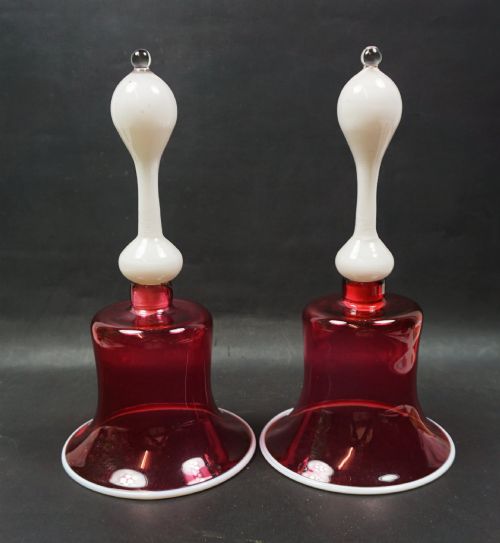
A cranberry glass pair consists of matching dual objects created in shades ranging from deep ruby to translucent pink, spanning the Victorian, Edwardian, and Art Nouveau periods.
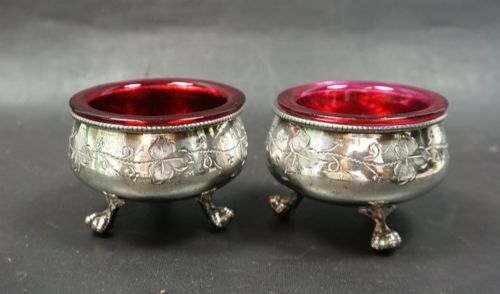
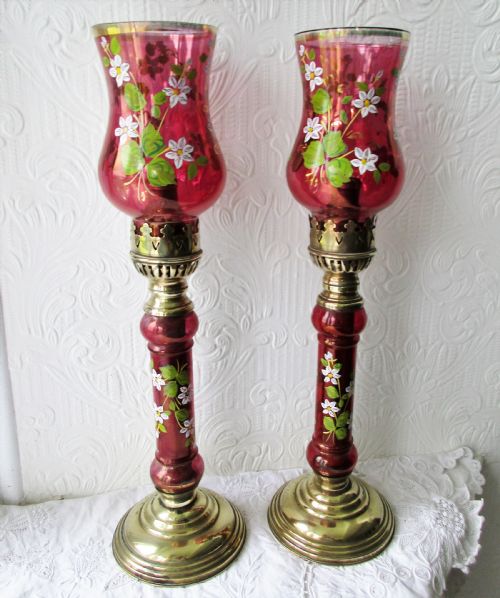
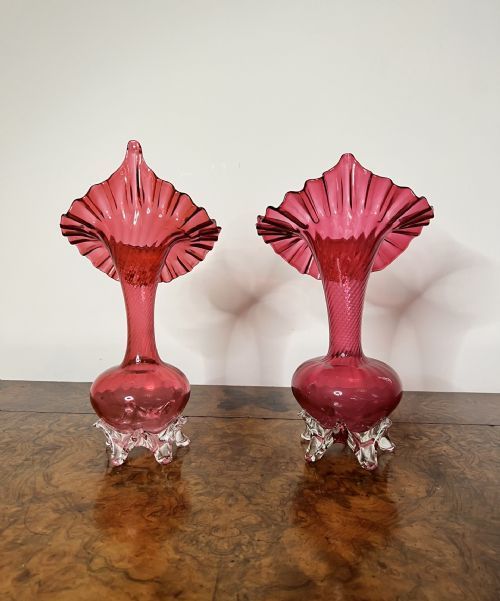
Buyers encounter forms such as decanters, salt cellars, trumpet vases, champagne coupes, and candle lamps, originating mainly from English and Bohemian workshops.
Matching pairs often combine the coloured glass with brass, silver plate, or clear crystal, serving functional dining roles or purely decorative mantelpiece displays.
Materials and Techniques
The distinctive red colour is achieved by adding gold chloride to the molten glass batch, creating rich tones from pale cranberry to dark ruby when fired.
Many items utilise an overlay technique, fusing a layer of cranberry glass over clear crystal before wheel-engraving floral or hunting motifs through to the clear layer beneath.
Metal mountings in brass and silver plate provide structural support for delicate glass liners, salt cellars, and oil lamps.
Some Victorian salt cellars come paired with tiny silver spoons, proving that miniature dining accessories commanded serious attention.
Quality Variations
Depth and evenness of the crimson hue distinguish superior pieces from paler, streaky examples, reflecting precise control over the gold content in the molten batch.
The crispness of wheel-engraved botanical or avian motifs separates standard moulded items from finely decorated glassware requiring advanced artisan skill.
Matching symmetry within the pair, alongside the integrity of paired metal frames or applied white glass handles, determines the overall cohesiveness.
Thomas Hart Stone
The Cranberry Glass Pair Glossary
- Cranberry glass
- A transparent red glass coloured with gold chloride. It became immensely popular during the Victorian era for tableware and decorative items.
- Overlay
- A technique of layering coloured glass over clear glass. Subsequent cutting or engraving exposes the clear layer underneath to create contrasting patterns.
- Jack in the pulpit
- A vase form with a fluted, flared rim resembling a flower blossom. Victorian makers frequently produced these in vibrant coloured glass.
- Lustre
- A mantelpiece ornament featuring a bowl with hanging glass prisms. These pieces often incorporate painted enamel or gilded accents.
- Champagne coupe
- A shallow, broad-bowled stemmed glass designed for sparkling wine. Victorian versions often pair coloured bowls with clear faceted stems.
Cranberry Glass Pair: Frequently Asked Questions
How do I clean antique cranberry glass safely?
Wash these items by hand in lukewarm water using mild dish soap. Avoid harsh scrubbers and sudden temperature changes to protect the fragile glass.
Dry them immediately with a soft cloth to prevent water spots on the surface and any attached metal components.
Were these pairs meant for daily use?
Most surviving matching sets served formal dining or parlour decoration rather than rough everyday tasks. Decanters, wine glasses, and salts held drinks and condiments during Victorian meals.
Floor vases and lustres remained static on mantelpieces or side tables to catch the ambient light.
How can I tell Victorian from Edwardian pieces?
Victorian items tend to feature heavier ornamentation, such as applied enamel, heavy gilt, and complex wheel-engravings of flora and fauna.
Edwardian and later Art Nouveau examples often lean towards simpler, flowing organic lines or restrained geometric cutting characteristic of the early twentieth century.
Why do some items combine glass with metal?
Makers added brass, silver plate, and solid silver frames to provide stability and secure fragile glass liners in items like salt cellars and candle lamps.
These metal additions also elevated the decorative status of the objects for affluent Victorian dining rooms.