



Cranberry Glass Oil Shade
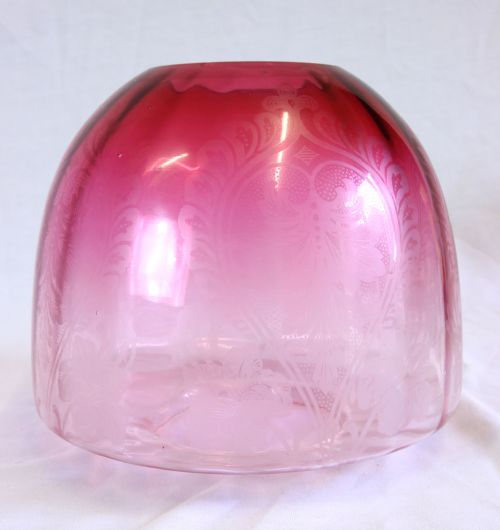
Cranberry glass oil shade pieces are vibrant Victorian and Edwardian lighting components prized for casting a warm, rich ruby glow.
Cranberry Glass Oil Shade
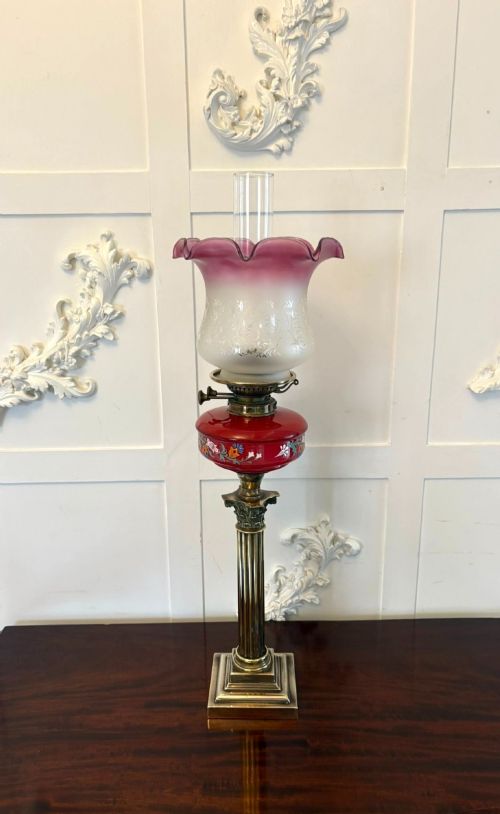
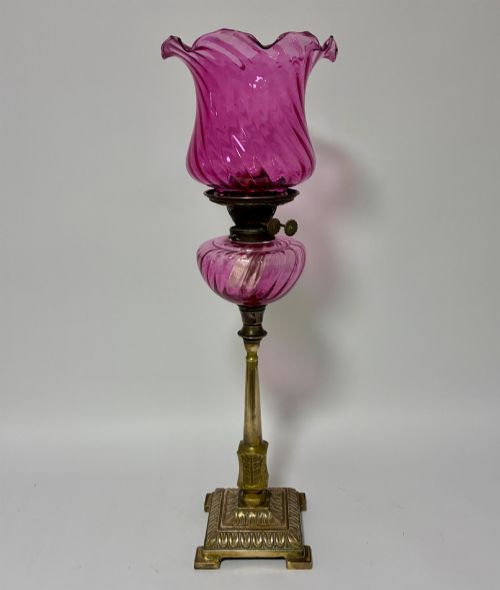
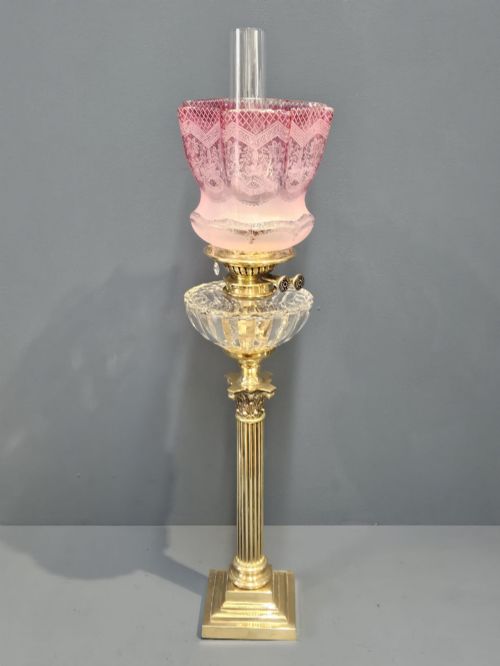
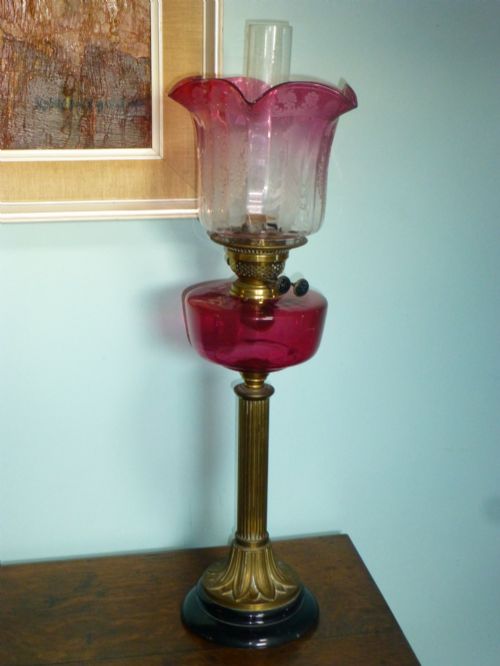
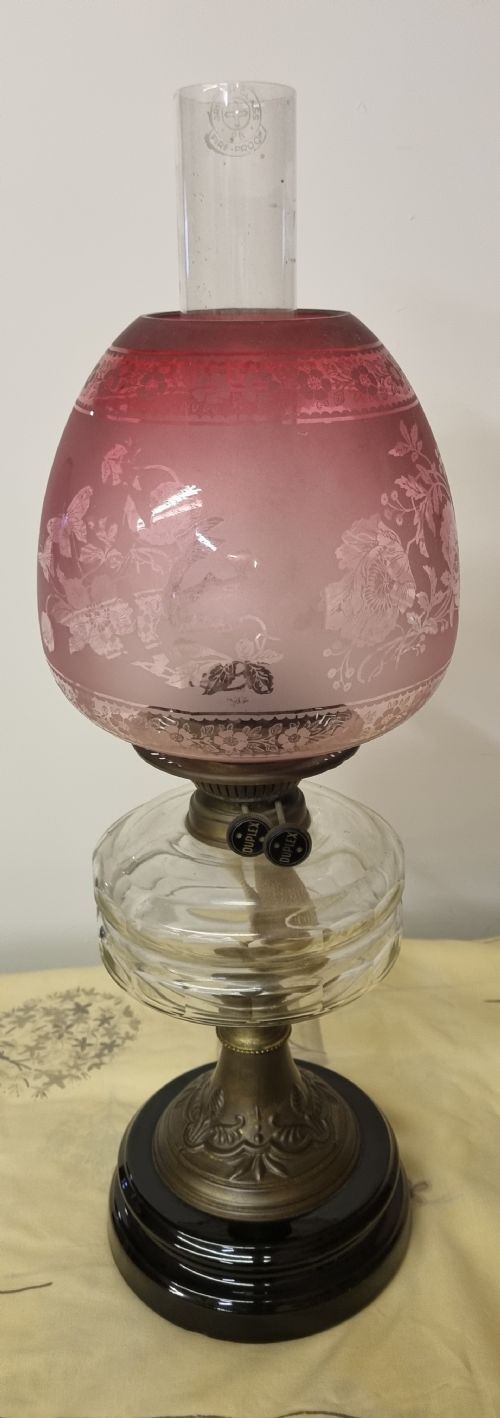
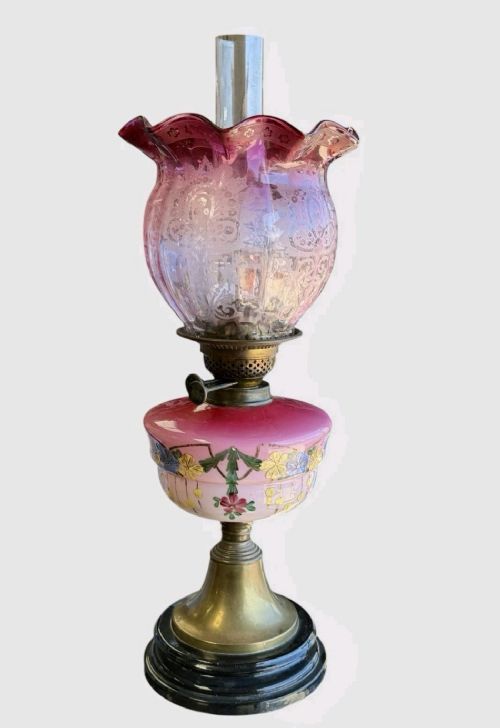
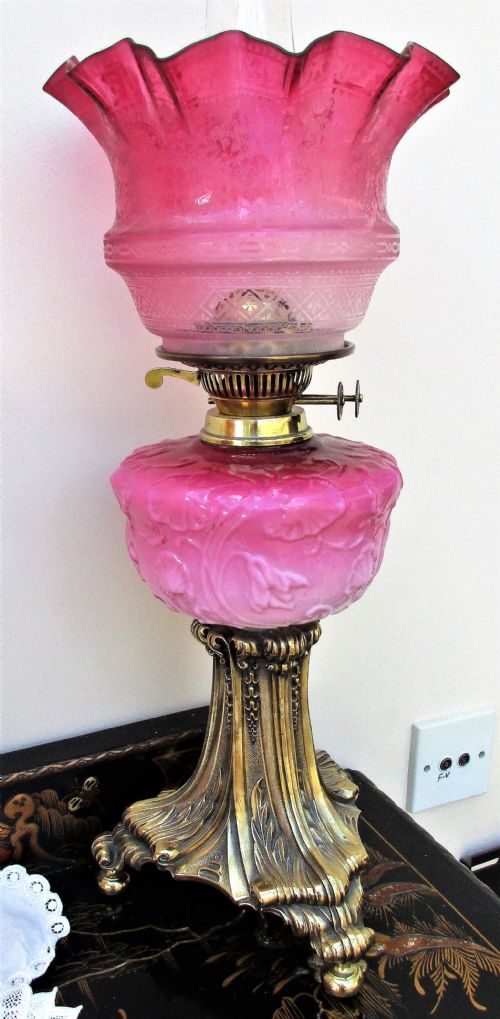
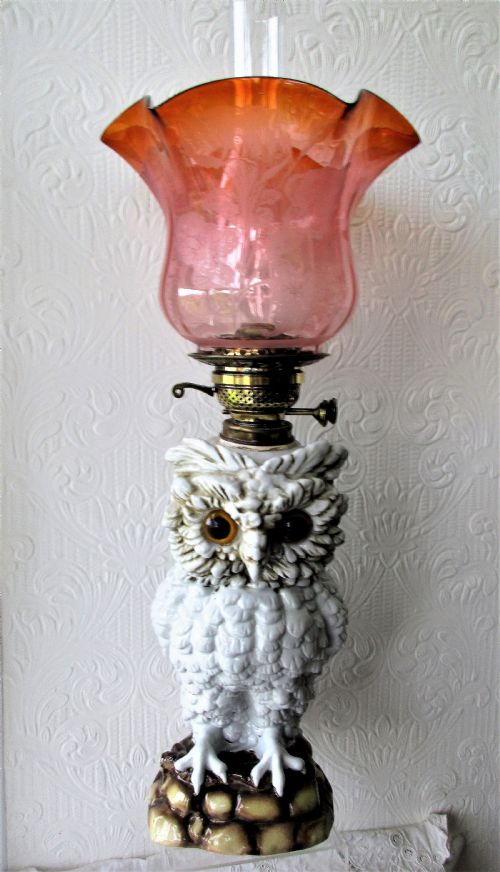
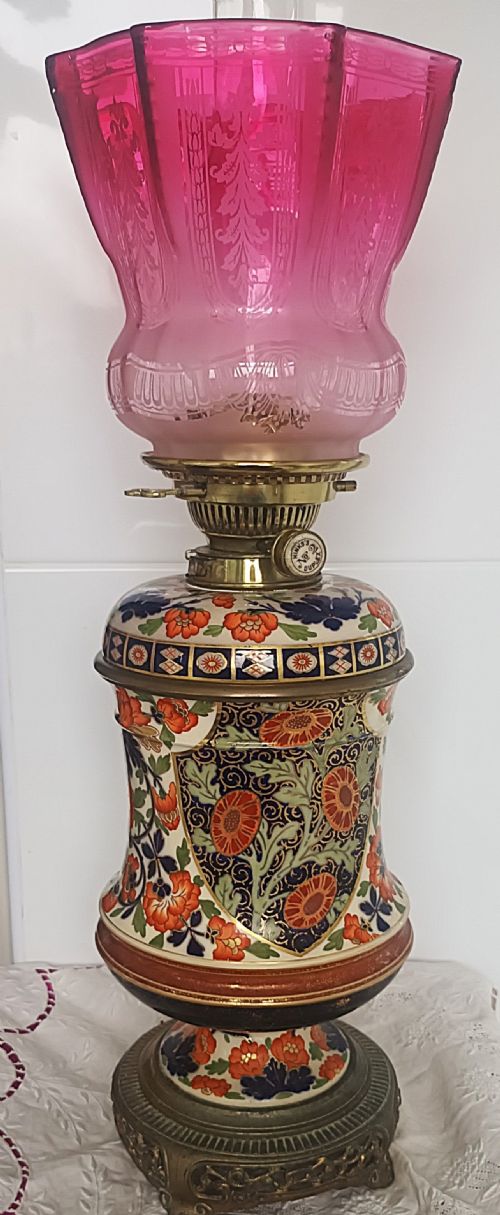
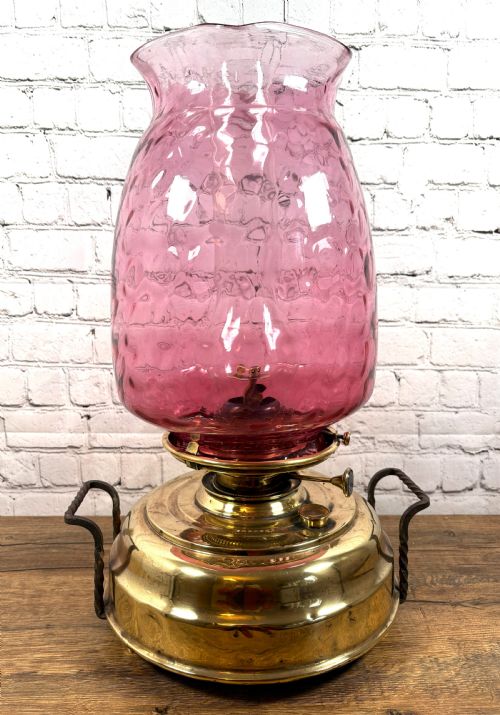
A cranberry glass oil shade brings a distinct rosy illumination to period lighting, appearing frequently across nineteenth-century and early twentieth-century examples. When you examine these items on this page, you encounter them mounted on brass columns, ceramic bodies, and complete table lamps from the Victorian and Edwardian eras.
The forms range from plain globular domes to fluted and frilled lamp shades designed to fit duplex and standard burners. Many pieces survive as independent shades, while others form part of tall floor standing lamps and table lamps featuring brass or porcelain reservoirs.
Materials and Techniques
The distinctive red colour of cranberry glass relies on the addition of gold chloride to the molten batch during production, creating rich hues that vary from pale pink to deep ruby. Craftsmen then shaped the hot metal through blowing and moulding, sometimes adding etched or hand-painted botanical motifs.
Brass serves as the principal mounting and structural material for the lamps carrying these shades, often shaped into reeded or Corinthian columns. Ceramic, porcelain, copper, and silver-plated elements also appear in the mountings alongside cut and clear glass components.
Listings on this page span the 1860s through to the Edwardian era, incorporating brass, porcelain, and etched glass.
Assessing Quality and Merit
Quality in a cranberry glass oil shade rests upon the depth and consistency of the colour dispersion throughout the metal, alongside the crispness of any applied frilling or etched decoration. Superior examples display a rich, even saturation without muddy patches.
The sophistication of the supporting metalwork or ceramic base dictates the standing of the piece. Heavy cast brass, intricate porcelain modelling, and robust construction separate standard domestic lighting from finer exhibition-grade examples.
Hinks·Taylor Tunnicliff·Sitzendorf
The Cranberry Glass Oil Shade Glossary
- Cranberry Glass
- Transparent glass coloured with gold oxide to produce shades ranging from pink to deep red. This material is particularly characteristic of Victorian decorative lighting.
- Duplex Burner
- A twin-wick burner mechanism common on larger nineteenth-century oil lamps. It provided a brighter illumination than single-wick alternatives.
- Frilled
- A decorative edge manipulated into ruffled or undulating folds while the glass remains hot. This technique appears often on nineteenth-century lamp shades.
- Corinthian Column
- An architectural column style featuring ornate acanthus leaf capitals, frequently utilised for the brass stands of tall Victorian lamps.
Cranberry Glass Oil Shade: Frequently Asked Questions
How do I date a cranberry glass shade?
Dating relies primarily on the manufacturing style, the shade fitter size, and whether the piece retains its original lamp base from the Victorian or Edwardian periods.
Fitter sizes shifted over decades, and nineteenth-century shades often exhibit hand-finished rims rather than modern machine-cut edges.
Can these shades fit modern lamps?
Many antique shades fit contemporary lamp galleries if the bottom fitter rim matches the collar diameter of the modern burner or holder.
Careful measurement of the opening is essential before attempting to pair an antique shade with a twentieth-century base.
Why does the glass colour vary?
The colour variation stems from the precise amount of gold content mixed into the molten glass batch and the exact temperature of the annealing kiln.
Older recipes often yielded subtle tonal shifts from top to bottom within a single piece of glassware.
How should I clean my oil shade?
Cleaning requires warm water and mild soap applied with a soft cloth to protect the fragile glass surface and any painted details.
Harsh chemical detergents or abrasive pads must be avoided to prevent scratching the historic finish.