






Covered Vegetable Tureen
When you search for a covered vegetable tureen, you find covered vessels designed for dining tables that bring ceramic, porcelain and silver plate into domestic service.
Covered Vegetable Tureen
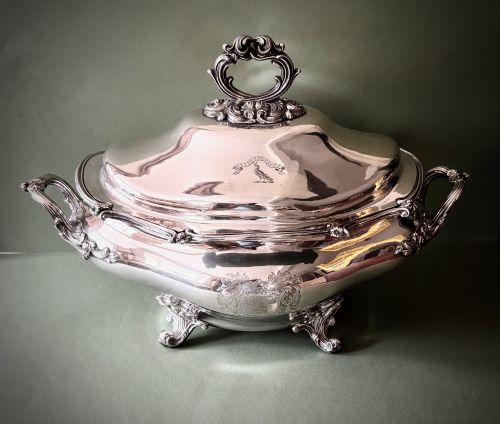
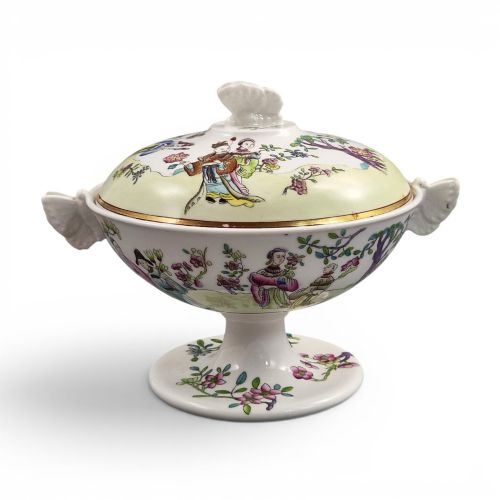
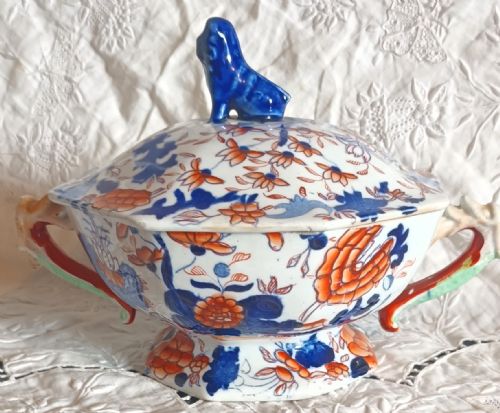
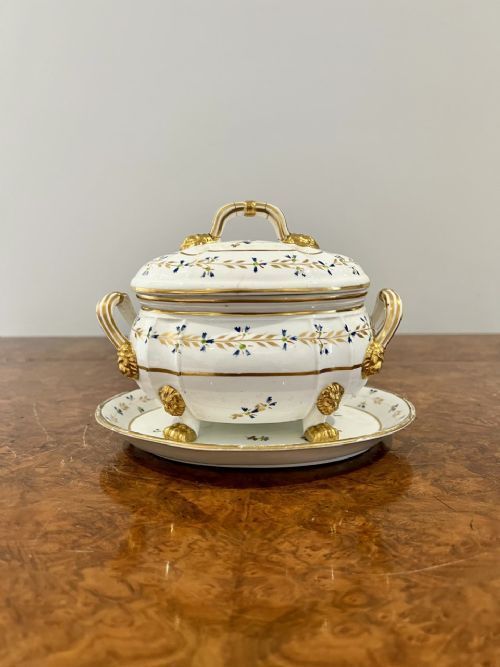
A covered vegetable tureen is a serving vessel designed to hold and warm food at the table, appearing in forms ranging from porcelain bowls to ironstone dishes and silver plated servers. The examples seen on this page span the eighteenth, nineteenth and twentieth centuries, originating from English potteries, European factories and Chinese export kilns. Buyers encounter diverse styles including Georgian, Regency, Victorian and Edwardian pieces, alongside Chinese Export and traditional European patterns.
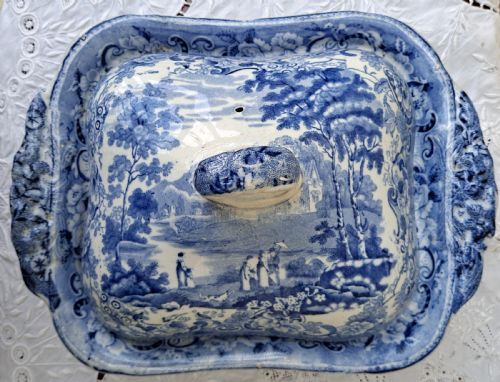
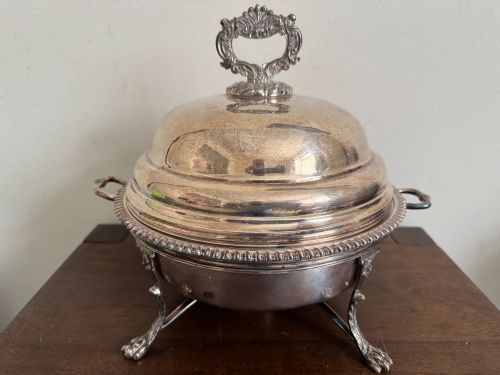
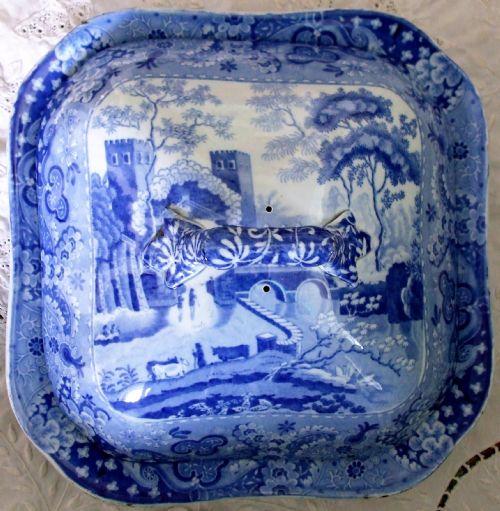
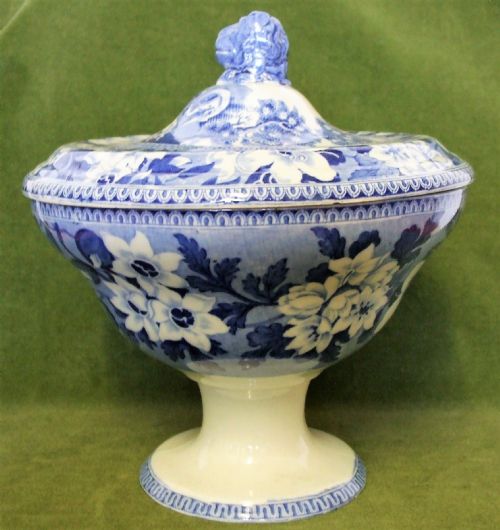
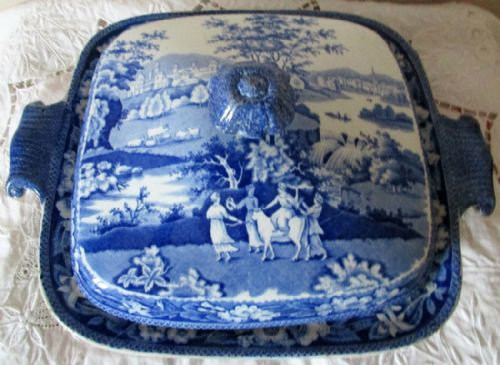
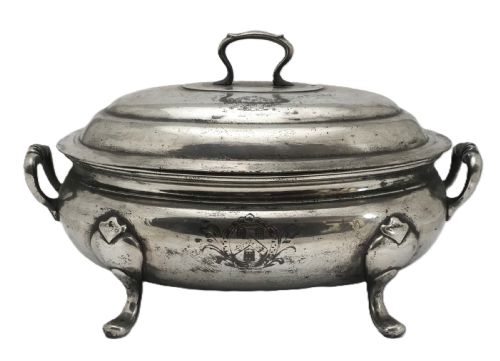
Most pieces on this page are earthenware, ironstone, porcelain or silver plate vessels equipped with matching lids, sometimes accompanied by ladles, stands or warming equipment. They serve both functional dining purposes and decorative display, featuring blue and white transfer prints, enamel decoration, gilt handles and hand-painted motifs.
How they were made
Potters shaped earthenware, ironstone and porcelain bodies on wheels or in moulds before applying glazes, transfer printing and hand-painted enamel colours. Many porcelain and ironstone pieces received gilt highlights on handles and borders, followed by kiln firing to set the decoration.
Metal vessels utilised Old Sheffield plate, silver plate or sterling silver, requiring smithing, soldering and engraving techniques. Makers applied gold leaf and silver plating over base metals or copper to achieve the appearance of solid silver.
Materials span ceramic, earthenware, porcelain, ironstone, silver plate and gold leaf.
What varies in quality
The standard of a tureen depends on the crispness of the moulding, the clarity of transfer printing and the precision of hand-painted enamel details. Finer ceramic pieces display balanced proportions, unblemished glazes and well-defined relief work on handles and covers.
Metal examples derive their distinction from the quality of the plating, the weight of the metal and the fineness of engraved crests or armorial details. Maker attribution to established workshops or factories also influences the standing of individual pieces.
James Wallace and Company·J and R Clews·John Rogers and Son·John and Richard Riley·Mappin and Webb·Hamilton and Inches·Flight Barr and Barr·William Grundy·Doulton Burslem
The Covered Vegetable Tureen Glossary
- Ironstone
- A durable type of earthenware patented in the nineteenth century that mimics porcelain. It resists chipping and provided a robust surface for colourful transfer prints and chinoiserie patterns.
- Old Sheffield Plate
- A composite material formed by fusing a sheet of silver to a thicker copper base. It predates modern electroplating and leaves a distinctive edge where the base metal shows.
- Transfer Print
- A decorative technique where an engraved copper plate transfers a design onto paper and then onto unglazed or biscuit ceramic. This allowed intricate blue and white landscapes to be repeated accurately across multiple pieces.
- Entree Dish
- A shallow serving vessel used for side dishes or main courses at the dining table. They frequently include removable handles and fitted covers.
- Chinoiserie
- A European artistic style reflecting Chinese motifs and decorative themes. It appears frequently on early nineteenth-century ironstone and porcelain tureens.
Covered Vegetable Tureen: Frequently Asked Questions
What is a covered vegetable tureen used for?
These vessels held vegetables, sauces or soups at the formal dining table, keeping the contents warm beneath a fitted lid during meals.
Their decorative covers and matching stands also made them centrepieces for sideboards when not in active dining use.
How do I care for antique ceramic tureens?
Wash them gently by hand in warm water using mild soap, avoiding abrasive sponges that can scratch the old glaze or wear away gilt decoration.
Keep them away from modern dishwashers and sudden temperature changes to protect the historic ceramic body.
How can I tell the period of a tureen?
Examine the material, factory marks stamped on the base, and the style of decoration such as transfer printing or hand-painted enamels.
Georgian and Regency pieces often feature specific ironstone bodies or hand-applied gilding, while Edwardian silver plate bears distinct maker stamps.
Were these pieces part of larger dinner services?
Many tureens formed part of extensive matching dinner services that included plates, platters, soup bowls and sauce tureens for grand households.
Individual pieces survived separately over the centuries, often retaining their original covers and ladles.