



Victorian Blue White Tureen
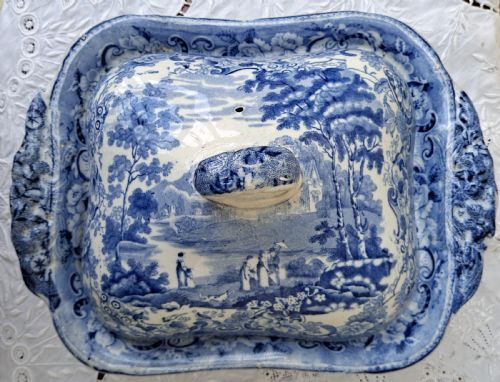
These Victorian blue white tureen pieces bring transfer printed scenes to the table, offering a functional piece of nineteenth century ceramic history.
Victorian Blue White Tureen
When you search for a victorian blue white tureen, you encounter lidded vegetable tureens, sauce tureens with ladles, and child's service items dating from the nineteenth century. These vessels served meals in Victorian dining rooms, often decorated with transfer printed patterns like rural scenery.
The selection on this page includes earthenware and ironstone examples, alongside related items such as soup ladles and fruit bowls. Copeland and Garrett, James Wallace and Company, Masons, Doulton Burslem, and Ridgways represent the makers found in these listings.
Materials and transfer printing
Potters shaped these objects from ceramic earthenware and ironstone, applying blue transfer printing beneath a clear glaze. Selected pieces incorporate additional embellishments such as enamel, gilding, and gold leaf on the ceramic body.
The blue transfer print technique allowed intricate pictorial scenes, such as rural scenery, to be applied consistently across lidded tureens and covers.
Victorian Blue White Tureen Retail Price Guide 2026
Typical asking prices for victorian blue white tureen among the pieces listed under this phrase on Sellingantiques today, from the lower quarter to the upper quarter. They describe what is for sale here now, not the wider market.
A bird claw motif adorns the reverse of a nineteenth century ceramic soup ladle.
Assessing quality in transfer ware
Quality in a victorian blue white tureen rests on the clarity of the blue transfer print and the crispness of the ceramic moulding. Maker marks stamped into the ironstone or earthenware base also distinguish factory output.
The presence of matching lids and original ladles elevates the completeness of a piece, separating standard utility vessels from notable service items.
James Wallace and Co·Masons·Doulton Burslem·Ridgways·Copeland and Garrett
The Victorian Blue White Tureen Glossary
- Transfer print
- A method of decorating ceramics by engraving a design on a copper plate, pulling it on tissue paper, and pressing it onto the unfired clay or bisque. This allowed detailed blue patterns to be replicated across tureens.
- Ironstone
- A dense, durable type of earthenware patented in the nineteenth century. It provided a strong body for heavy dining tureens.
- Flow blue
- A style of transfer printing where the blue colour intentionally bleeds into the surrounding white glaze during firing. This created a soft, hazy appearance on nineteenth century ceramics.
- Tureen
- A deep, large bowl with a cover used for serving soups, vegetables, or sauces at the table. Victorian examples often included matching ladles.
Victorian Blue White Tureen: Frequently Asked Questions
What is a Victorian blue white tureen?
A victorian blue white tureen is a covered ceramic vessel used for serving vegetables or sauces during nineteenth century meals, decorated with blue transfer printing.
Potters utilised earthenware and ironstone to form these pieces, often featuring scenic patterns like rural views.
How do I care for antique transferware?
Wash these nineteenth century ceramics gently by hand in warm water using mild soap, avoiding dishwashers and harsh scouring pads.
Protect the glaze and any gilding or enamel details by storing them securely away from heavy impacts.
Did all tureens come with ladles?
Sauce tureens and soup vessels frequently included a matching ceramic ladle for serving contents at the dining table.
Vegetable tureens typically consisted of a base and a fitted cover without a separate spoon.
What is flow blue pottery?
Flow blue is a nineteenth century ceramic style where the cobalt blue pigment diffuses into the white glaze during the kiln firing.
This chemical reaction produced a characteristic misty outline on the transfer printed decoration.