





Covered Porcelain Tureen Lid
These covered porcelain tureen lid examples complete serving vessels from the eighteenth and nineteenth centuries, offering collectors matching replacement components.
Covered Porcelain Tureen Lid
When you search for a covered porcelain tureen lid, you encounter individual protective covers belonging to soup tureens, sauce boats, cream bowls, and broth cups. These components survive from Georgian, Regency, and Victorian dining services, representing domestic serving ware produced across Britain and continental Europe.
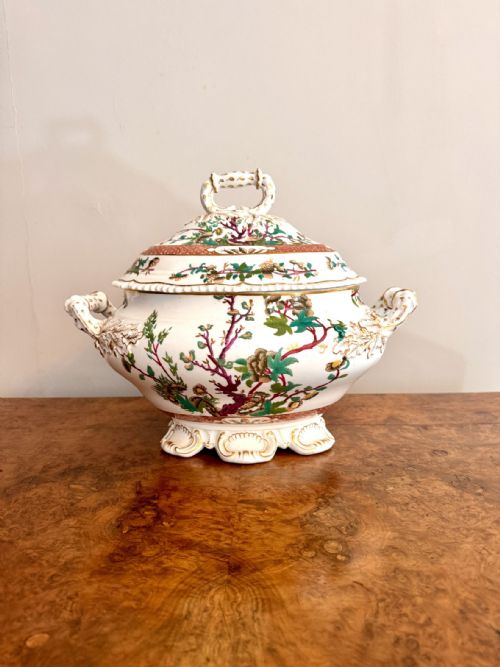
The pieces on this page span from eighteenth-century soft-paste porcelain to nineteenth-century ironstone and felspar porcelain. You frequently find covers belonging to Derby, Spode, and Mason's productions, alongside continental European and Italian workshops dating between the 1760s and the 1860s.
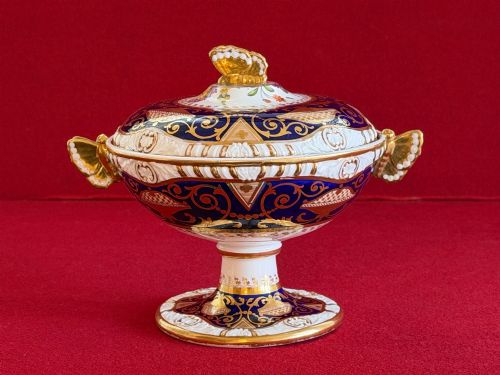
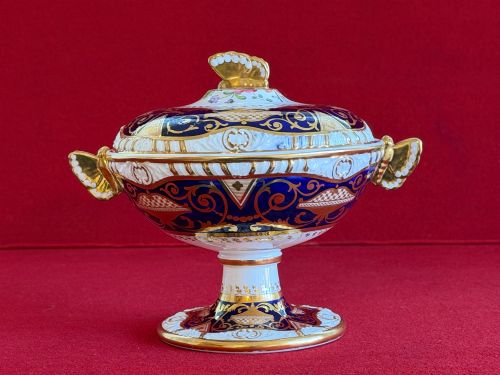
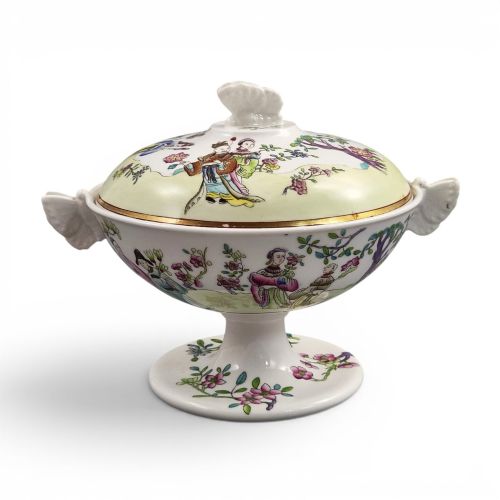
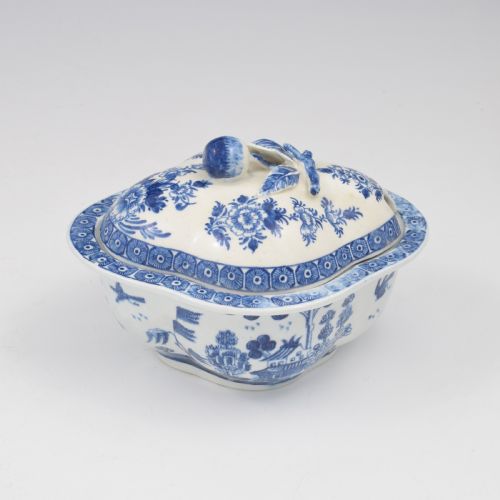
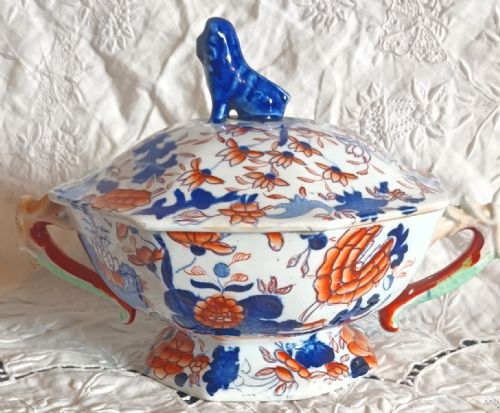
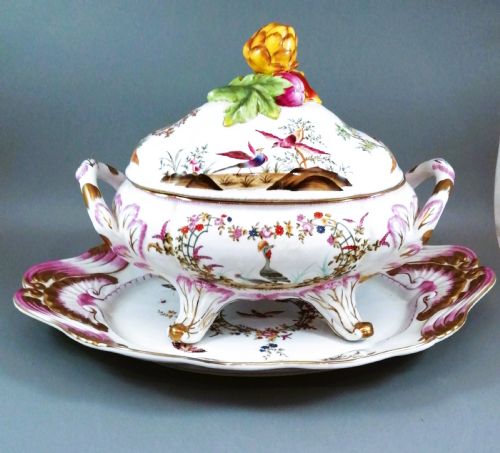
Most items reflect formal dining traditions where tureens formed the centrepiece of the table. Surviving lids display variations in form, ranging from quatrefoil sauce covers to large pedestal bowl lids finished with butterfly handles or mandarin patterns.
Materials and production methods
Potters utilised soft-paste porcelain, hard-paste porcelain, and ironstone body compositions moulded into specific shapes before firing in kilns. Ironstone provided a heavy, dense ceramic base suitable for robust household use, whilst earlier soft-paste porcelain yielded a finer, translucent body.
Glazing and enamelling followed the initial firing, often incorporating hand-painted cobalt blue, polychrome Chinoiserie mandarin patterns, and applied gold leaf or gilding. Factories like Spode developed specialised felspar porcelain bodies to achieve greater whiteness and structural stability during high-temperature firing.
Covered Porcelain Tureen Lid Retail Price Guide 2026
Typical asking prices for covered porcelain tureen lid among the pieces listed under this phrase on Sellingantiques today, from the lower quarter to the upper quarter. They describe what is for sale here now, not the wider market.
Some nineteenth-century tureen covers feature delicate butterfly handles, offering a whimsical touch to otherwise formal dining tables.
Assessing quality in ceramic covers
Quality separates mass-produced utility wares from fine cabinet specimens through the crispness of the moulding and the delicacy of the painted detail. Finer pieces exhibit precise transfer printing or skilful hand-painting beneath the glaze, whilst lesser examples show blurring or pooling in the pigment.
The integrity of the paste and the purity of the white glaze also determine the grade of a piece. Superior soft-paste and felspar porcelain items retain sharp relief definition on finials and handles, whereas degraded or heavily used utilitarian ironstone may display dull surfaces and manufacturing blemishes.
Spode·Derby Porcelain·Mason's Ironstone·Worcester Dr Wall·Richard Ginori
The Covered Porcelain Tureen Lid Glossary
- Ironstone
- A dense, heavy ceramic paste patented in the nineteenth century for durability. It combines earthenware and porcelain properties to resist chipping during daily kitchen use.
- Felspar porcelain
- A refined ceramic body developed in the nineteenth century using felspar minerals. This formulation enhanced translucency and strength in tableware production.
- Soft-paste porcelain
- An artificial ceramic mixture fired at lower temperatures than true porcelain. It produces a warm, creamy body texture often found on eighteenth-century pieces.
- Quatrefoil
- A symmetrical shape featuring four lobes arranged in a cloverleaf pattern. Potters applied this outline to sauce tureens and dishes to create decorative visual interest.
- Mandarin pattern
- A decorative hand-painted or transfer-printed Chinese-inspired motif depicting figures in traditional costume. This style appeared frequently on English ironstone during the early nineteenth century.
Covered Porcelain Tureen Lid: Frequently Asked Questions
How do I match a lid to a tureen?
Matching a lid requires careful measurement of the rim diameter, aperture shape, and clearance for interior seating flanges. You must also compare the ceramic body type, whether ironstone, soft-paste, or felspar porcelain.
Decoration and pattern alignment provide further clues for pairing items correctly. Colours and gilding styles should align with the period of the base vessel.
What period do most lids date from?
The pieces available primarily originate in the eighteenth and nineteenth centuries. Georgian and Regency examples sit alongside later Victorian ironstone productions.
Stylistic shifts in handles and finials help narrow down the decade of manufacture. Earlier items often feature simple scroll knobs, whilst later Victorian pieces introduce bolder moulded forms.
Can I use these lids for serving food?
Most antique ceramic lids remain suitable for gentle domestic use, provided the glaze is intact and free from toxic degradation. However, collectors typically treat them as display or replacement items rather than everyday tableware.
Thermal shock from hot liquids can crack old ceramic bodies. Hand washing and careful handling protect the structural integrity of these fragile historical components.