









Covered Ceramic Vase
A covered ceramic vase brings a structured silhouette and painted surface to a room, uniting functional storage with decorative presence.
Covered Ceramic Vase
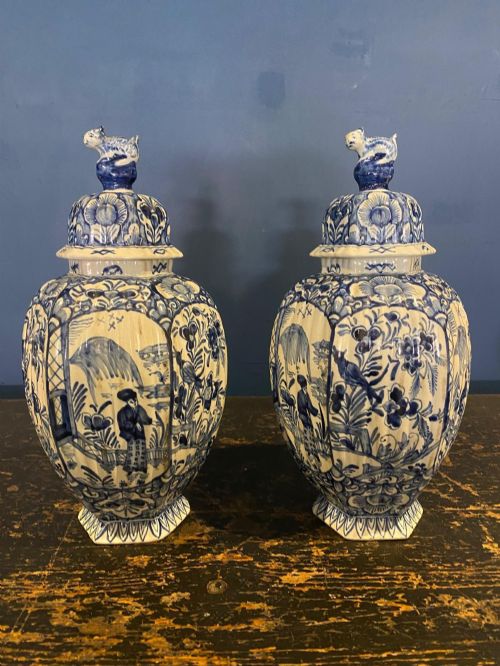
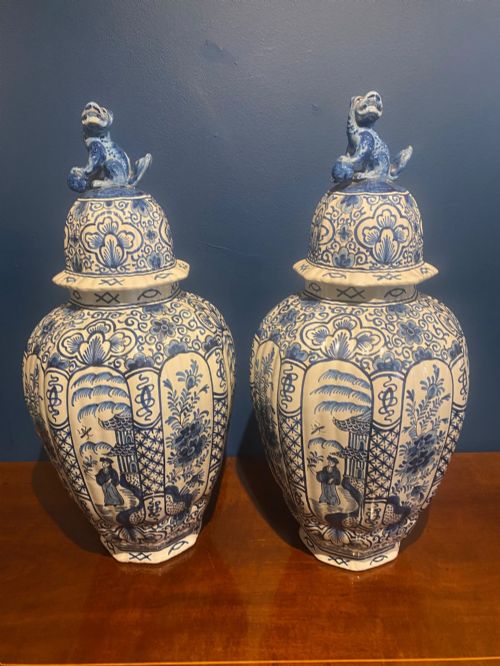
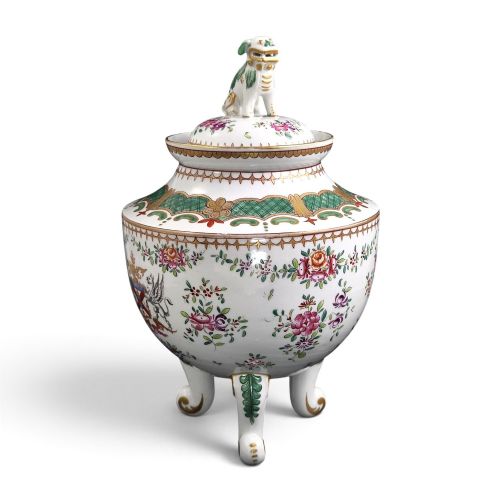
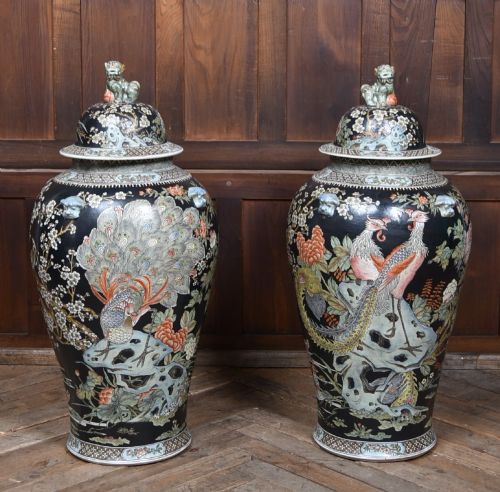
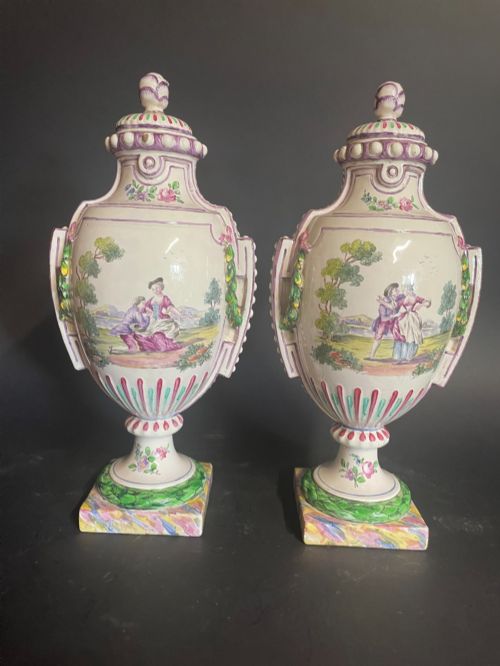
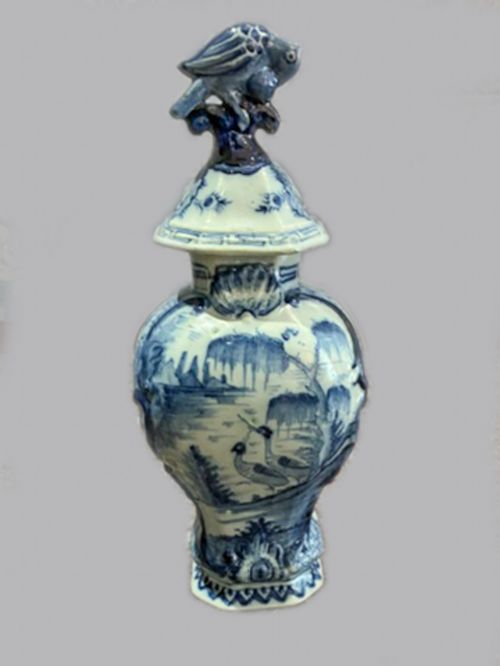
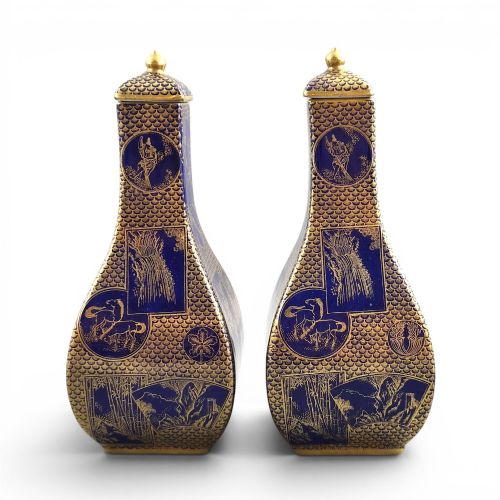
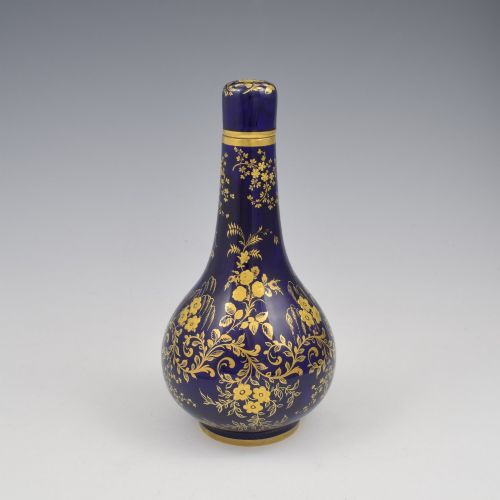
When searching for a covered ceramic vase, a buyer encounters lidded vessels spanning ginger jars, pot-pourri pots, and tall palace urns. These pieces serve to hold dry materials or simply stand as ornamental focal points on furniture.
The versions most commonly met on this page belong to the nineteenth century, alongside eighteenth-century Delftware and early twentieth-century English porcelain. Formats range from miniature scent bottles to large floor jars with matching lids.
Origins stretch from English factories such as Derby, Worcester, and Royal Worcester to continental European faience makers, Dutch delftware potteries, and Japanese Arita kilns. The category embraces diverse stylistic traditions including Chinoiserie, Imari, and majolica.
How they were made
Bodies are formed from earthenware, ironstone, or fine porcelain, shaped on the wheel or cast in moulds before receiving an initial kiln firing. Tin-glazes, enamel colours, and cobalt blue underglazes are applied by hand, often accented with gold leaf.
Potters seal the porous ceramic body with specialised glazes, while makers such as Mason's utilise durable ironstone for robust vessels. Decorative details involve transfer printing combined with hand painting, sometimes finished with ormolu mounts.
Covered Ceramic Vase Retail Price Guide 2026
Typical asking prices for covered ceramic vase among the pieces listed under this phrase on Sellingantiques today, from the lower quarter to the upper quarter. They describe what is for sale here now, not the wider market.
Listings feature porcelain, ironstone, and tin-glazed earthenware across eighteenth, nineteenth, and twentieth-century periods.
What varies in quality
Quality separates through the precision of the hand-painted brushwork and the clarity of the enamel colours against the background glaze. Pieces bearing named artist signatures or distinct factory marks display superior execution in their pictorial scenes.
The crispness of the moulding on handles, finials, and lids distinguishes standard production from exceptional studio output. Weight, balance, and the harmonious integration of the lid with the main body determine the overall success of the vessel.
Samson Paris·Sitzendorf·Derby Porcelain·Mason's Patent Ironstone·Chamberlain Worcester·Booths Silicon China·Crown Staffordshire·Royal Worcester·Coalport·Spode·Samuel Alcock
The Covered Ceramic Vase Glossary
- Ginger jar
- A ceramic vessel with a wide rounded body and a domed lid, originally designed for storing spices. These pieces now function primarily as decorative interior objects.
- Pot-pourri jar
- A lidded container pierced with holes or designed to hold dried scented plant materials. They often feature elaborate painted floral decoration and gilt accents.
- Ironstone
- A dense, heavy type of earthenware patented for its durability and resistance to chipping. Makers utilised this strong body for large decorative hall vases.
- Faience
- Tin-glazed earthenware produced in continental Europe, typically featuring opaque white glazes painted with coloured pigments. The technique allows for smooth pictorial surfaces.
- Imari
- A Japanese style of porcelain decoration characterised by a palette of underglaze blue, iron red, and gold. European factories frequently copied these distinctive patterns.
Covered Ceramic Vase: Frequently Asked Questions
What fits inside a covered ceramic vase?
These vessels suit dried botanicals, pot-pourri mixtures, or small keepsakes stored within the enclosed body.
Many examples function purely as decorative display items where the lid remains permanently in place.
How do I clean an antique lidded vase?
Dust the exterior gently with a soft, dry cloth to protect delicate enamel and gold leaf decorations.
Avoid immersing antique ceramic pieces in water, particularly those with ormolu mounts or fragile hand-painted surfaces.
How do I date a ceramic jar?
Examine the underside for factory backstamps, impressed numbers, or painted marks that correspond to historical manufacturer records.
Stylistic cues such as cobalt blue transfer prints or blush ivory grounds help narrow the production era.
Where should I display a floor jar?
Large palace jars and floor urns sit securely on stable foundational surfaces like wooden flooring or heavy pedestals.
Position these substantial vessels away from high-traffic household pathways to prevent accidental impacts.