



Courting Scene Porcelain Vases
These courting scene porcelain vases are decorative vessels featuring hand-painted figurative narratives from the nineteenth century and earlier.

Courting Scene Porcelain Vases
Courting scene porcelain vases bring together narrative figurative painting and traditional ceramic forms from various Asian and European traditions. Buyers searching this phrase encounter nineteenth century Chinese Canton and Rose Medallion examples alongside Japanese Meiji period Satsuma wares and European porcelain.
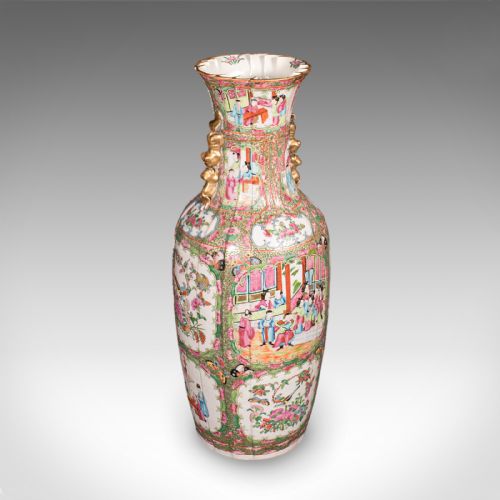
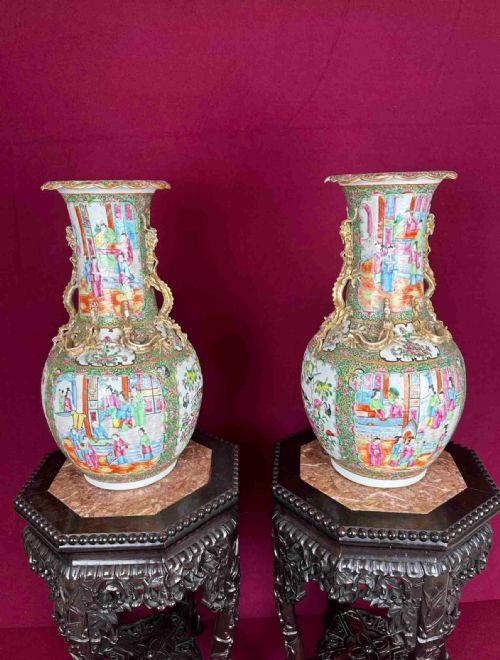
The most common pieces on this page are nineteenth century Chinese export vases decorated with polychrome enamels depicting figures in courtyard or garden settings. These large pairs and centrepieces often combine intricate figural panels with dense floral borders and gilt highlights.
Earlier Chinese blue and white vessels and nineteenth century European adaptations also appear, demonstrating the global exchange of ceramic styles across different periods. Each form serves primarily as a decorative garniture or floor vase rather than a utilitarian container.
Materials and Construction
The foundation of these objects is hard-paste porcelain or earthenware, shaped on the wheel or in moulds before receiving initial cobalt blue underglaze decoration where applicable. Artisans then applied opaque and translucent enamel pigments by hand to render the detailed garments, faces, and architectural backgrounds.
Gilt highlights and gold leaf were frequently added as a final decorative layer, accentuating borders, handles, and panel surrounds before low-temperature firing fixed the enamel colours to the glazed ceramic body.
Courting Scene Porcelain Vases Retail Price Guide 2026
Typical asking prices for courting scene porcelain vases among the pieces listed under this phrase on Sellingantiques today, from the lower quarter to the upper quarter. They describe what is for sale here now, not the wider market.
The object forms recorded here include lidded vases, monumental floor vases, and traditional centrepieces decorated with enamels and gold gilt.
Assessing Quality and Execution
The weight and balance of the porcelain body, together with the richness of the gold gilt application and the preservation of the glaze over centuries, determine the overall standing of the piece within its period.
The Courting Scene Porcelain Vases Glossary
- Famille rose
- A palette of opaque pink and red enamel colours introduced to Chinese ceramics during the Qing dynasty. This palette allows for subtle tonal shading in figurative robes and floral motifs.
- Rose medallion
- A distinct style of Chinese export porcelain featuring partitioned panels of figures and birds set against a dense background of green and gold flowers.
- Canton
- A major port city in southern China where porcelain blanks manufactured elsewhere were decorated for export to Western markets. These pieces often exhibit vibrant polychrome enamel work.
- Satsuma
- A type of Japanese earthenware featuring a crackled ivory glaze decorated with delicate polychrome enamels and raised gold. Production flourished during the Meiji period.
- YenYen
- A tall, trumpet-shaped vase form with a flared neck and sweeping body, originating in seventeenth century China. This silhouette provides a wide canvas for narrative painting.
Courting Scene Porcelain Vases: Frequently Asked Questions
How do I date these vases?
Dating relies on examining the characteristics of the porcelain body, the composition of the enamel colours, and the style of the painted figures. Nineteenth century pieces often show specific Canton or Rose Medallion palette traits.
Comparing the potting style and baseline glazes to known period examples helps narrow down the decade of manufacture, distinguishing Victorian imports from earlier Qing dynasty output.
Where were these vases displayed?
These decorative vessels were primarily manufactured for export to European and American drawing rooms, mantelsides, and entrance halls. Large pairs functioned as architectural centrepieces.
In domestic interiors, they served as visual focal points, often displayed on pedestals or tables to demonstrate the owner's appreciation for global craftsmanship.
How should I clean porcelain vases?
Maintenance requires gentle dusting with a soft, dry brush to prevent accumulation on the textured enamel and gilt surfaces. Moisture can damage vulnerable historical repairs or low-fired enamels.
Avoid using chemical cleaning agents or submerging the ceramic in water, particularly on pieces with exposed earthenware bodies or delicate gold leaf.
What is a garniture set?
A garniture is a matching set of three, five, or more vases designed to be displayed together on a mantelpiece or cabinet top. These groupings typically feature a balanced arrangement of shapes.
In surviving pairs and sets, the narrative scenes across different vessels often complement one another while maintaining a uniform decorative scheme.