





Dresden Porcelain Urns
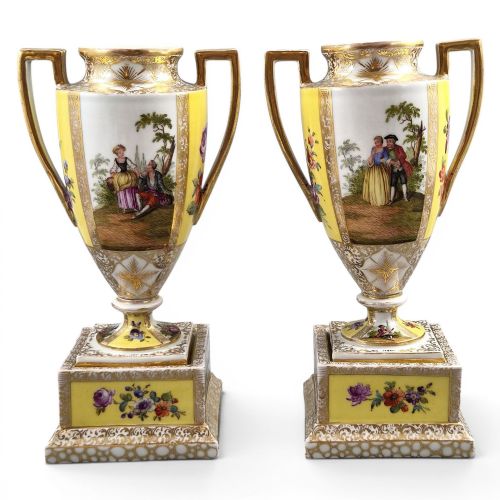
These dresden porcelain urns bring elaborate Rococo Revival flair and hand-painted detail into a room, offering ornamental presence for a period interior.

Dresden Porcelain Urns
When you search for dresden porcelain urns, you encounter decorative lidded vessels, ginger jars, and potpourri pieces that originate primarily from the nineteenth century. These objects typically reflect Victorian continental tastes, incorporating ornate shapes and classical forms designed for display on mantelpieces or cabinets.
The pieces listed here frequently showcase specific traditional aesthetics, including Meissen-style decoration and Watteau scenes. You are most likely to meet pairs of lidded vases finished in vibrant colour grounds or classic white porcelain.
Makers and decorators such as Helena Wolfsohn, Augustas Rex, and Sitzendorf define the core of what collectors find under this heading. Alongside these, related continental and Hungarian works expand the selection into the twentieth century.
How they were made
Makers utilised hard-paste porcelain as the primary ceramic body, shaped into complex vessels like gourd vases and lidded ginger jars. This dense material provided a durable foundation for intricate sculptural elements and applied figures.
Artisans applied detailed enamel painting by hand, frequently depicting figurative scenes alongside elaborate floral motifs. Gilding and gold leaf accents then highlighted the moulded borders and structural ridges of the Rococo Revival forms.
Dresden Porcelain Urns Retail Price Guide 2026
Typical asking prices for dresden porcelain urns among the pieces listed under this phrase on Sellingantiques today, from the lower quarter to the upper quarter. They describe what is for sale here now, not the wider market.
Materials recorded on this site include hard-paste porcelain, enamel, gold leaf, and gilt.
What varies in quality
The refinement of the hand-painted enamel work separates standard decorative output from finer studio pieces. Skilled brushwork in the figurative scenes and botanical details elevates the artistic merit of the vessel.
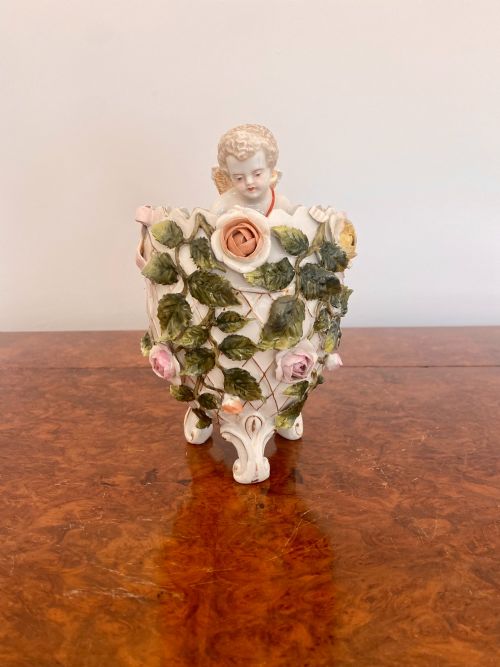
The application of gilding and the crispness of the moulded porcelain ornamentation indicate the level of craftsmanship involved. Pieces featuring well-defined cherubs, applied flowers, and balanced colour grounds demonstrate superior workshop standards.
Helena Wolfsohn·Augustas Rex·Sitzendorf·Herend
The Dresden Porcelain Urns Glossary
- Hard-Paste Porcelain
- A dense, vitrified ceramic material fired at high temperatures. It forms the durable white body characteristic of fine European decorative items.
- Rococo Revival
- A nineteenth-century design style mimicking the asymmetrical curves, C-scrolls, and ornamental exuberance of the eighteenth century. This aesthetic dominates the moulding of these vases.
- Gilding
- The application of gold leaf or powdered gold to the surface of the porcelain. It accentuates rims, handles, and raised sculptural details.
- Potpourri
- A vessel featuring a pierced or perforated lid designed to diffuse scent from dried organic materials. These lidded pieces combine practical function with ornate decoration.
- Enamel
- Opaque vitreous paint applied to the glazed porcelain surface and fired to fix the colour. It provides the palette for traditional scenic and floral panels.
Dresden Porcelain Urns: Frequently Asked Questions
What are dresden porcelain urns?
These pieces are ornamental ceramic vessels, lidded jars, and vases produced in continental Europe during the nineteenth and twentieth centuries. They are characterised by elaborate moulded forms and decorative painting.
Collectors prize them for their connection to historic German porcelain traditions and their ornate Victorian aesthetic.
How were these urns used?
They served primarily as decorative garnitures and display objects on mantelpieces, sideboards, and large cabinets. Some variations functioned as potpourri containers to scent grand rooms.
Their substantial size and elaborate decoration meant they were meant for visual display rather than practical utility.
How do I identify the period?
Dating relies on examining the porcelain body, the style of hand-painted enamels, and any factory marks on the base. Nineteenth-century examples often display specific decorator ciphers and Victorian continental characteristics.
Twentieth-century pieces tend to show different baseline ceramic formulas and cleaner, modern manufacturing finishes.
How do I care for them?
Maintain these porcelain pieces by dusting them gently with a soft dry cloth. Avoid using harsh cleaning agents or water on gilded and enamelled surfaces to protect the hand-painted details.
Keep them away from direct sunlight and areas subject to sudden temperature changes to preserve the glaze.