
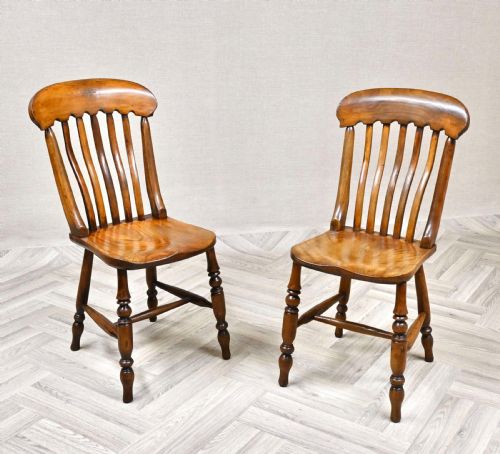
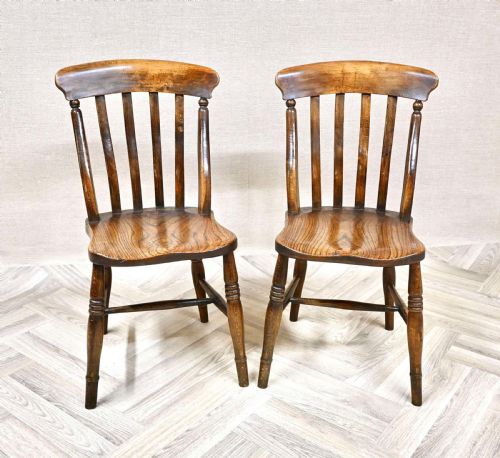
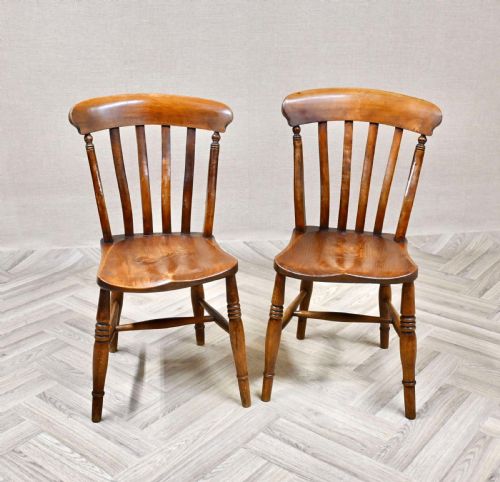
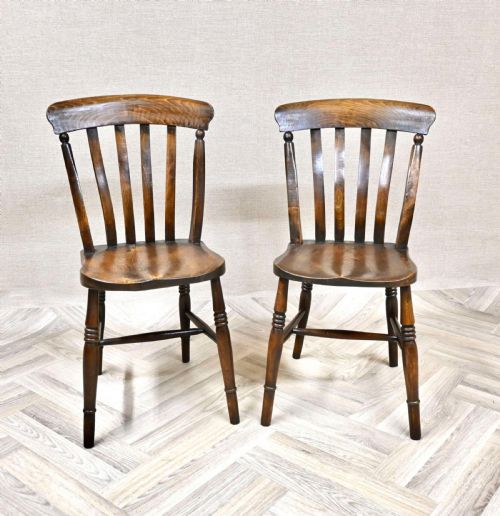
Country Windsor Chair Pair
A country windsor chair pair offers matched traditional seating forged in elm, ash and yew across multiple centuries of rural craftsmanship.
Country Windsor Chair Pair
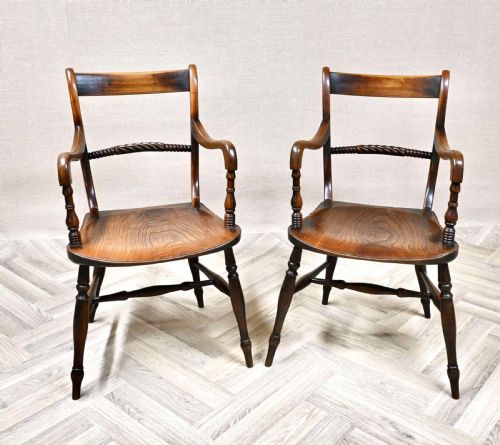
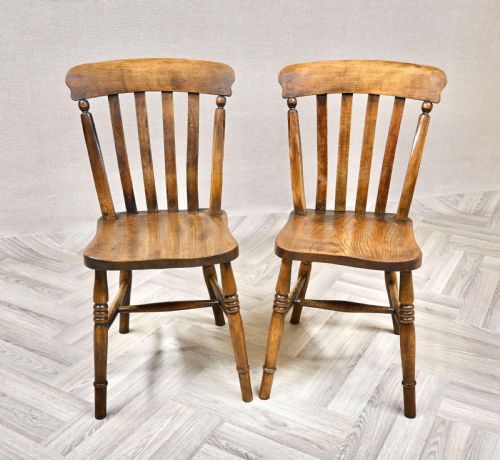
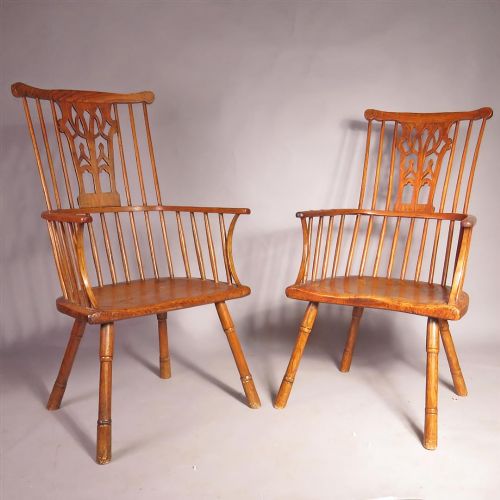
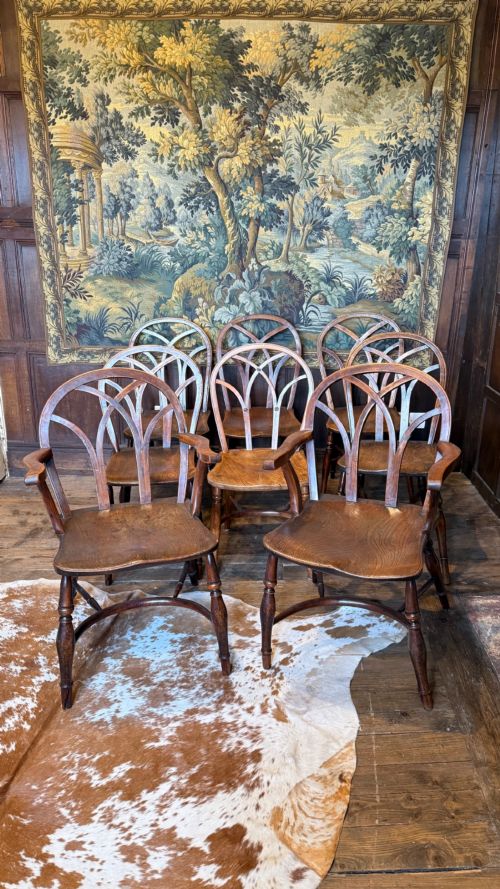
A country windsor chair pair comprises two matching wooden seats constructed with distinct central spindles fitted directly into a solid sculpted wooden bottom. These pairings emerge primarily from the nineteenth century alongside eighteenth century and Edwardian examples, spanning farmhouse kitchens to formal rural drawing rooms.
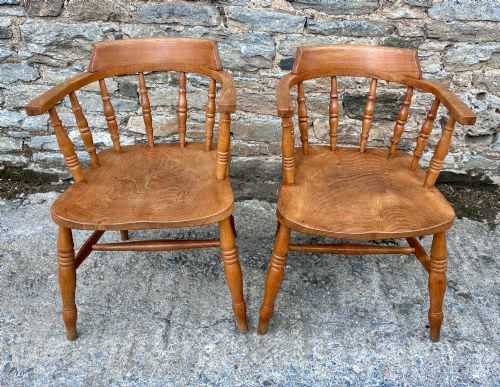
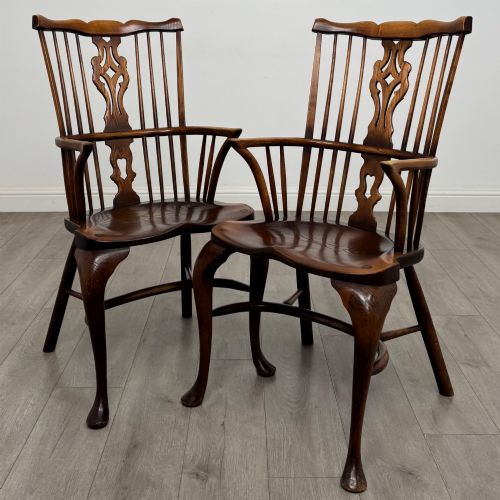
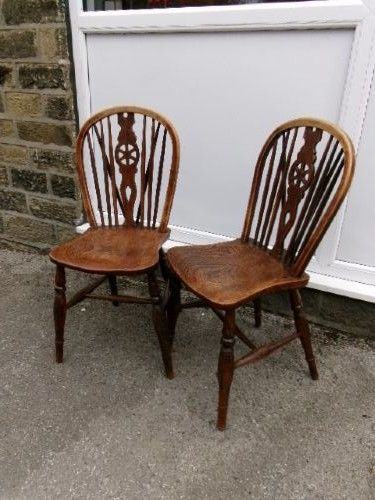
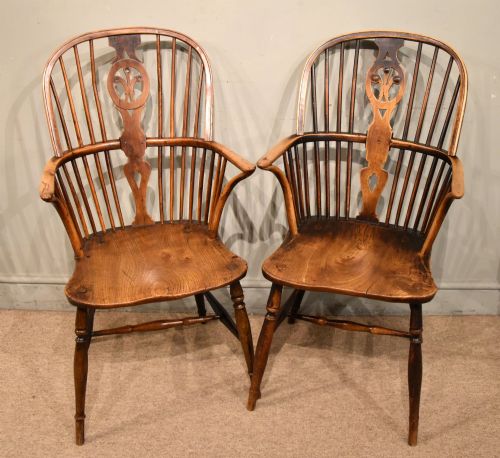
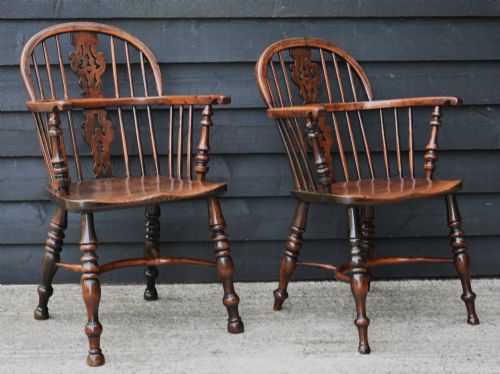
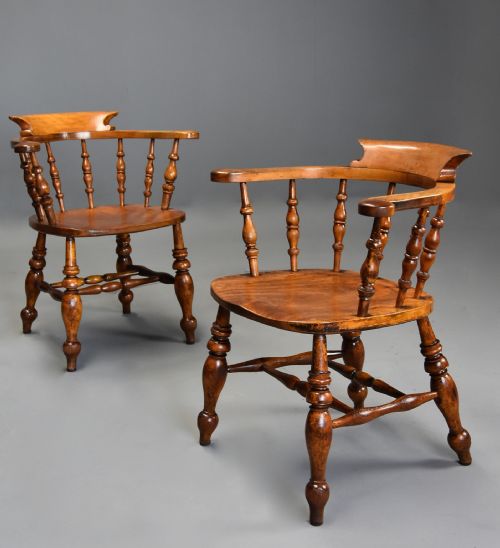
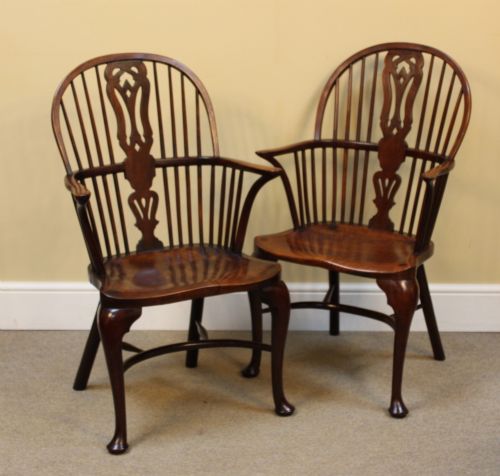
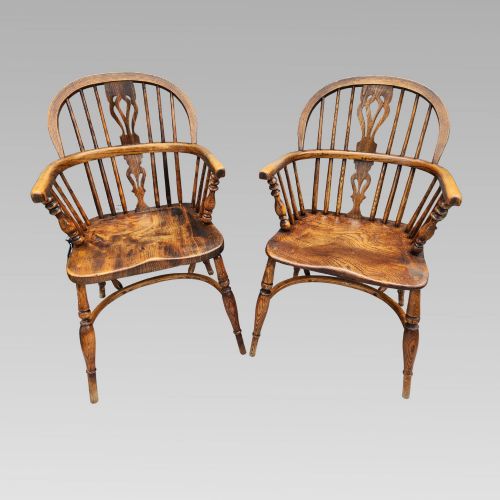
Forms vary significantly between high back armchairs, low backs, captain chairs, and wheelbacks featuring pierced splats. Buyers encounter regional variants such as Thames Valley styles alongside standard kitchen dining configurations.
How they were made
Traditional makers combined different timber types within a single frame, pairing resilient ash or beech for spindles and legs with deeply dished elm or richly figured yew for the seats. This material division utilised the specific bending and load-bearing properties of each wood.
Components were typically turned on bodgers' pole lathes in woodland settings before being assembled using wedged tenon joints. Seats were hollowed out using adzes and scorps to create comfortable ergonomic contours.
Many nineteenth-century bodgers turned chair legs directly in woodland clearings before hauling bundles of damp spindles to local assembly shops.
What varies in quality
Quality rests upon the choice of timber and the depth of figuring in the wood, particularly evident in burr yew or highly grained elm seats. Matched pairs showing consistent grain patterns and uniform turning across both chairs command higher regard than assembled near pairs.
The integrity of the structural undercarriage, including the tightness of leg joints and the presence of decorative stretchers such as crinoline braces, dictates the enduring stability and execution standard of the piece.
The Country Windsor Chair Pair Glossary
- Windsor chair
- A wooden chair built with a heavy solid plank seat into which the legs, back spindles and bow are independently inserted.
- Captain's chair
- A low-backed armchair featuring a continuous curved armrail supported by numerous small spindles, often also known as a smoker's bow.
- Wheelback
- A design incorporating a pierced wooden splat carved in the shape of a spoked cart wheel centrally positioned in the backrest.
- Crinoline stretcher
- An arched undercarriage stretcher connecting the legs of a Windsor chair, providing substantial lateral reinforcement while resembling a hoop skirt.
- Comb back
- A Windsor chair variation where the vertical back spindles extend upward to support a horizontal top rail resembling an antique hair comb.
Country Windsor Chair Pair: Frequently Asked Questions
How do I care for antique windsor chairs?
Maintain these wooden chairs by keeping them away from direct heat sources and sudden humidity shifts that can cause timber to split. Apply a microcrystalline wax polish occasionally to nourish the historic surface.
Avoid using modern liquid polishes that contain silicone. Regular gentle dusting preserves the natural patina accumulated over generations of domestic use.
How are different periods identified?
Earlier eighteenth-century examples often feature broader saddle seats, lower profiles, and simpler comb or stick backs constructed from ash and elm. Nineteenth-century versions frequently introduce decorative splats like wheelbacks, barbacks, or crinoline stretchers.
Timber choice also aids dating, as richly figured yew wood gained prominence in higher status vernacular seating during the Georgian and Victorian eras.
Were these chairs made as pairs originally?
Many sets began life as larger groups of dining chairs or were gathered together as near pairs due to matching dimensions and timber characteristics. True pairs share identical turning details, identical wood species, and matching wear patterns.
Makers often produced them in batches for rural households where sturdy matching dining furniture was essential for daily family life.