


Country Sporting Wall Art
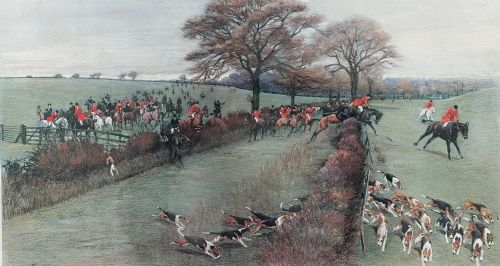
Country sporting wall art captures the spirited energy of equestrian pursuits, field sports, and canine companions through traditional paintings and prints.
Country Sporting Wall Art
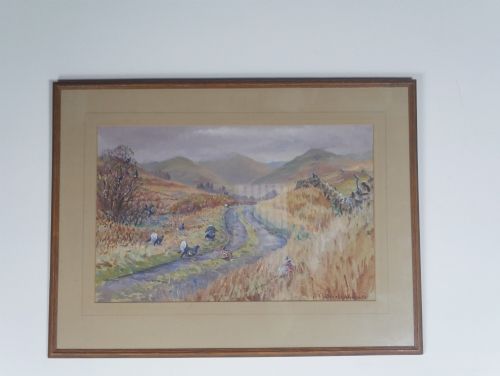
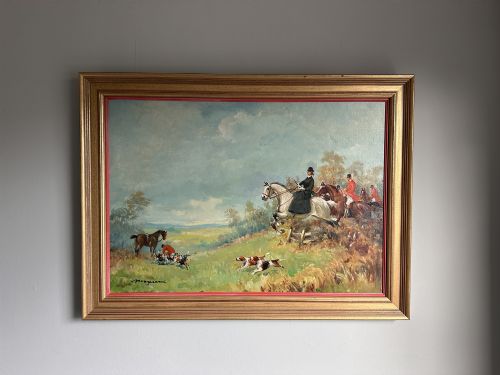
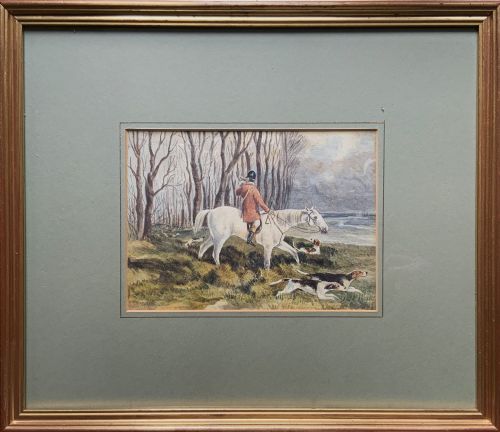
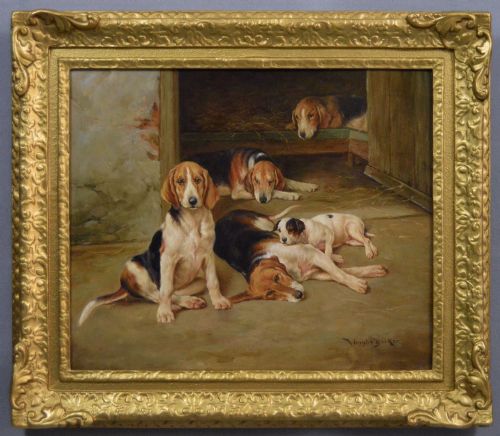
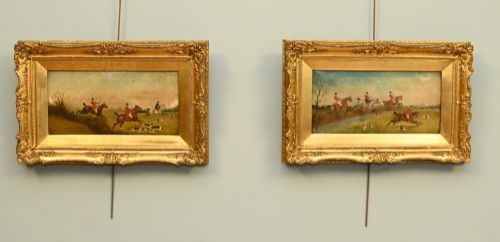
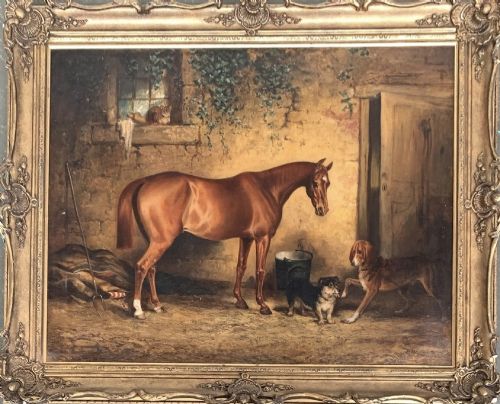
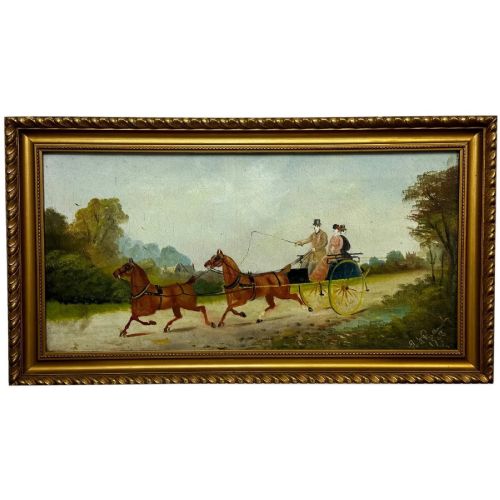
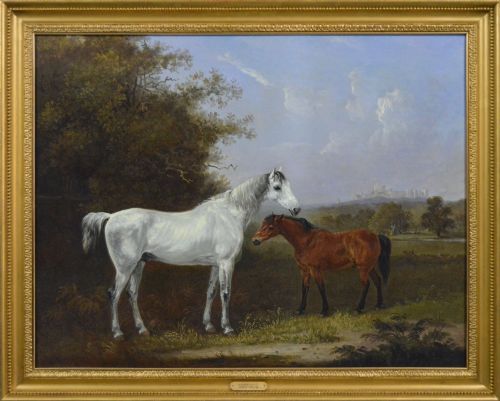
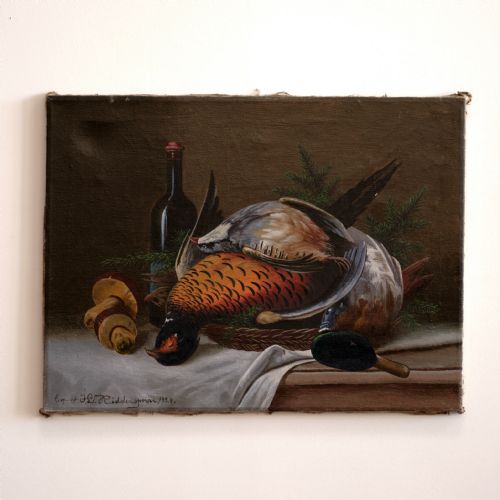
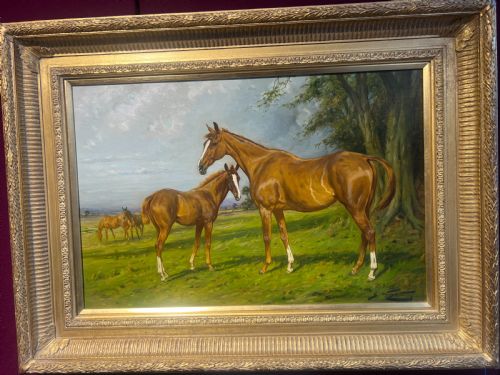
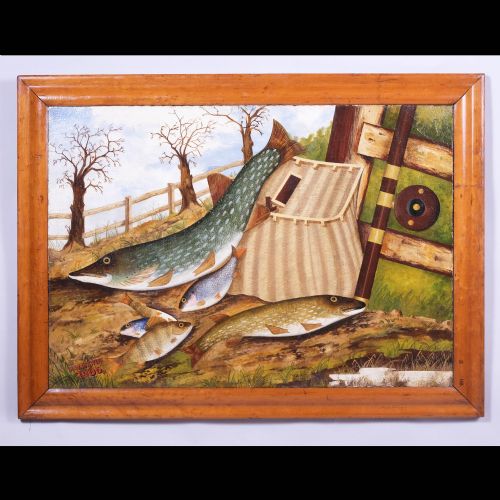
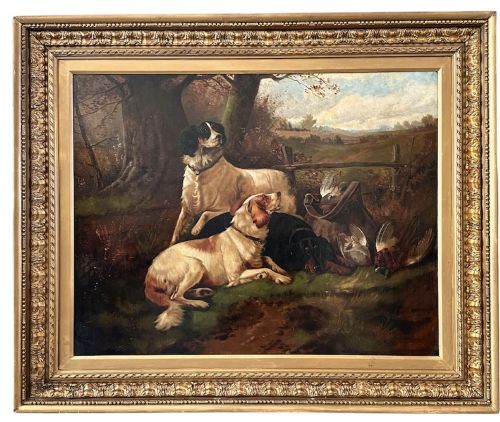
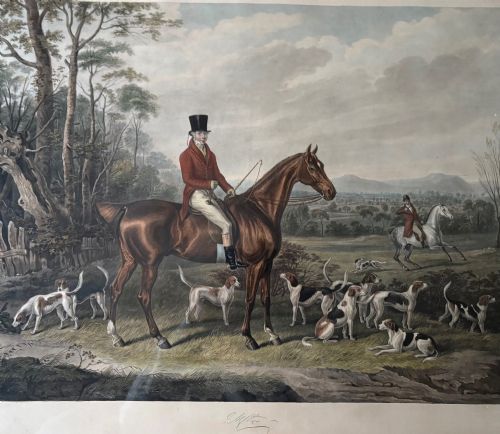
Country sporting wall art encompasses framed paintings, watercolours, and prints depicting horses, hounds, game birds, and field scenes. These pieces frequently date from the nineteenth century into the mid-twentieth century, reflecting British artistic traditions associated with rural life and hunting.
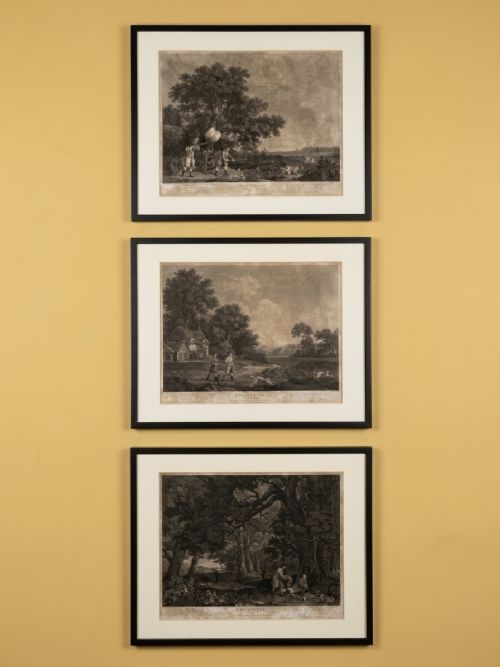
The version most commonly encountered on this page is the oil painting on canvas or panel, alongside framed watercolours and hand-coloured engravings. Subjects range from individual portraits of hunters and gun dogs to bustling scenes of fox hunts and coaching journeys.
How country sporting wall art was made
Artists typically worked with oil paint on stretched canvas or panel, utilising layered glazes to capture the sheen of equine coats and the texture of landscape foliage. Watercolours on paper offered a lighter medium for detailed studies of game birds and canine portraits.
Many images were preserved through engraving, etching, and aquatint techniques, sometimes finished with hand-applied colour. These works were housed in timber frames, frequently accented with giltwood mouldings.
Country Sporting Wall Art Retail Price Guide 2026
Typical asking prices for country sporting wall art among the pieces listed under this phrase on Sellingantiques today, from the lower quarter to the upper quarter. They describe what is for sale here now, not the wider market.
Listings feature works spanning the Georgian, Regency, Victorian, and Edwardian periods, executed in oil, watercolour, and engraved print formats.
What varies in quality
Quality rests in the anatomical accuracy of the animals, the fluidity of brushwork, and the artist's ability to render light and movement within a landscape. Superior works demonstrate a precise understanding of horse conformation, hound posture, and spatial depth.
The selection of framing materials and the preservation of the original surface, whether canvas, paper or under glass, influence the visual impact of the piece. Stronger examples maintain crisp detail in the subjects while integrating them harmoniously into the surrounding environment.
Wright Barker RBA·Cecil Charles Windsor Aldin RBA·Charles Bilger Spalding·Henry Barraud·Philip H Rideout·Edmund Bristow·William Woollett·George Stubbs·John Sargent Noble·George Wright·George Rankin·Thomas Walker Bretland·John Frederick Herring Snr·John Arthur Lomax·Valentine Thomas Garland·Charles Faulkner·Fannie Moody·Clifton Tomson·Samuel Henry Alken
The Country Sporting Wall Art Glossary
- Aquatint
- A printmaking technique that produces tonal areas resembling watercolour washes. It was frequently utilised alongside etching to reproduce landscape and sporting subjects.
- Giltwood
- Wood that has been treated with gold leaf or a gold-coloured metallic finish. It is commonly found on traditional picture frames.
- Equestrian
- Pertaining to horses and horseback riding. This style forms a major component of British sporting art.
- Canvas
- A heavy woven fabric used as a surface for oil paintings. It is typically stretched over a wooden frame before painting.
Country Sporting Wall Art: Frequently Asked Questions
What subjects are included in country sporting wall art?
These works primarily feature horses, hunting hounds, gun dogs, game birds, and rural coaching scenes. They record the activities of the British countryside across different centuries.
Subjects range from formal portraits of prize hunters to dynamic narratives of hunts and fishing excursions.
How do I date a sporting oil painting?
Dating relies on stylistic evidence, artist signatures, clothing fashions, and framing materials. Nineteenth-century works often carry specific dates or archival labels on the reverse.
Comparing the technique and subject matter to documented works by known animal and sporting artists helps narrow the period.
Where should I hang these framed paintings?
These pieces suit studies, libraries, dining rooms, and traditional living spaces where rural themes complement the interior. They pair well with wood paneling and neutral wall colours.
Direct sunlight and excessive moisture should be avoided to protect both canvas and paper works under glass.
What is the difference between an oil painting and an engraving?
An oil painting is a unique original work created with pigmented paint on canvas or panel. Brushwork and texture are visible upon close inspection.
An engraving is a printed reproduction created from an incised metal plate, sometimes featuring hand-applied watercolour washes.