





Scottish Sporting Art
Scottish sporting art captures the distinct character of northern field sports through traditional oil paintings, watercolours and carved horn games boards.
Scottish Sporting Art
Scottish sporting art gathers works depicting Highland fauna, game birds, hunting dogs and angling scenes from the eighteenth century to the mid-twentieth century. These pieces record the pursuits of the moor and river through the specific lens of regional painters and craftsmen.
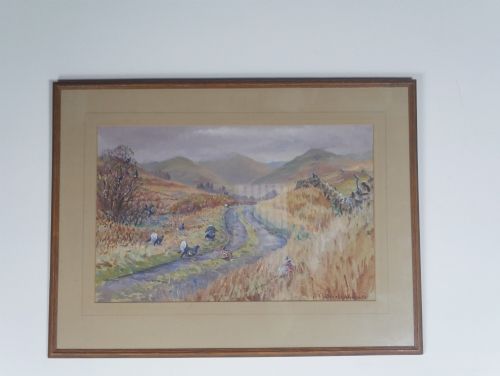
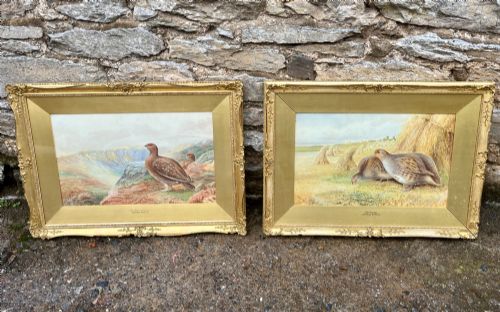
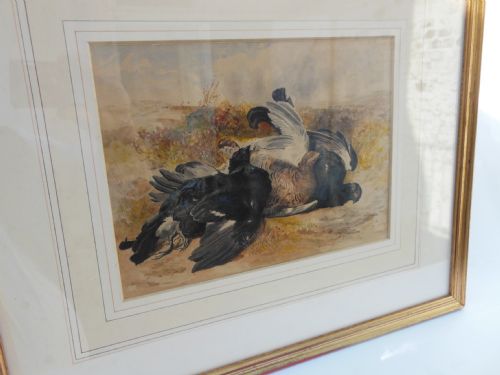
The watercolours and oil paintings on this page frequently portray black game, stags, grouse and sporting dogs in sweeping Highland landscapes. Framed canvases sit alongside tactile items such as stag horn cribbage boards, reflecting both fine art and domestic craftsmanship.
The selection ranges from eighteenth-century oils by Stephen Elmer to Victorian depictions of game dogs and twentieth-century interpretations. Buyers encounter diverse manifestations of Highland romanticism and British naturalism across paper, canvas and wood.
How they were made
Painters utilised oil on canvas and watercolour paint on paper to render feathered game, hounds and moorland terrain. These traditional media allowed artists to capture the shifting light of northern skies and the fine textures of fur and plumage.
Makers shaped natural materials like horn into functional objects, demonstrated by the stag horn cribbage boards present in the record. Artisans also housed works in giltwood and gilt wood frames that complement the painted scenes.
Scottish Sporting Art Retail Price Guide 2026
Typical asking prices for scottish sporting art among the pieces listed under this phrase on Sellingantiques today, from the lower quarter to the upper quarter. They describe what is for sale here now, not the wider market.
A stag provided its horns so someone could count points during a nineteenth-century card game.
What varies in quality
The strength of the composition and the fidelity of the animal anatomy separate accomplished works from simpler depictions. Masterful brushwork in oil or watercolour brings immediate vitality to the rendering of dogs, fish and game birds.
The integration of the subject within its Highland landscape defines the success of individual paintings. Furthermore, the preservation of the original giltwood frame or the intricacy of carved horn adds tangible character to the piece.
George Rankin·John Charles Tunnard·Robert Cleminson·James Russell·William Crampton·Stephen Elmer
The Scottish Sporting Art Glossary
- Highland Romanticism
- An artistic movement focusing on the dramatic scenery and wildlife of the Scottish Highlands. It shaped much of the regional visual culture found in nineteenth-century painting.
- Cribbage board
- A traditional score-keeping board used in the card game cribbage. Examples in this field are carved from natural stag horn.
- Watercolour paint
- A water-soluble medium applied to paper to create translucent washes of colour. It forms the basis of many detailed game bird studies.
- Oil on canvas
- A painting technique using pigments bound in drying oil applied to a stretched cloth support. This medium allowed artists to build rich textures and deep tones.
- Giltwood
- Wood that has been coated with a thin layer of gold leaf or gold paint. It provides traditional framing for oil paintings and watercolours.
Scottish Sporting Art: Frequently Asked Questions
What subjects appear in Scottish sporting art?
Works typically feature game birds such as grouse and black game, alongside stags, hunting dogs, Highland ponies and trout fishing scenes. These subjects reflect the traditional field sports and wildlife of the Scottish landscape.
Artists placed these animals within recognisable moorland or river settings, often emphasising the atmospheric weather and terrain of the region.
How do watercolours differ from oil paintings here?
Watercolours utilise water-soluble pigment on paper, offering lighter, more delicate washes that suit detailed studies of game birds. Oil paintings employ pigment bound in oil on canvas, allowing for deeper tones and textured brushwork.
Both media were widely used by artists recording Highland pursuits across the nineteenth and twentieth centuries.
What periods do these pieces span?
The selection spans from the eighteenth century through the Victorian and Edwardian eras into the mid-twentieth century. Pieces reflect shifting stylistic approaches, from early naturalism to later romantic interpretations of the countryside.
Dates recorded on individual works help place them within this broad historical trajectory.
How were horn cribbage boards used?
Stag horn cribbage boards served as tactile score-keeping objects for the traditional card game during leisure hours. They combined practical utility with natural materials sourced directly from the moorland environment.
These carved pieces complement the framed paintings by representing three-dimensional domestic craft.