



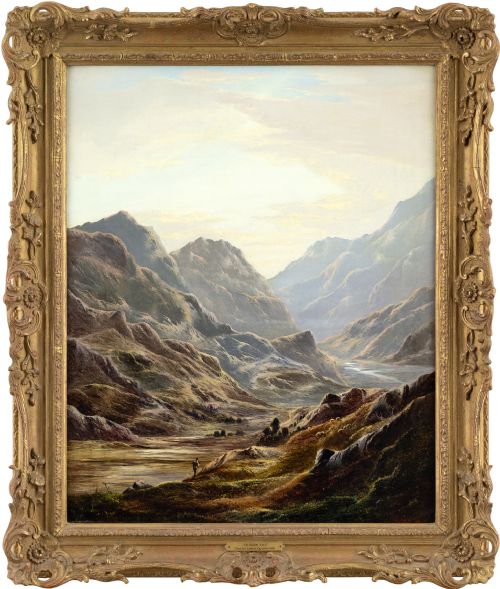
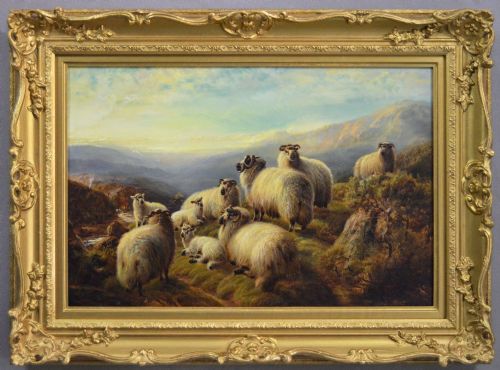


Framed Highland Landscape Picture
A framed highland landscape picture brings the vast, atmospheric expanses of northern mountains and misty lochs directly onto an interior wall.
Framed Highland Landscape Picture
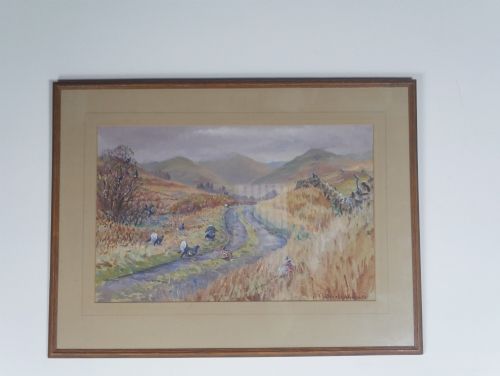
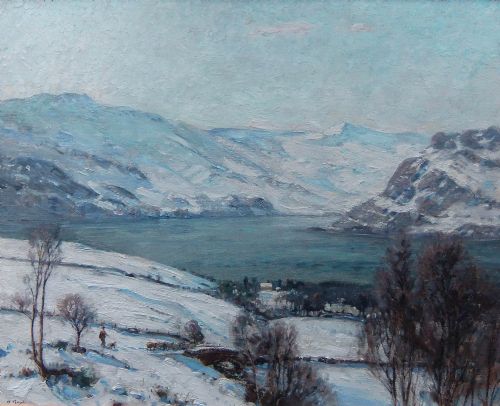
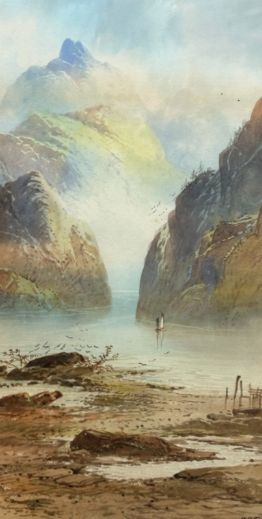
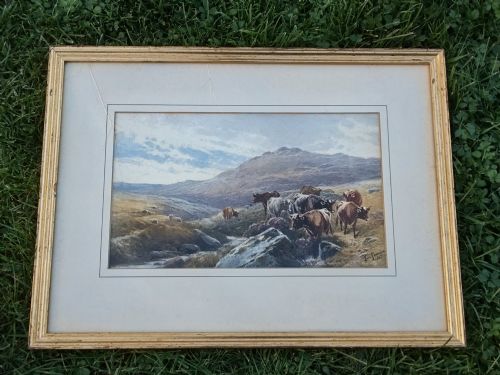
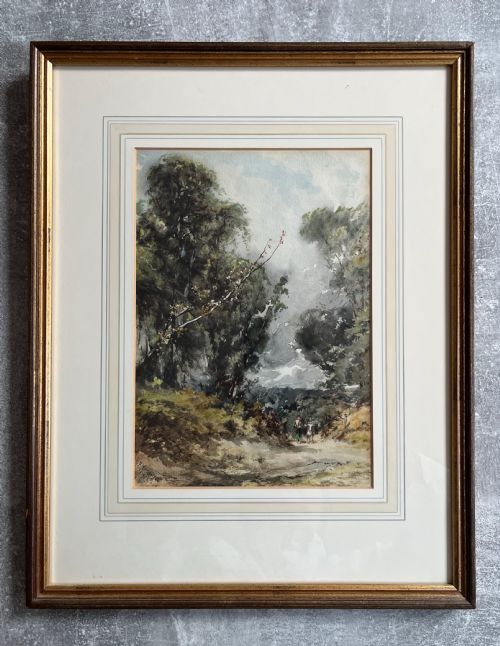
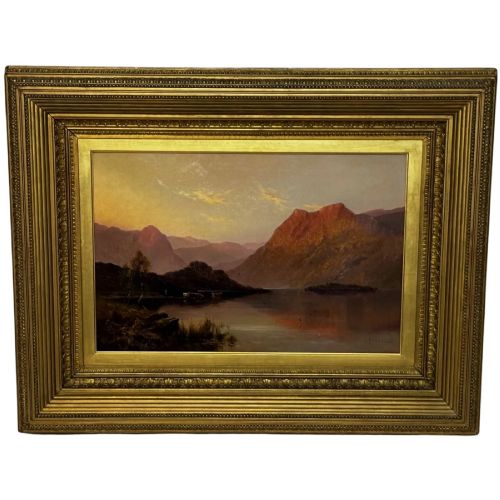
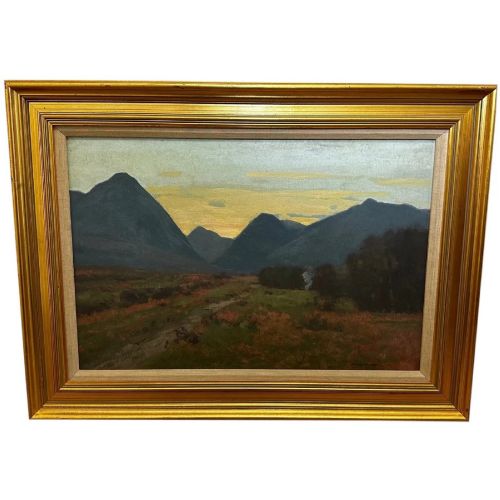
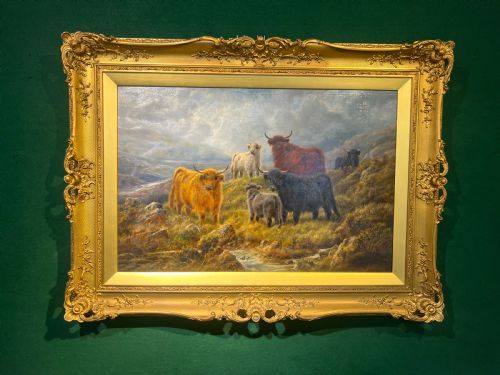
A framed highland landscape picture captures the rugged scenery of Scotland and northern England through traditional painting and watercolour. These works depict remote mountainous terrain, misty lochs, pastoral valleys, and wandering cattle under expansive skies.
The versions most commonly met on this page date from the Victorian and Edwardian eras, stretching from the late nineteenth century into the early twentieth century. They range in scale from intimate watercolours on paper to large oil paintings enclosed in decorative frames.
Subjects frequently centre on pastoral life, featuring Highland cattle resting near streams, shepherds with flocks, or solitary stone crofts nestled beneath peaks such as Ben Lawers. These framed compositions preserve a specific artistic vision of nineteenth-century topography and romantic wilderness.
How They Were Made
Artists painted primarily with oil on canvas or wood panel, or applied watercolour and gouache onto paper. Oil mediums allowed for deep layering of pigment to capture shifting atmospheric light on water and rock, while watercolours offered swift, translucent washes for skies and distant mists.
Surviving works are held within wood frames, frequently finished in gilt or giltwood to accentuate the composition. These frames often match the period of the artwork, using moulded timber details typical of Victorian and Edwardian workshop practices.
Framed Highland Landscape Picture Retail Price Guide 2026
Typical asking prices for framed highland landscape picture among the pieces listed under this phrase on Sellingantiques today, from the lower quarter to the upper quarter. They describe what is for sale here now, not the wider market.
Keep an eye out for stubbornly stationary highland cattle that apparently refused to budge while the Victorian artist set up their easel.
What Varies in Quality
Quality rests upon the artist's ability to handle light and spatial depth, distinguishing skilled academic painters from formulaic commercial studio output. Superior examples demonstrate confident brushwork in rendering the texture of wool, water, and granite rather than relying on standard compositional formulas.
The preservation of the underlying canvas, paper, and pigment condition dictates the visual strength of the piece. Intact original frames that complement the painting without excessive modern restoration also elevate the integrity of the work.
Herbert Royle·Thomas Rowden·George Fotherly Hargitt·William Henry Earp·Alfred Fontville de Breanski·George Houston·Robert Watson·Charles Leslie·Joseph Knight·William George Tennick·Henry Robinson Hall·H Wallace·Tom Seymour·James Bell Anderson·Sidney Yates Johnson·Stanley Orchart·John Charles Tunnard·Nasmyth·George Turner·Alfred de Breanski·Robert Cleminson·Frederick Richard Lee·Thomas Sidney Cooper·AJ Thornton·Gustave De Brianski
The Framed Highland Landscape Picture Glossary
- Giltwood
- Wood carved and coated with gold leaf or metallic powder to create a reflective golden surface. This finish was standard for framing significant nineteenth-century paintings.
- Watercolour
- A paint consisting of pigment suspended in a water-soluble binder, applied to paper to create luminous transparent washes. It was widely used for portable landscape studies.
- Gouache
- An opaque water-based paint that includes a white pigment filler, producing heavier, solid colours. Artists used it alongside watercolour to add highlights to mountain crags and skies.
- Canvas
- Heavy woven fabric stretched across a wooden frame to serve as a sturdy support for oil paintings. It provides texture that influences how oil paint catches the light.
- Provenance
- The documented history of a painting's ownership and origin. Clear provenance helps verify the attribution of works by named nineteenth-century artists.
Framed Highland Landscape Picture: Frequently Asked Questions
What periods do these paintings come from?
The works primarily date from the nineteenth century, the Victorian era, and the early twentieth century. Artists working during these decades recorded the British landscape through romantic and impressionistic lenses.
Later pieces extend into the mid-twentieth century, maintaining traditional approaches to topographical scenery and rural subjects.
How were these pictures originally framed?
Period pictures were typically mounted in heavy timber frames finished with plaster mouldings and gold leaf. These surrounds were designed to project the artwork forward and catch interior gaslight or daylight.
Many surviving pieces retain their original giltwood or painted wood frames from the Victorian or Edwardian periods.
Where should I hang a highland landscape?
These works suit traditional living spaces, studies, or hallways where natural light can illuminate the oil glazes or watercolour paper. Pairing them with period interior elements enhances their visual impact.
Ensure they are placed away from direct sunlight and damp walls to protect the canvas, paper, and gilt framing over time.
How do I identify the artist?
Look for signatures, monograms, or dates inscribed directly into the lower corners of the canvas or watercolour paper. Handwritten notes on the reverse of the stretcher bars or frame also frequently reveal titles and artist names.
Comparing stylistic traits like brushwork, cattle rendering, and mountain contours helps attribute unsigned Victorian and Edwardian works.