



Highland Landscape Watercolour
These highland landscape watercolour works capture wild Scottish terrain on paper, bringing moody lochs and remote glens directly into your study.
Highland Landscape Watercolour
A highland landscape watercolour depicts the rugged topography, remote lochs, and agricultural life of Scotland, rendered through water-based pigments on paper. These works span periods from the Georgian era through Victorian times and into the twentieth century, reflecting shifting tastes in British landscape art.
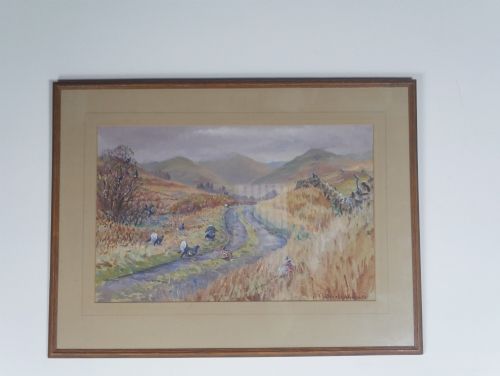
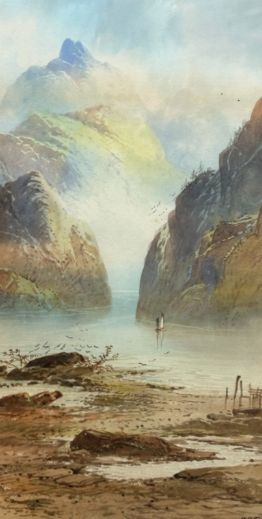
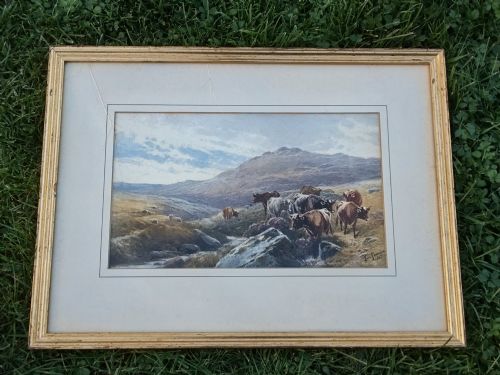
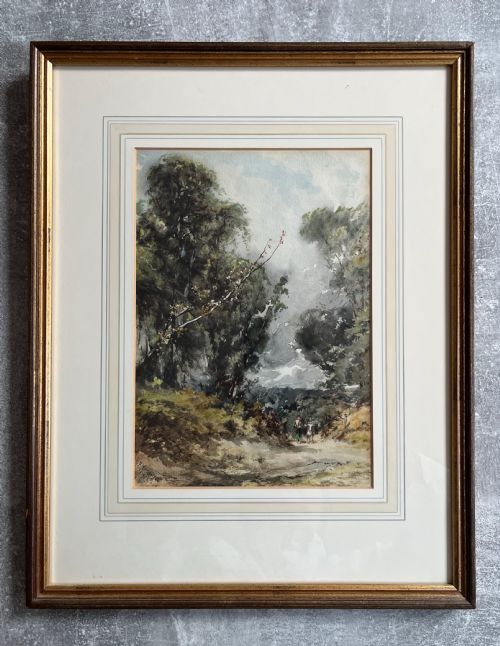
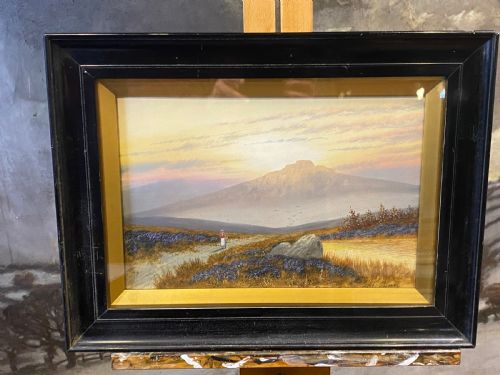
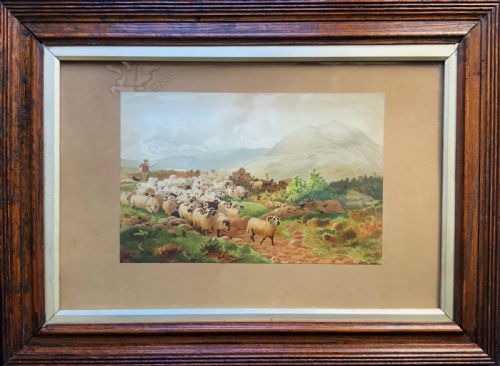
You will most frequently encounter nineteenth-century and Victorian examples on this page, often framed in wood or gilt settings with glass protection. The subjects range from misty highland lochs and distant mountains to detailed pastoral scenes featuring sheep, cattle, and solitary figures navigating rural paths.
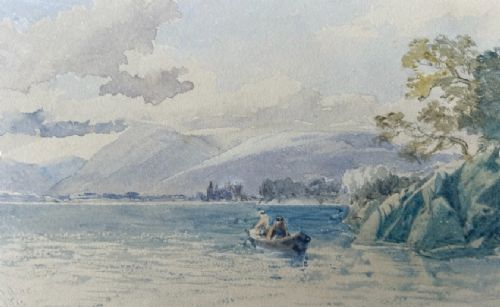
The compositions vary from expansive panoramic views of places like Loch Awe and Loch Leven to intimate depictions of Scottish crofts and farming life. Makers and artists documented these environments using both pure watercolour pigment and gouache, capturing the changing weather and atmospheric light of the northern terrain.
Materials and techniques
Artists applied watercolour pigment and opaque gouache onto prepared paper surfaces, often building up translucent washes to achieve atmospheric effects of mist and water. The paper itself provides the luminous base light that shines through the thin pigment layers.
Framing materials such as wood, gilt wood, and gold leaf were utilised to protect and complement the works, preserving the delicate water-soluble pigments from moisture and handling. Many pieces are preserved under glass within traditional frames that match the period of the painting.
Highland Landscape Watercolour Retail Price Guide 2026
Typical asking prices for highland landscape watercolour among the pieces listed under this phrase on Sellingantiques today, from the lower quarter to the upper quarter. They describe what is for sale here now, not the wider market.
Listings span the nineteenth and twentieth centuries, featuring paper, gouache, and traditional wood framing.
Assessing quality and execution
Quality rests upon the artist's command of light, tone, and perspective in capturing the challenging weather and vast scale of the northern terrain. Stronger works demonstrate confident brushwork and precise atmospheric depth rather than static reproduction.
The preservation of the paper and the purity of the watercolour pigment determine the visual impact of the piece over time. Original framing materials and clear signatures or documentation by known artists further elevate the standing of a work.
Thomas Rowden·George Fotherly Hargitt·Thomas Miles Richardson Jnr·William Henry Earp·Stanley Orchart·AJ Thornton·Henry Birtles·Milton Drinkwater·Alfred Graham·Aster Richard Chilton Corbould·Thomas Pritchard
The Highland Landscape Watercolour Glossary
- Watercolour
- A painting method in which the paints are made of pigments suspended in a water-based solution. This technique allows for delicate washes and luminous effects on paper.
- Gouache
- A method of painting using opaque pigments water-bound and thickened with a binding agent. It provides solid, flat areas of colour that contrast with transparent watercolour washes.
- Gilt
- Covered thinly with gold leaf or gold paint. This finish appears frequently on the frames enclosing nineteenth-century landscape works.
- Pastoral
- A genre of art depicting rural life and agricultural scenes. These works often feature herdsmen, cattle, and sheep within expansive natural settings.
- Monogram
- A motif made by overlapping or combining letters to form a symbol. Artists often used these initials to sign their works discretely.
Highland Landscape Watercolour: Frequently Asked Questions
How old are these highland landscape watercolour works?
The listings span from the Georgian period through the Victorian era and into the mid-twentieth century. Many date specifically from the nineteenth century.
Artists during this era frequently travelled north to document the remote landscapes and traditional ways of life in Scotland.
How should I display watercolour art at home?
Watercolour paintings require protection from direct sunlight to prevent the pigments from fading over time. Hanging them away from damp walls and heat sources ensures the paper remains stable.
Keep the original glass and frame intact whenever possible to shield the delicate pigments from environmental damage.
What subjects appear in these highland scenes?
Common subjects include expansive lochs, mountainous terrain, and remote Scottish crofts. Many compositions also feature farming life, including herdsmen, cattle, and sheep.
Artists sought to capture the distinct atmosphere and changing weather patterns of the northern landscape.
How can I tell the period of a painting?
Dating relies on the framing materials, paper types, and the artist's active working dates. Signatures, monograms, and period inscriptions often provide precise clues to the year of creation.
Stylistic conventions also shift from the romantic Georgian views to the more detailed Victorian pastoral works.