


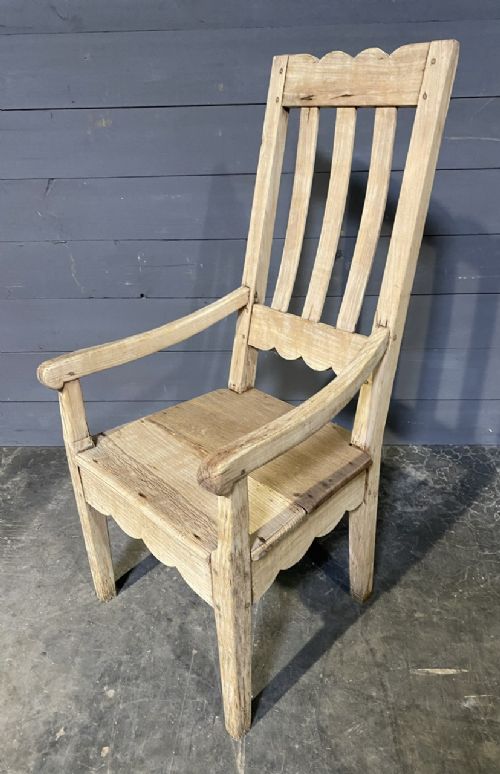


Country Pine Armchair
A country pine armchair brings immediate warmth and honest vernacular character to a room, built from accessible timber for everyday domestic comfort.
Country Pine Armchair
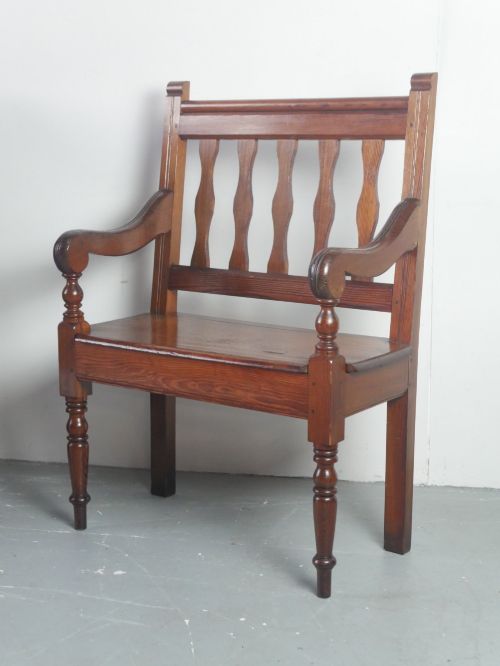
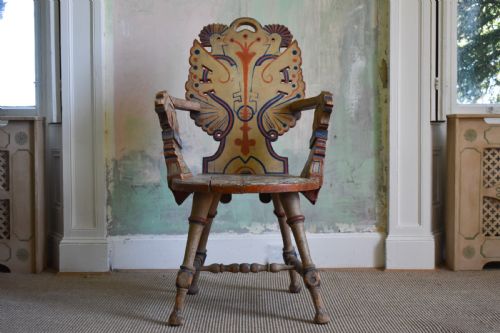
A country pine armchair is a utilitarian seating form shaped by regional traditions and domestic needs across the eighteenth and nineteenth centuries. These pieces encompass diverse regional vernacular styles, ranging from robust Scottish crofter seating to Swedish folk art designs and French country armchairs.
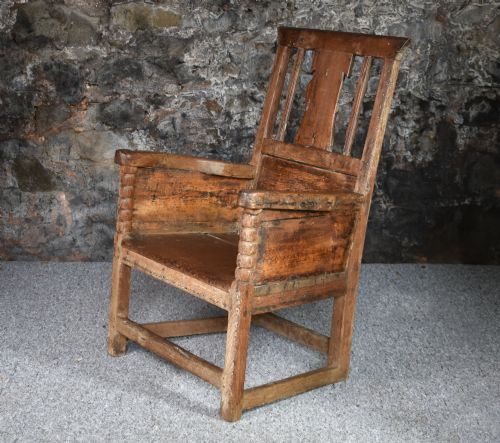
Buyers browsing this selection most frequently encounter nineteenth-century examples alongside earlier Georgian vernacular pieces and primitive Dug Out forms. The construction relies on sturdy local timber shaped by provincial makers rather than urban cabinetmakers.
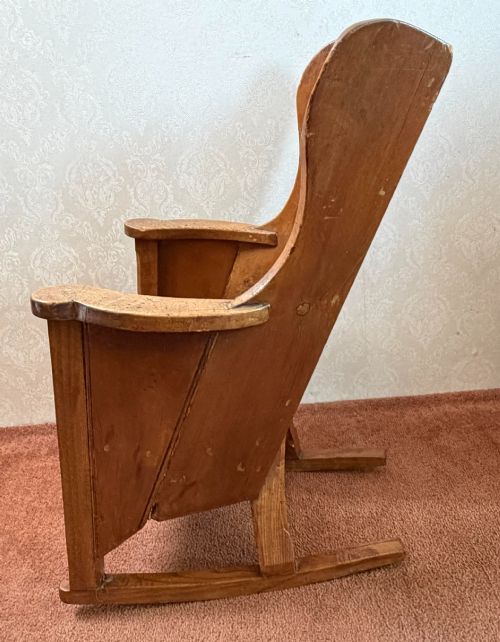
Forms vary from nursing chairs and child-sized rockers to multi-functional lambing chairs and solid dug-out seats hewn from a single log. Each iteration reflects the practical requirements of rural households rather than formal salon aesthetics.
How they were made
Construction relies primarily on solid pine and pitch pine, occasionally supplemented with oak, ash, birch, or iron fixings. Makers selected timber based on local availability, utilising dense woods for structural integrity and softer pine for carved or shaped elements.
Techniques range from dug-out hollowing of solid logs to vernacular joinery employing peg construction and primitive framing. Surfaces frequently display historic layers of paint, revealing the ongoing maintenance and decorative choices of successive generations.
One tiny chair was built small enough for a child or a very patient doll, proving that even rural woodworkers enjoyed miniature projects.
What varies in quality
Quality rests in the integrity of the original construction, the honesty of the surface patination, and the proportion of the vernacular form. Pieces retaining untouched historic paint surfaces and robust structural timber hold greater integrity than those altered by modern intervention.
The sophistication of regional carving and the cleverness of vernacular adaptation distinguish standard utilitarian seating from exceptional folk art examples. Balance between rugged practicality and sculptural form governs the standing of each piece.
The Country Pine Armchair Glossary
- Vernacular
- Everyday furniture made by local regional makers using accessible materials rather than following metropolitan high-style designs. This approach prioritises local utility and traditional local construction methods.
- Dug-out
- A seating form carved entirely from a single solid log or trunk rather than assembled from separate joined components. This ancient method creates heavy, monolithic chairs with great structural permanence.
- Lambing chair
- A high-backed provincial armchair traditionally featuring hooded sides or wings to shield the sitter from draughts near a hearth. These chairs often incorporate storage compartments or table attachments.
- Folk art
- Decorative and utilitarian objects created within a traditional community culture, reflecting regional aesthetics and naive craftsmanship. Such pieces display individual artistic expression within established local traditions.
- Pitch pine
- A heavy, resinous softwood sourced from pine species known for durability and prominent grain patterns. Makers utilised this robust timber for pieces requiring extra structural strength.
Country Pine Armchair: Frequently Asked Questions
What is a country pine armchair?
A country pine armchair is a utilitarian seat produced by regional makers using accessible timber, designed for practical domestic use in rural homes.
These pieces reflect local traditions, ranging from Swedish folk art designs to Scottish vernacular forms, prioritising sturdiness and comfort over formal elegance.
How were country armchairs used?
They served as everyday seating by the hearth, in farmhouses, or within crofters' cottages, providing sturdy support for daily household life.
Specialised forms like nursing chairs or lambing chairs met specific domestic needs, such as tending to infants or sheltering from cold draughts.
How do I date a pine armchair?
Dating relies on examining construction methods, tool marks, timber characteristics, and stylistic traits associated with periods like the Georgian era or the nineteenth century.
Surface wear, original paint layers, and vernacular joinery details help contextualise the age and regional origin of the piece.
Are these chairs comfortable?
Yes, though their comfort derives from honest ergonomic adaptation and generous proportions rather than modern upholstery.
Many feature deep seats, supportive backs, and armrests shaped by the practical demands of rural domestic life.
How do I care for antique pine?
Care involves keeping the wood away from direct heat sources and sudden humidity changes to prevent timber movement and splitting.
Maintaining a stable environment preserves historic surface patination and keeps the original timber stable without heavy modern restoration.