

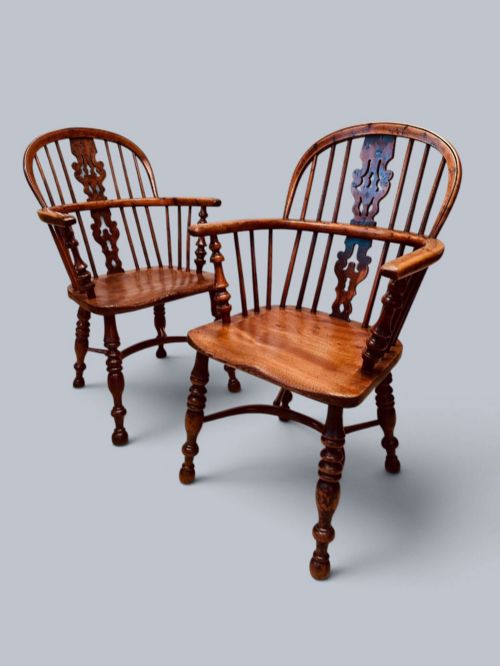
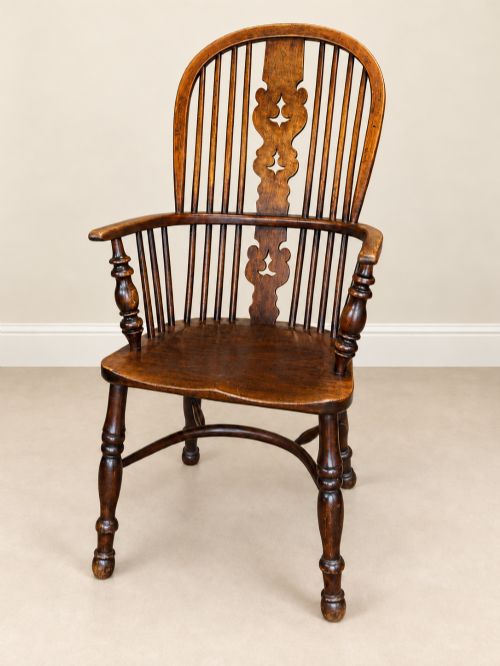
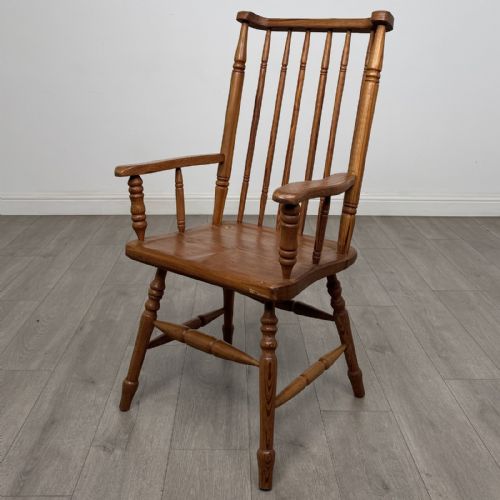
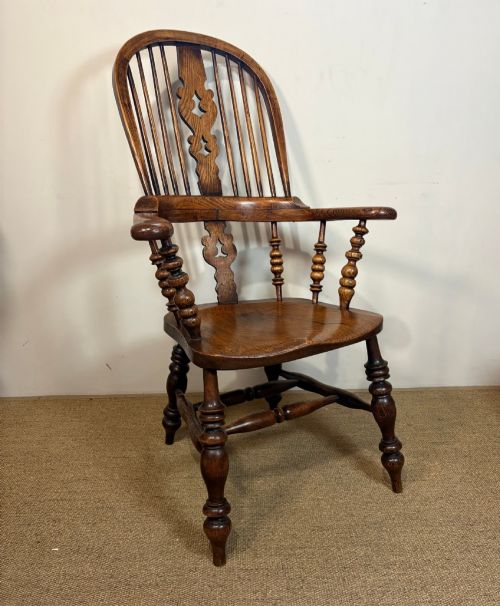
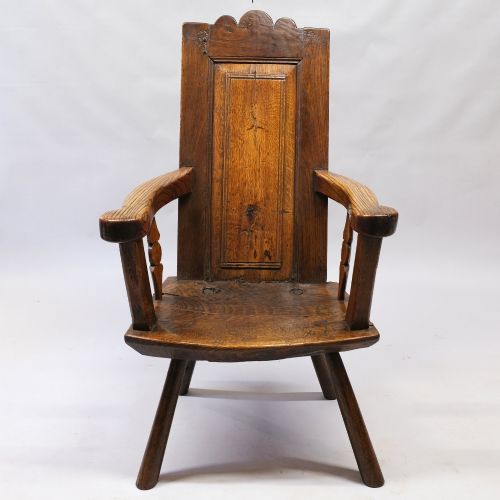
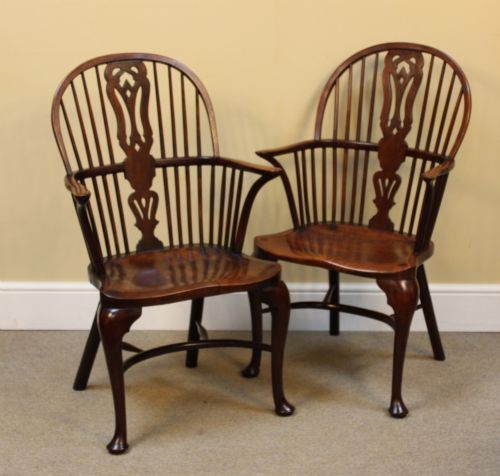

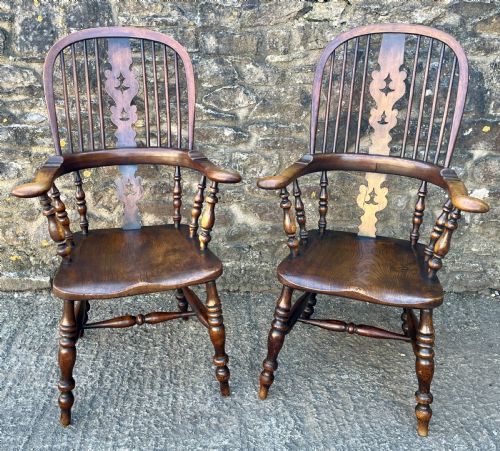


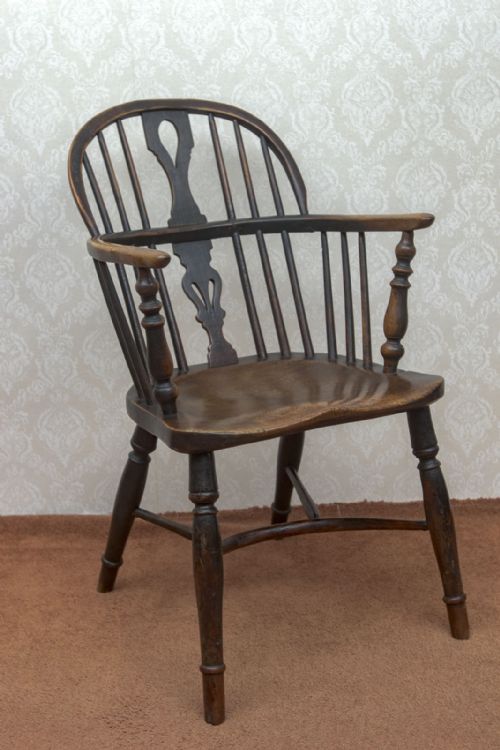

Windsor Style Armchair
A windsor style armchair brings tactile timber and vernacular design into a room, offering robust seating shaped by generations of rural cabinet-makers.
Windsor Style Armchair
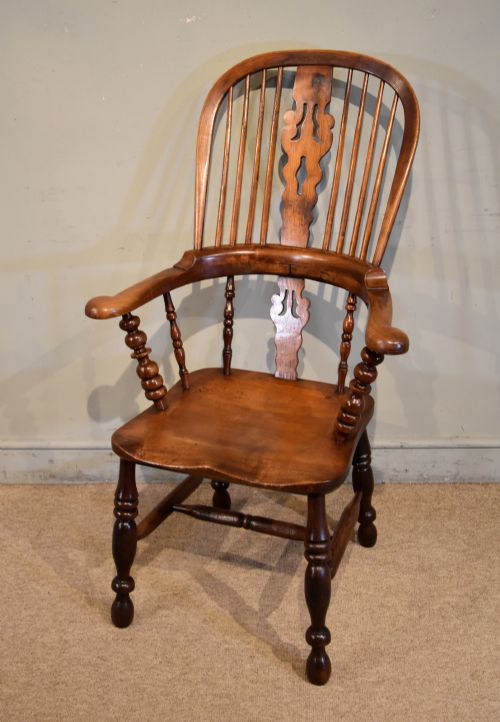
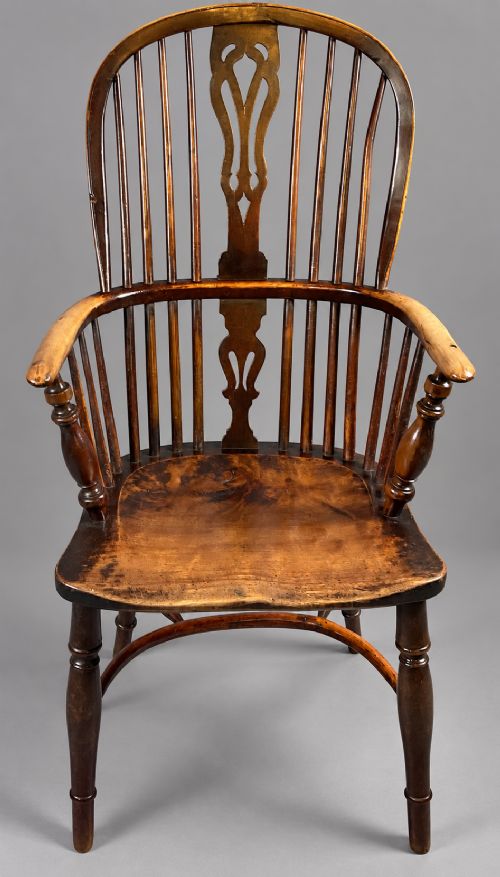
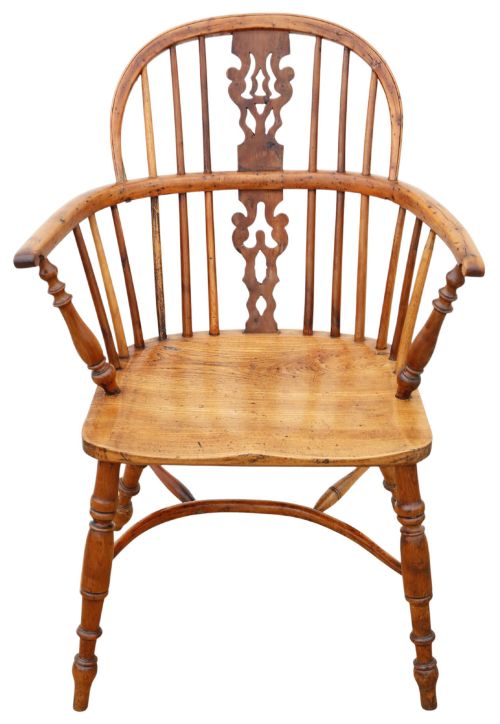
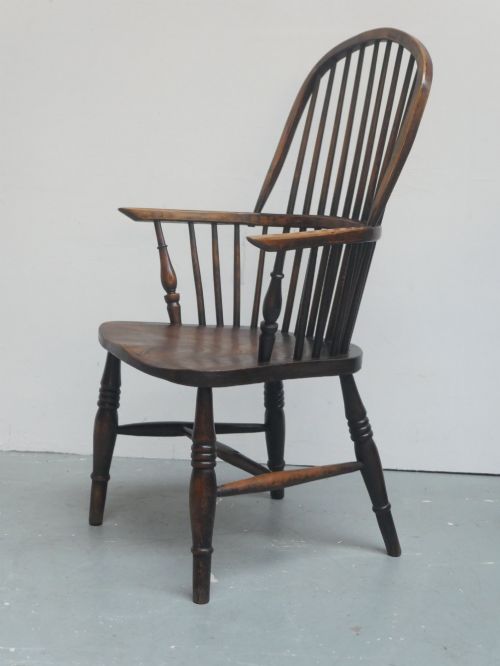
A windsor style armchair is defined by its distinct construction where spindles and legs are socketed directly into a solid wooden seat. You will frequently encounter nineteenth-century examples on this page, alongside earlier eighteenth-century forms and later rustic interpretations.
The regional variations range from high-back and low-back dining chairs to broad armchairs, rocking chairs, and small child's chairs. These pieces emerge from English country traditions, often utilising vernacular forms that prioritize sturdy utility.
Makers shaped these chairs with solid plank seats, frequently carved into a saddle shape for comfort. The upright members support the arms and back, creating a coherent structural skeleton without heavy upholstery.
Materials and construction methods
Makers selected different timbers for specific structural demands within a single windsor style armchair. Elm commonly provided the solid, cleft seat because its interlocking grain resisted splitting under downward pressure.
Yew and ash supplied the slender spindles, hoops, and bow backs, offering immense tensile strength and flexibility when steamed. Beech and pitch pine also appear frequently in turned legs and stretchers.
Turned components were shaped on a lathe before being fitted into bored holes with wedge joints. This clever greenwood and seasoned timber hybrid construction allowed the chair to tighten as wood naturally dried.
Windsor Style Armchair Retail Price Guide 2026
Typical asking prices for windsor style armchair among the pieces listed under this phrase on Sellingantiques today, from the lower quarter to the upper quarter. They describe what is for sale here now, not the wider market.
The inventory records vernacular forms ranging from full-sized rocking chairs down to diminutive child's armchairs made in local workshops.
What distinguishes finer examples
Quality in a windsor style armchair rests upon the harmony of proportions and the selection of figured timbers. Yew wood examples with rich grain patterns and deep patination command particular attention.
Benjamin Gilling
The Windsor Style Armchair Glossary
- Comb-back
- A windsor chair variation where the central spindles extend upward to support a horizontal top rail resembling a traditional hair comb.
- Spindle back
- A classic backrest design composed of numerous turned wooden uprights radiating from the seat to the top rail.
- Crinoline stretcher
- A curved wooden brace connecting the legs of a chair to provide rigidity, often shaped in a bow.
- Carver
- An eighteenth-century term for an armchair, typically designed to match a set of smaller dining chairs.
- Saddle seat
- A wooden seat base carved with ergonomic hollows for comfort, characteristic of better country seating.
Windsor Style Armchair: Frequently Asked Questions
How do I care for a wooden armchair?
Keep wooden seating away from direct heat sources and sudden humidity shifts to prevent timber splitting.
Apply a microcrystalline wax occasionally to nourish the surface and maintain the natural lustre of the aged grain.
Are these chairs comfortable for daily use?
The ergonomic saddle-molded wooden seats provide surprisingly supportive sitting positions for meals or reading.
Adding a loose sheepskin or a simple linen cushion softens the firmer timber base for extended sitting.
What is a smoker's bow?
A smoker's bow is a low-backed armchair variant with a continuous curved arm rail and turned spindles.
These compact seats were common in nineteenth-century provincial settings and public houses.
How do I spot an earlier chair?
Earlier examples often feature multi-piece elm seats and thicker, more organic turnings on the legs and stretchers.
Constructive details like wedged tenons passing right through the seat surface also point towards older craftsmanship.