




Antique Pitch Pine Seating
These antique pitch pine seating pieces offer robust timber construction and striking ecclesiastical or industrial character, built to last for generations.
Antique Pitch Pine Seating
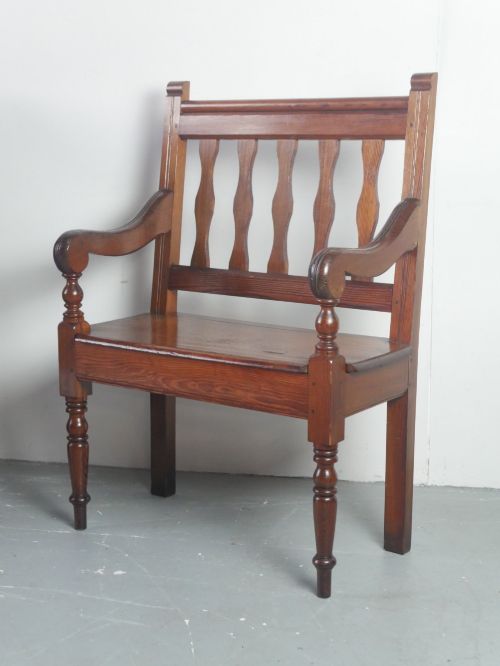
When buyers search for antique pitch pine seating, they encounter sturdy wooden benches, church pews, hall chairs, and industrial stools dating from the nineteenth century. These practical forms range from rustic country examples to elaborate Gothic Revival and Arts and Crafts designs.
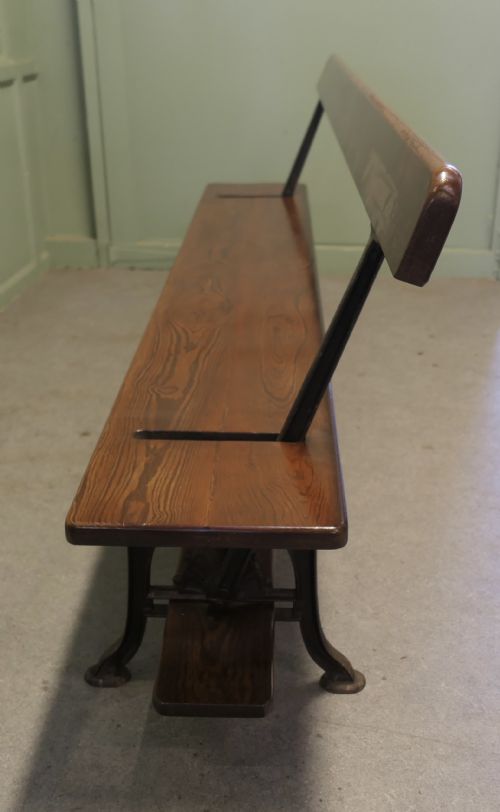
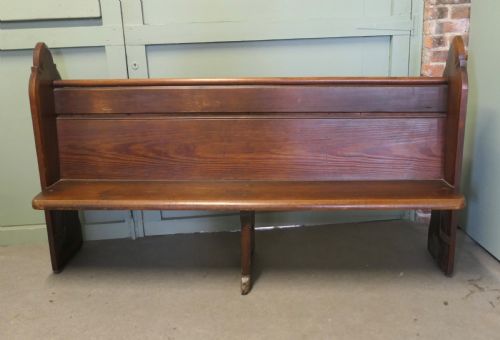
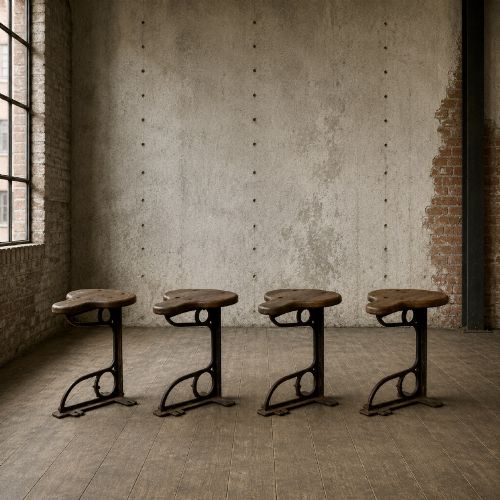
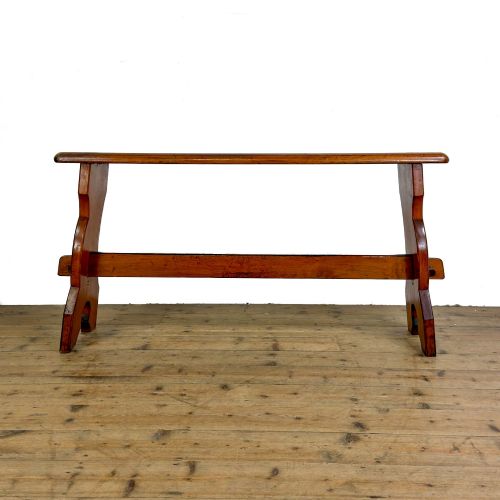
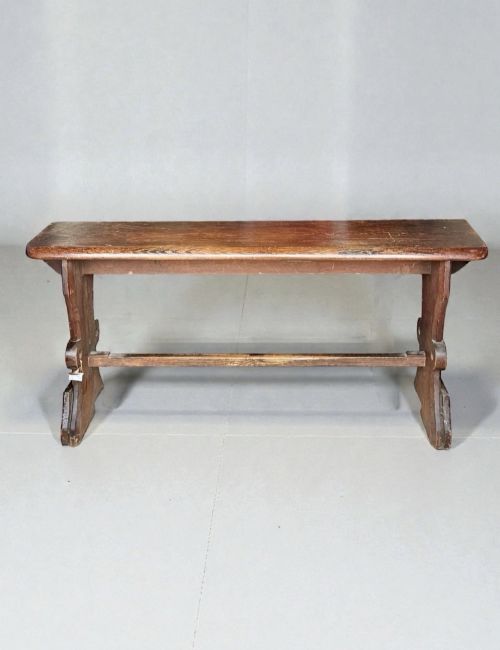
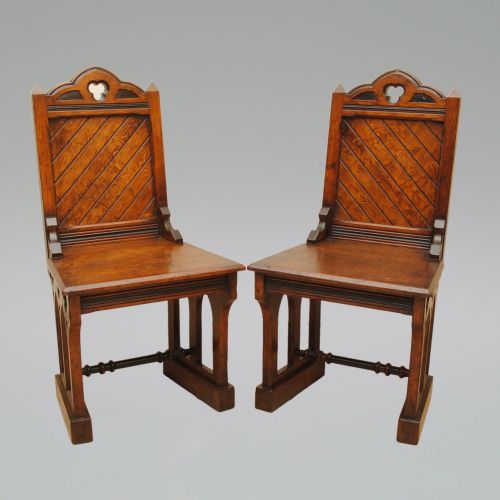
The pieces on this page are most commonly Victorian church benches, institutional pews, and domestic hall chairs, alongside unusual items such as tramway reversible benches and machinist stools. Their origins span ecclesiastical and industrial settings, utilising the dense, resinous grain characteristic of the timber.
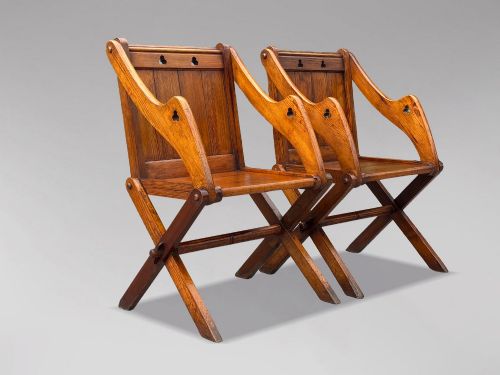
Forms vary from neat hall benches and pairs of Glastonbury armchairs to organ benches and flip-over railway seating. The overarching aesthetic draws heavily on Gothic design influences paired with utilitarian function.
How antique pitch pine seating was made
Construction relies heavily on solid pitch pine and pine timbers, valued for their durability and pronounced growth rings. Makers frequently combined this resinous wood with structural metal components such as cast iron frames and brass or iron fittings.
Joinery techniques prioritize strength to withstand heavy institutional or industrial use, often reinforced with metal studs. Surviving pieces occasionally retain original upholstery fabric or show the marks of hand-tooling alongside period mechanical fixings.
Some pews spent decades listening to quiet sermons before starting a second life as hallway seating.
What varies in quality
Quality in these pieces rests primarily on the grain definition of the timber and the integrity of the original construction. Tighter growth rings and heavier timber substance distinguish superior examples from simpler utilitarian items.
Design ambition also separates the range, moving from plain functional church pews to carved Gothic Revival throne chairs, ecclesiastical armchairs, and matched sets of industrial stools.
The Antique Pitch Pine Seating Glossary
- Pitch pine
- A dense, resinous softwood timber with a prominent grain pattern widely used in Victorian and industrial furniture. It was favoured for its strength and durability in heavy-use environments.
- Gothic Revival
- An architectural and decorative style popular during the nineteenth century that drew inspiration from medieval forms. Pieces in this style often feature pointed arches, tracery, and formal vertical lines.
- Glastonbury armchair
- A type of folding chair with X-framed legs and a sloping back, based on an ancient relic chair. They became popular in the Victorian period during the Gothic Revival movement.
- Organ bench
- A long, stable seat designed for musicians playing church or parlour organs. They often doubled as side tables or storage seats in domestic settings.
- Ecclesiastical furniture
- Furnishings originally created for use in churches and religious institutions. This category includes pews, throne chairs, and choir stalls built to withstand decades of regular gathering.
Antique Pitch Pine Seating: Frequently Asked Questions
Where were pitch pine benches used?
These benches served primarily in churches, chapels, schools, and railway stations before entering the domestic market.
Their robust construction made them ideal for high-traffic public spaces that required durable seating.
How do I identify Victorian pitch pine?
Victorian pitch pine is distinguished by its heavy weight, deep orange-brown colour, and very prominent, resinous grain lines.
Nineteenth-century examples often display the tool marks and construction methods typical of the period's workshops.
Are church pews comfortable for daily use?
Church pews and institutional benches were built for upright posture during services rather than lounging.
Many owners add loose cushions or pads to adapt these firm wooden seats for modern dining or hallway use.