
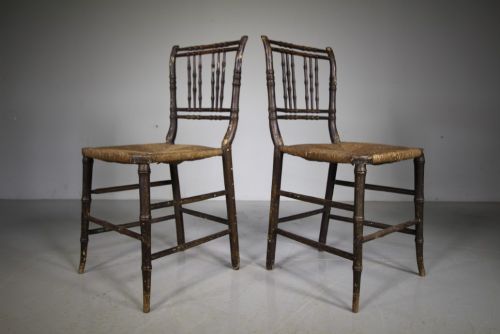
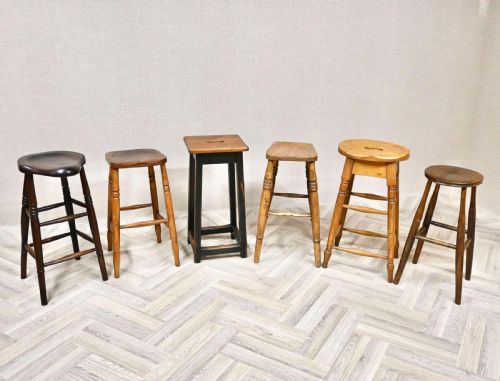
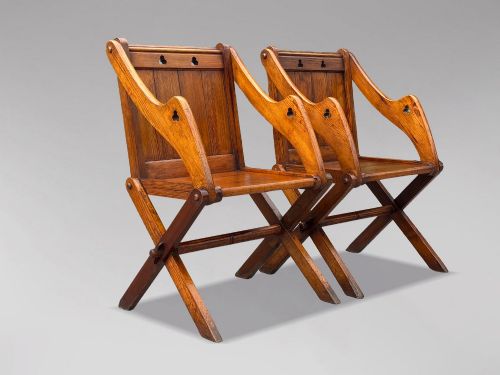
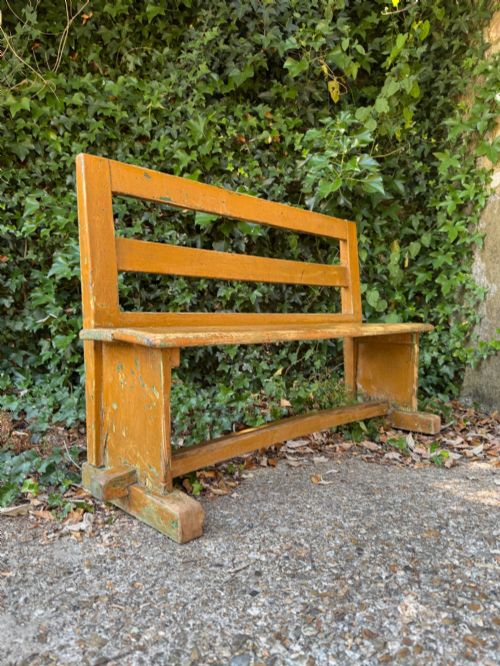



19th Century Pine Chairs
These 19th century pine chairs offer honest domestic utility and regional character, shaped by hands across Sweden, Britain, and Central Europe.
19th Century Pine Chairs
When you search for 19th century pine chairs, you encounter seating that served kitchens, farmhouses, and nurseries across Europe during the 1800s. These pieces range from plain utilitarian forms to decorated examples made for both work and children.
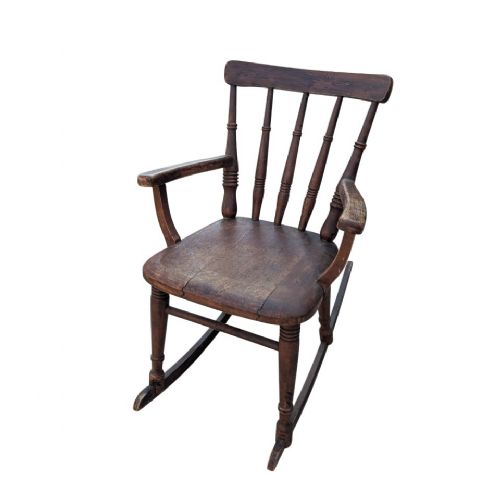
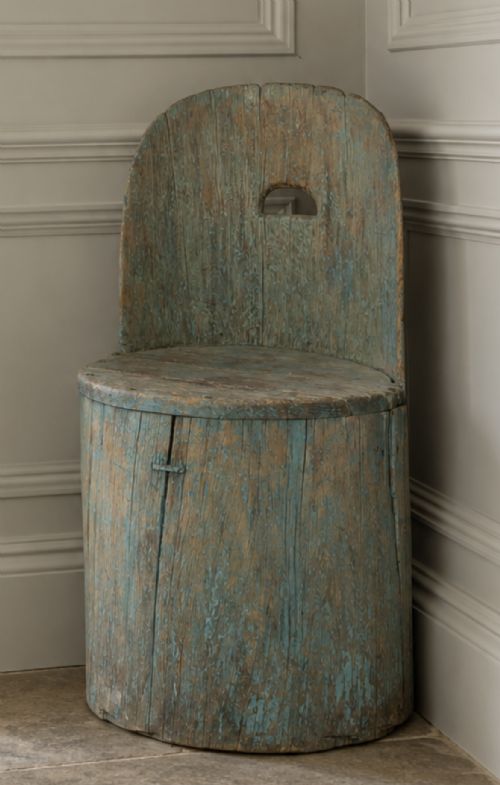
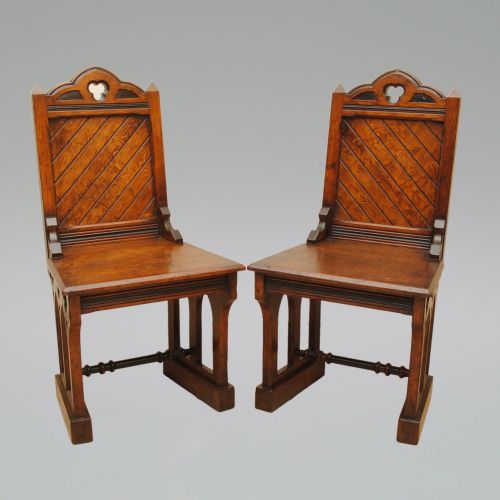
The selection on this page leans heavily toward Scandinavian country and Alpine folk art traditions. You regularly meet sturdy dug-out chairs, painted pairs, and architectural hall chairs alongside smaller child-sized rocking chairs and highchairs.
Makers utilised local softwoods to build functional seating for everyday life. While formal dining sets and benches appear, single armchairs and matched pairs dominate the current records.
How they were made
Carpenters constructed these seats using solid pine and dense pitch pine, often supplementing the softwoods with beech, elm, or oak for structural parts like spindles and stretchers. Iron nails and fixings provide hidden support where joints required extra strength.
Many surfaces carry original or early paint, while others display the smooth grain of scrubbed timber. Regional makers shaped dug-out seats from single blocks of wood using adzes and gouges, creating deep contours designed for comfort without upholstery.
Listings feature pine alongside pitch pine, elm, beech, and rush across styles spanning Scandinavian country to Victorian Gothic revival.
What varies in quality
Quality in these rural seats rests upon the integrity of the original timber and the survival of early painted surfaces. Pieces that retain their unstripped patination and original iron or wooden fixings stand apart from those altered or heavily sanded over time.
Proportion and execution define the better examples. A well-balanced dug-out chair or a sharply carved Gothic revival hall chair shows deliberate proportion, whereas lesser utilitarian pieces prioritize speed of construction over finished detail.
The 19th Century Pine Chairs Glossary
- Pitch pine
- A resinous pine variety known for its dense grain and durability, frequently chosen for architectural and Gothic revival seating. It resists wear better than standard softwoods.
- Dug-out chair
- A primitive seat hewn from a single solid block of timber, forming an integrated seat and back. This method appears frequently in Scandinavian country pieces.
- Famine chair
- A vernacular term for simple, utilitarian seating produced under economic hardship using basic materials and construction methods. These chairs embody austere regional craftsmanship.
- Harlequin set
- A collection of dining chairs that match in general style and period but vary slightly in individual detail. Such sets accumulated in homes over time rather than arriving from a single workshop batch.
- Folk art
- Decorative or utilitarian objects created within a specific regional tradition rather than an academic design school. These pieces display local aesthetic preferences and vernacular techniques.
19th Century Pine Chairs: Frequently Asked Questions
How do I date a pine chair?
Examine the tool marks, construction joints, and nail types. Hand-forged iron nails and adze marks point to earlier decades of the nineteenth century.
Compare the form with documented regional styles like Swedish folk art or British Gothic revival. Consistency in the timber's ageing and wear patterns further confirms the era.
Are pitch pine and pine different?
Pitch pine is a distinct species containing a high resin content, giving it a heavier weight and a more pronounced, darker grain than standard white or yellow pine. Carpenters selected it for structural strength and architectural detail.
Standard pine offers a lighter colour and softer texture, commonly used for painted folk furniture and domestic seating.
Did these chairs always have paint?
Many nineteenth-century chairs received layers of paint to protect the softwood and brighten modest interiors. Regional workshops often applied decorative pigments or simple block colours.
Over decades, some surfaces were stripped down to the bare timber by later owners, while others preserved their original painted skin.
How do I care for antique pine?
Keep the wood away from direct heat sources and dramatic humidity shifts to prevent the timber from splitting or warping. Feed dry unpainted surfaces with appropriate wax rather than modern silicon polishes.
Protect painted chairs by dusting with a dry cloth and avoiding harsh liquid cleaners that might lift fragile historic pigments.