


Gothic Revival Entry Chairs
Gothic revival entry chairs bring sharp arches, heavy timbers and ecclesiastical gravity into the hallway.
Gothic Revival Entry Chairs
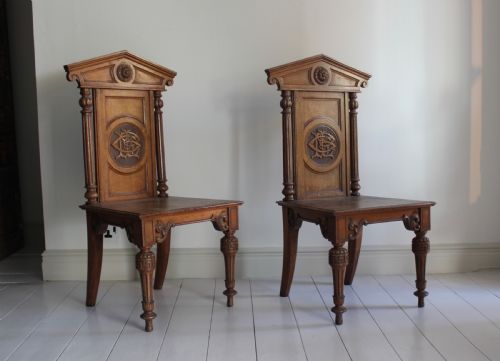
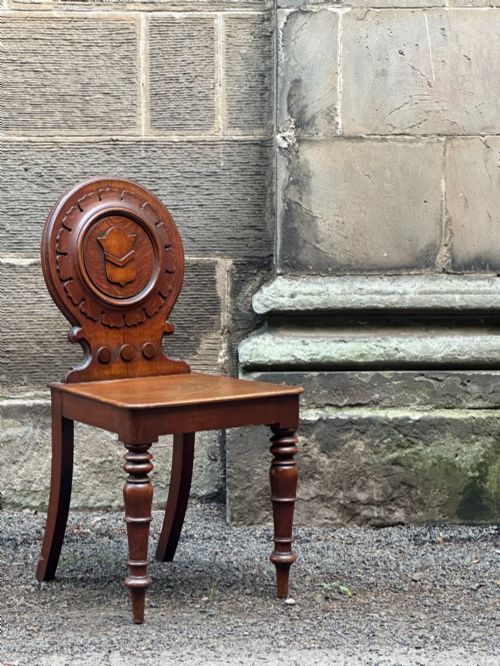
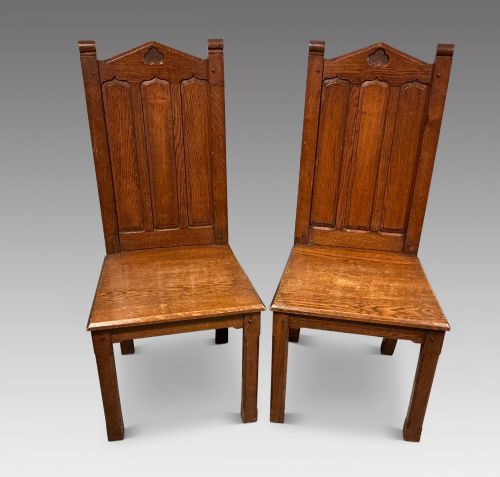
These gothic revival entry chairs are primarily upright hall chairs designed for nineteenth-century hallways and entrances. The pieces appearing here span the nineteenth century, including specific decades from eighteen-fifty to eighteen-ninety and the wider Victorian period.
Most examples take the form of tall wooden seats intended for occasional use rather than long sitting. They arrive frequently in pairs or larger sets, constructed predominantly in oak alongside mahogany, pitch pine and walnut.
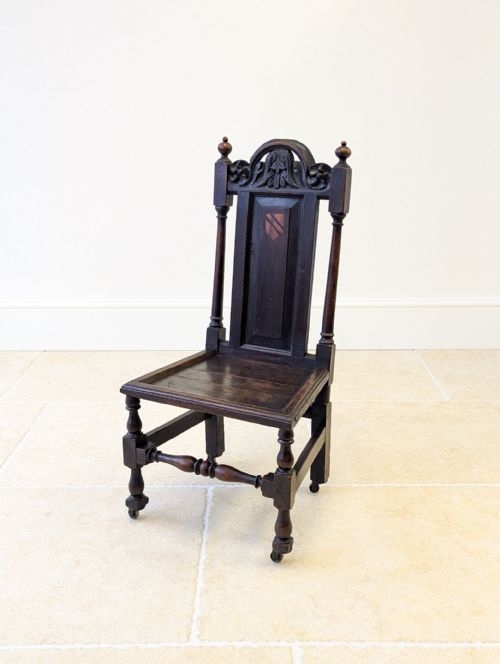
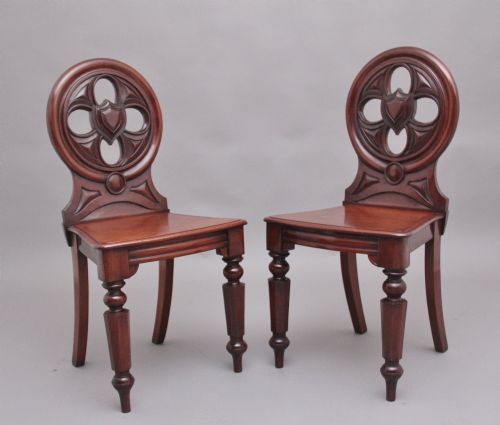
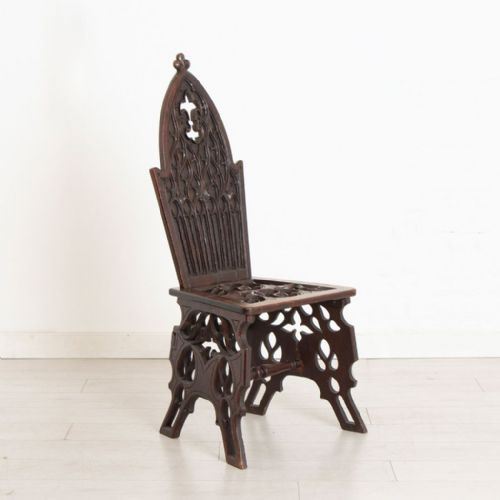
Makers drew on overlapping aesthetic movements, resulting in titles referencing Jacobean revival, Renaissance revival, arts and crafts and Victorian gothic styles. The visual language relies heavily on pointed arches, carved tracery and solid timber construction.
Materials and construction methods
Makers relied heavily on solid oak, mahogany, walnut and pitch pine to build these sturdy seats. Timber was selected for durability in high-traffic hallways and often subjected to deep hand-carving.
Detailing frequently incorporated brass hardware, applied ceramic Minton tiles, leather upholstery and velvet inserts. Joinery methods reflected nineteenth-century workshop practices, combining heavy framing with pegged or doweled joints.
Stylistic flourishes such as linenfold panels, crockets and pointed arches were chiseled directly into the structural wood. Surface finishes ranged from plain wax polishes to dark varnishes intended to highlight the grain of the timber.
Distinctions in quality and execution
Quality rests heavily on the depth and crispness of the carved ornament. Master carvers produced sharp tracery and clean relief work, whereas simpler pieces rely on shallow stamping or basic geometric incisions.
The choice of primary timber dictates much of the physical presence and longevity. Dense figured oak, rich mahogany and select walnut elevate a piece above utilitarian pitch pine versions intended for simpler domestic settings.
Design complexity also separates standard production from ambitious commissions. Incorporating specialist elements like inset ceramic tiles or leather panels points toward higher workshop standards.
The Gothic Revival Entry Chairs Glossary
- Hall chair
- A rigid, upright wooden seat designed for an entrance hall or passage. These pieces typically lack upholstered arms and prioritise architectural presence.
- Tracery
- Openwork or surface patterns of intersecting ribwork derived from Gothic architecture. It frequently appears carved into the backs of these seats.
- Pitch pine
- A resinous softwood utilised during the nineteenth century for furniture and architectural joinery. It offers a distinct grain pattern when finished.
- Jacobean revival
- A nineteenth-century design style emulating seventeenth-century British furniture forms. It manifests here through heavy turned legs and rectilinear paneling.
- Minton tiles
- Glazed ceramic inserts produced by a prominent nineteenth-century English manufactory. They occasionally decorate the wooden backs of arts and crafts seating.
Gothic Revival Entry Chairs: Frequently Asked Questions
Where should I put a gothic revival chair?
These pieces suit entrance halls, landings and corridors where their narrow proportions and upright backs function effectively without blocking passage.
They serve primarily as decorative accents or occasional perches rather than lounging seats.
Are these chairs comfortable to sit on?
Most examples feature rigid wooden seats and straight backs designed for brief use when putting on boots or waiting in a hallway.
Some variants soften this with leather pads or upholstered inserts, but overall comfort remains secondary to architectural display.
How do I identify a Victorian gothic piece?
Look for characteristic architectural motifs such as pointed lancet arches, trefoils, heavy linenfold carving and dark polished timber.
Nineteenth-century makers combined these medieval elements with robust Victorian joinery techniques.
Why do these seats often come in pairs?
Hallway seating was traditionally commissioned or purchased in matching pairs to stand symmetrically flanking a doorway or console table.
Surviving pairs remain common because nineteenth-century households favoured balanced arrangements in public spaces.