

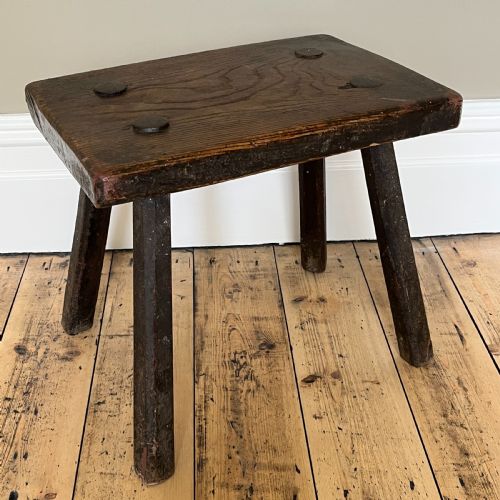


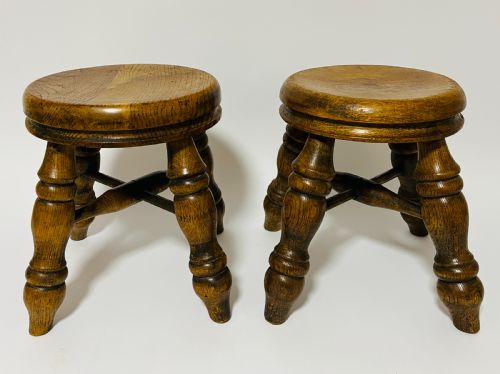

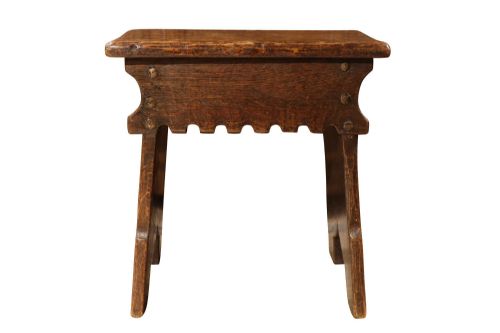
Country Oak Side Stool
A country oak side stool is a sturdy provincial seat built for domestic labour or fireside use, prized for honest timber grain and rustic utility.
Country Oak Side Stool
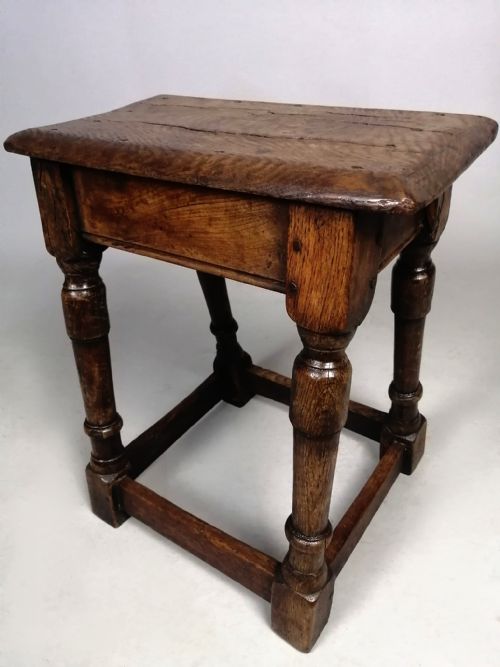
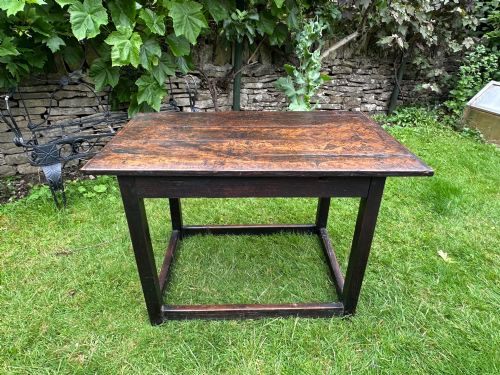
A country oak side stool represents a robust tradition of provincial seating, encompassing functional joint stools, milking stools, and low hearth designs. When searching for a country oak side stool, buyers encounter centuries of utilitarian forms shaped by local carpenters for daily farmhouse life.
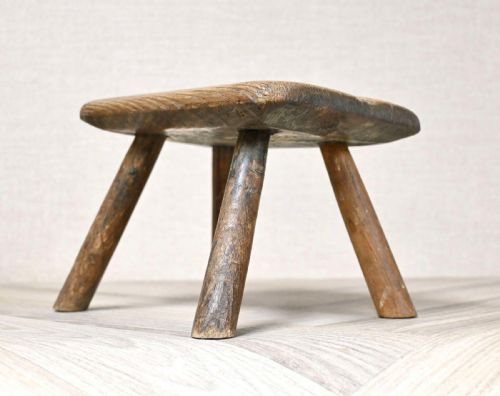
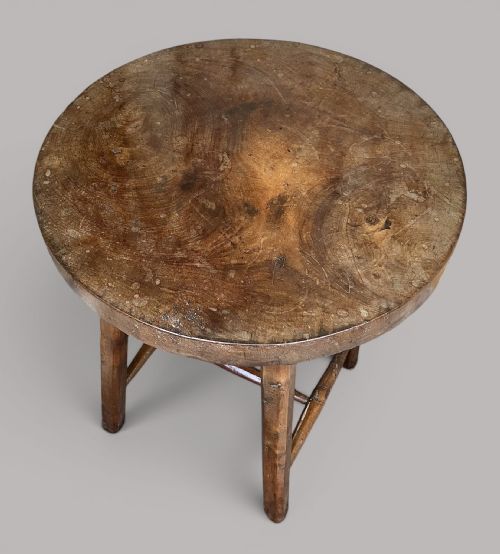
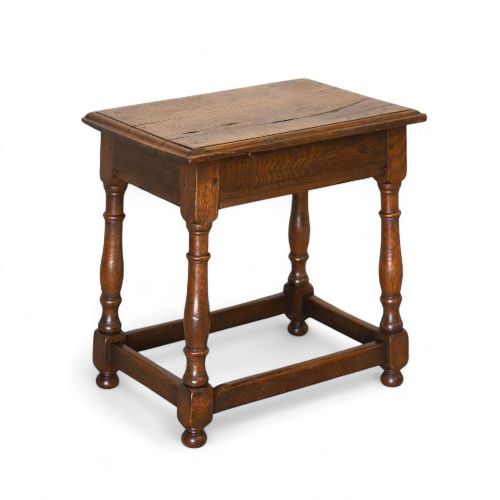
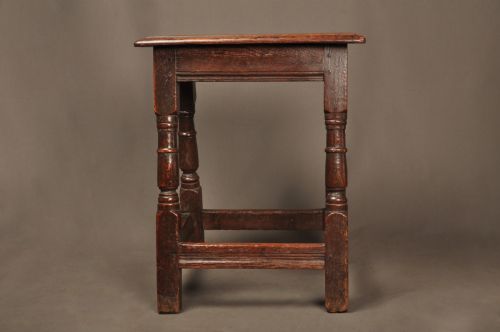
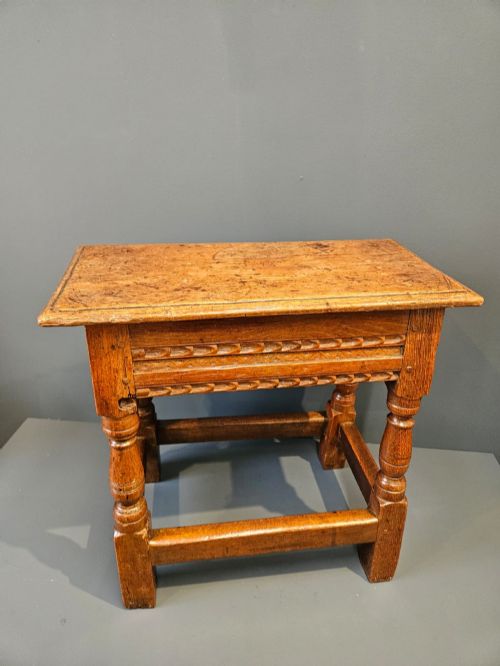
The selection ranges from seventeenth-century joint constructions with pegged joints to later nineteenth-century rustic variations incorporating elm, ash, and yew. Early seventeenth and eighteenth-century examples display straightforward rectangular tops and turned legs, while later periods introduce three-legged stool formats and low occasional tables.
Domestic interiors benefit from these pieces as versatile seats, bedside surfaces, or low display stands. Their unpretentious proportions allow them to sit comfortably in both historic and contemporary rooms without dominating the floor space.
Materials and construction methods
Makers relied primarily on native hardwoods such as English oak, elm, ash, and pollard oak, selecting timbers known for density and strength. Planks were often hand-sawn and joined using traditional pegged construction, mortise and tenon joints, or sturdy dowels that locked the frame together without metal fasteners.
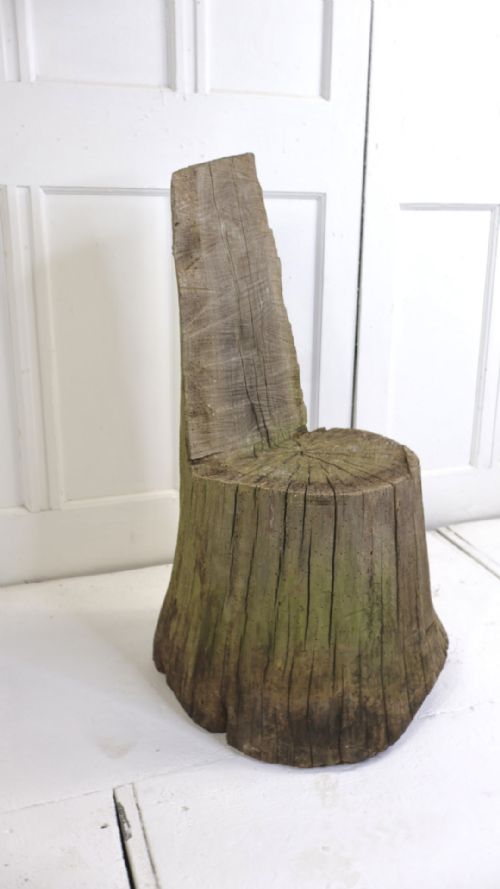
Secondary timbers like elm frequently provided tough, interlocking grain for seats that needed to resist splitting under heavy use. Turned legs on seventeenth and eighteenth-century pieces were shaped on pole lathes, while rustic country stools utilised unworked tree trunks and branches for three-legged supports.
The inventory combines traditional joint stools with rustic chopping blocks, cricket tables, and low occasional stands.
Assessing quality in provincial seating
Quality rests in the integrity of the original timber and the survival of early surface patination, rather than decorative refinement. Pieces that retain their original pegged joints and unclipped feet demonstrate superior craftsmanship from regional workshops.
The relationship between the top and the underframe dictates the structural success of the stool. Examples exhibiting honest timber shrinkage, rich colour accumulated through generations of handling, and minimal replacement parts command greater regard among collectors.
The Country Oak Side Stool Glossary
- Joint stool
- A sturdy wooden seat constructed with mortise and tenon joints, pegged together securely. These pieces date back to the seventeenth and eighteenth centuries and served multiple household functions.
- Pegged construction
- A method of joining wooden components using tight wooden dowels instead of metal nails or screws. This traditional technique allows the timber to expand and contract naturally.
- Elm
- A tough, durable hardwood frequently utilised for stool seats because its interlocking grain resists splitting under pressure. It often accompanies oak frames in country furniture.
- Pollard oak
- Timber harvested from trees that were cut back close to the trunk to encourage dense, branching growth. This process produces distinctive decorative patterns in the wood grain.
Country Oak Side Stool: Frequently Asked Questions
What is a joint stool?
A joint stool is an early wooden seat built with joined and pegged framing rather than glued joints. Carpenters made them for heavy domestic use around the home.
They often doubled as surfaces for serving food or reaching high shelves before lighter chairs became common in everyday households.
How do I date an oak stool?
Dating relies on observing construction marks, timber wear, and joint types. Hand-sawn boards and pegged pegged joinery typically point to seventeenth or eighteenth-century origins.
Later nineteenth-century and Edwardian pieces often display softer machine tool marks and lighter timbers alongside traditional forms.
Were these stools used for milking?
Certain low three-legged stools served practical agricultural roles in milking sheds and farmyards. Their tripod design kept them stable on uneven earth floors.
Other low stools functioned primarily as hearth seats placed close to the open fire for warmth during cold winter evenings.
Can I use an antique stool as a side table?
These sturdy stools make excellent low side tables or bedside surfaces due to their flat timber tops and compact footprints. Their solid construction easily supports lamps and books.
Placing them in modern rooms adds textural warmth and practical surface area without overwhelming the surrounding space.