


Country Oak Child Chair
A country oak child chair is a diminutive vernacular seat made for youngsters, offering both domestic utility and enduring rustic charm.
Country Oak Child Chair
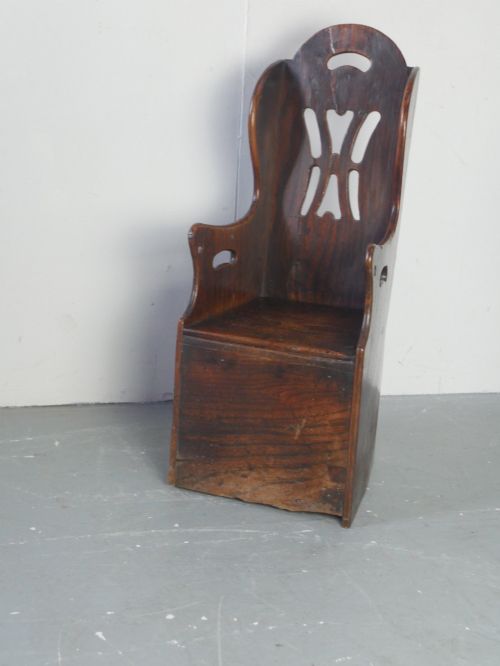
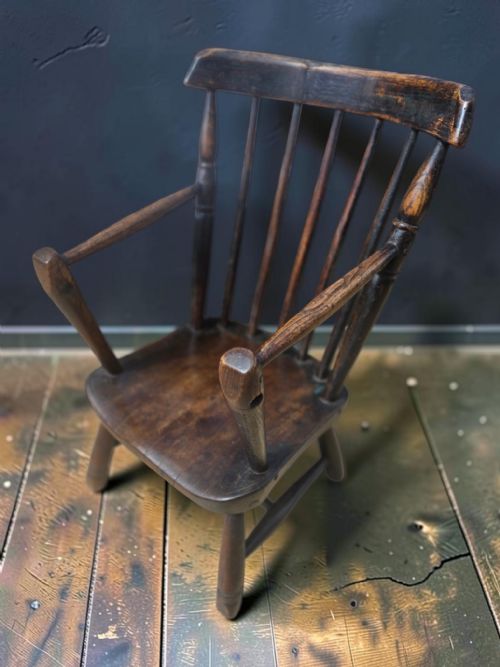
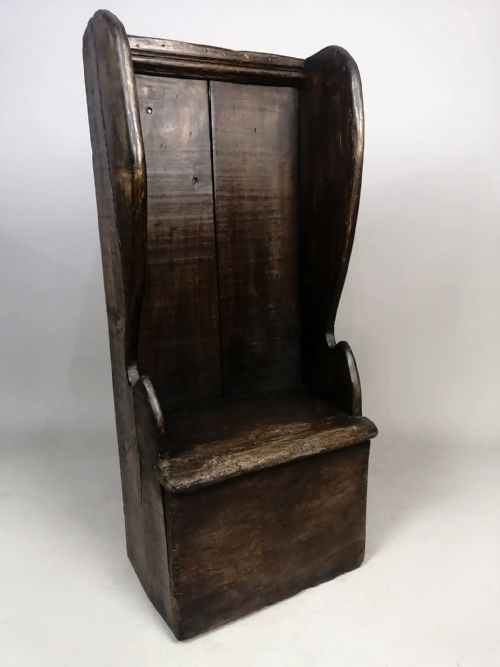
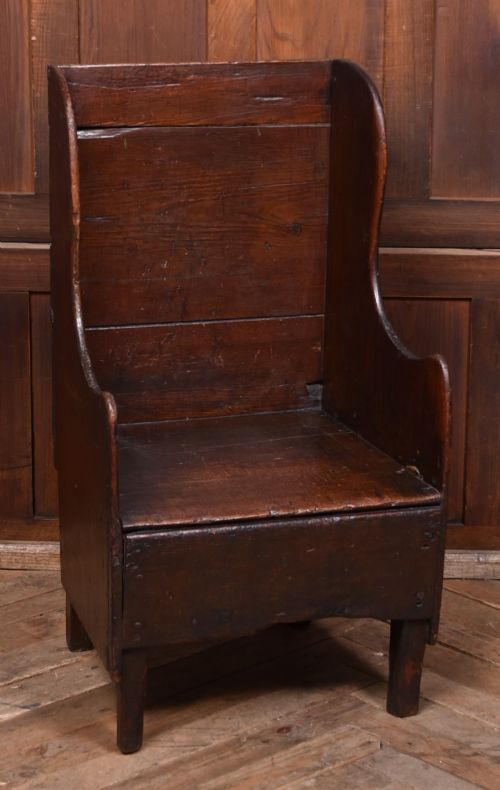
A country oak child chair is a small-scale seat produced in regional workshops for domestic use. These pieces mirror adult forms such as lambing chairs, Windsor chairs, and ladderbacks.
The selections span from the seventeenth century through the Victorian era and into the early twentieth century. Common variations include rocking chairs, high chairs, and simple stickbacks found across English and Welsh regions.
How they were made
Carpenters utilised native timbers including oak, elm, ash, fruitwood, beech, and yew for frames and spindles. These woods were often turned on bodgers' poles or shaped by hand with drawknives.
Seats incorporated solid wooden boards or woven rush, whilst some vernacular examples received later coats of paint. Joints were typically pegged or wedged securely together.
Listings feature oak, elm, ash, and fruitwood across vernacular forms spanning the seventeenth to the twentieth century.
What varies in quality
Construction methods and timber selection set examples apart, ranging from rustic provincial work to refined regional joinery. The balance of proportions in a miniature frame indicates the maker's skill.
Surface patination and the survival of original rush seating or early paint contribute greatly to the character of a piece. Substantial framing timbers add integrity to surviving high chairs and lambing chairs.
The Country Oak Child Chair Glossary
- Lambing chair
- An enclosed vernacular seat designed to shield the occupant from drafts, featuring high wooden wings and a low seat. Miniature versions replicated this comfortable domestic form for children.
- Windsor chair
- A seat constructed with stick-inserted legs and spindles fitted directly into a solid wooden seat. Child versions often display hoop backs or crinoline stretchers.
- Ladderback
- A chair back featuring horizontal wooden slats between upright posts. These frames frequently supported woven rush seating.
- Crinoline stretcher
- A curved metal or wooden brace linking the legs of a Windsor chair to provide stability. It forms a semi-circular hoop beneath the seat.
- Rush
- Dried marsh grass twisted into cords and woven to create flexible seating surfaces. It appears frequently on ladderback and provincial chairs.
Country Oak Child Chair: Frequently Asked Questions
Were these miniature chairs actually used by children?
Yes, these scaled-down seats served a practical daily purpose in historical households, keeping youngsters elevated or secure near the hearth.
High chairs and lambing chairs protected children from floor drafts while containing them safely during family meals.
How do I tell an 18th-century chair from a Victorian one?
Dating relies on examining the timber preparation, tool marks, and construction techniques evident in the frame. Earlier examples often display hand-rived boards and primitive pegged joints.
Victorian pieces frequently incorporate machine-sawn components and different turning profiles on the spindles and legs.
Should I worry about replaced parts?
Repairs are common in vernacular seating due to centuries of domestic use by active children. Replacement stretchers or minor pegging updates simply reflect a long working life.
Original surfaces and primary framing timbers remain the key indicators of historical integrity.