
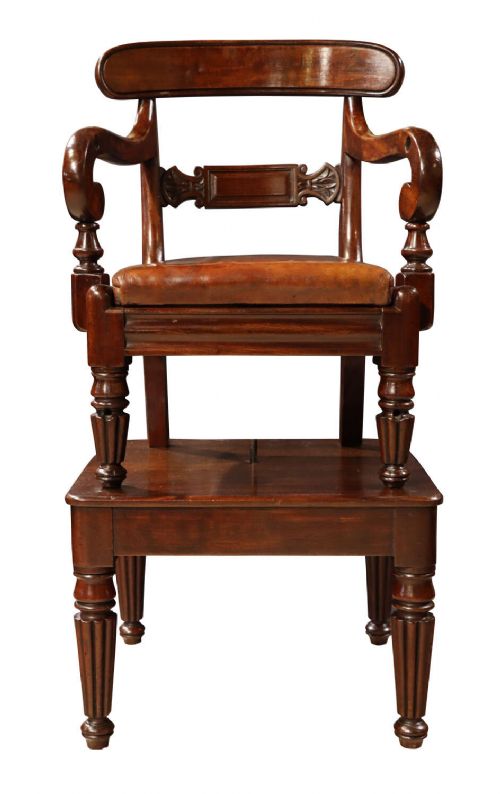


Georgian Wooden Highchair
A georgian wooden highchair brings centuries of domestic history into a room with sturdy craftsmanship and compact proportions.
Georgian Wooden Highchair
A georgian wooden highchair is a functional piece of children's seating designed to elevate a child to table height during meals. These pieces span periods from the eighteenth century into the nineteenth century, reflecting evolving domestic habits for the nursery and dining room.
The versions most commonly met on this page include mahogany examples with stands, simpler elm and ash vernacular armchairs, and metamorphic designs that convert for different uses. Formats range from hoopback windsor styles to tub highchairs fitted with cane work.
How they were made
Makers constructed these chairs predominantly using dense hardwoods such as mahogany, oak, elm, and ash, selecting each timber for its structural resilience. Joinery techniques relied on traditional pegged mortise and tenon joints to withstand the heavy wear associated with children's furniture.
Secondary materials such as cane, leather, and fabric appear across seats and panels, while brass fittings provide functional hardware for stands and metamorphic actions. Surfaces frequently showcase the natural grain of the timber beneath historical finishes rather than heavy decoration.
Current listings feature materials including mahogany, elm, ash, cane, fabric, leather, brass, and oak across Georgian and nineteenth-century periods.
What varies in quality
The distinction between standard nursery furniture and finer examples lies in the selection of timber and the sophistication of the joinery. Mahogany pieces destined for formal dining spaces display careful turning and proportions, whereas vernacular elm and ash chairs prioritize rugged utility.
Survival of original components, such as detachable stands and cane seating panels, significantly influences the integrity of each piece. Subtle details in the arm supports and back rail shaping separate workshop-made pieces from simpler regional production.
The Georgian Wooden Highchair Glossary
- Metamorphic
- Describing a piece of furniture designed to transform from one form into another, such as a high chair converting into a low chair and table. This ingenuity was particularly valued in nineteenth-century domestic spaces.
- Stand
- A separate base frame that elevates a child's armchair to highchair height, often secured with pins or simple interlocking joinery. These stands allow the upper section to function independently.
- Hoopback
- A chair back formed from a single continuous bent piece of timber that sweeps around to create the arm supports. This construction method provides considerable lateral strength.
- Caned
- Woven rattan or split cane used to form lightweight, flexible seat or back panels. It requires skilled hand-weaving to achieve even tension across the frame.
- Vernacular
- Everyday furniture made by local regional joiners using accessible regional timbers rather than following strict metropolitan design rules. These pieces often exhibit charming individual quirks in construction.
Georgian Wooden Highchair: Frequently Asked Questions
What is a metamorphic high chair?
A metamorphic high chair is a dual-purpose design that alters its configuration, usually allowing the upper chair section to detach from its base frame to form a low seat or play table.
This clever engineering maximises utility in historical nurseries where space and resources were carefully managed.
How do I date a wooden high chair?
Dating relies on examining the timber species, joinery methods, and stylistic cues such as leg turning and backrest profiles. Pieces from the eighteenth century often feature denser mahogany and more restrained proportions compared to later nineteenth-century variations.
Comparing construction details with dated examples helps narrow down the period of manufacture.
Were these chairs used daily?
Yes, these chairs served practical domestic roles for feeding young children within family spaces. Their sturdy construction in hardwoods like elm and ash reflects the heavy demands placed on nursery furniture.
Survival rates indicate that many were valued heirlooms passed down through generations.