

Country Low Table
When you search for a country low table, you enter a practical tradition of domestic furniture shaped by local timber and everyday work.
Country Low Table
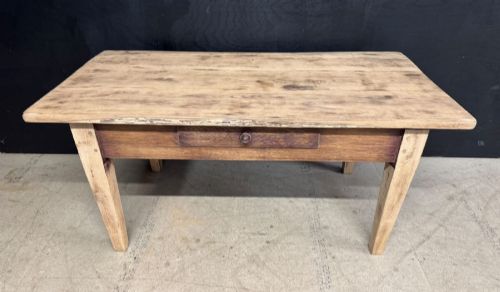
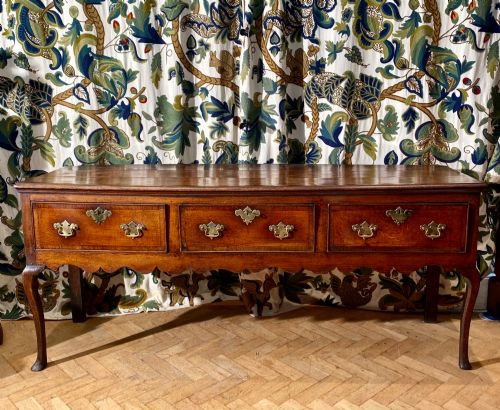
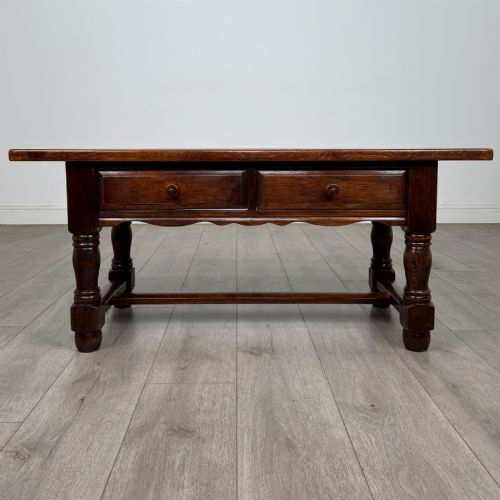
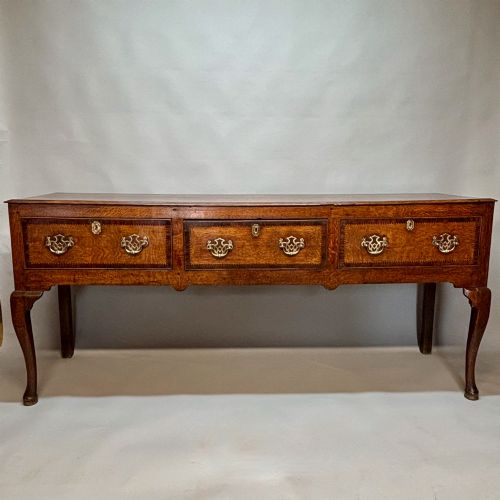
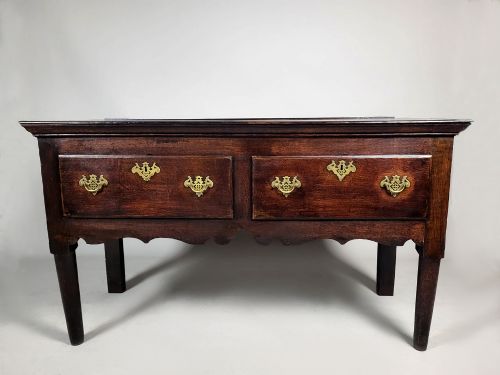
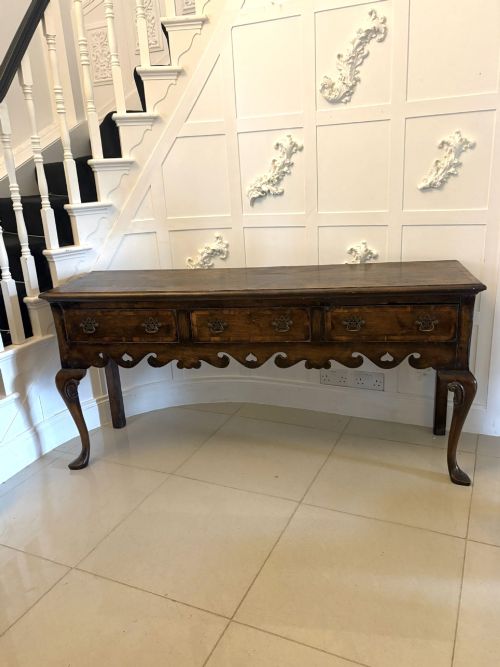
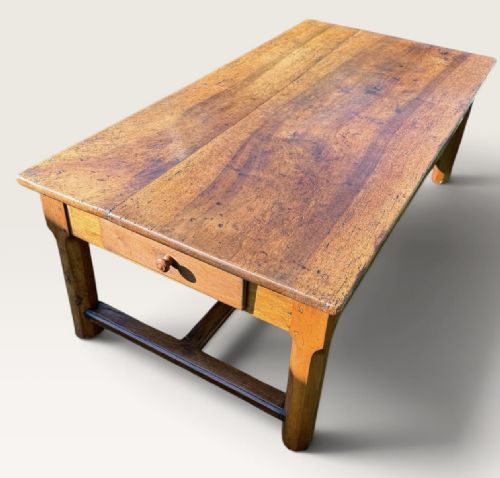
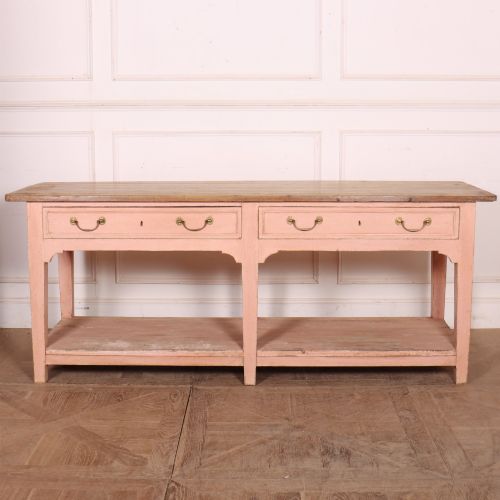
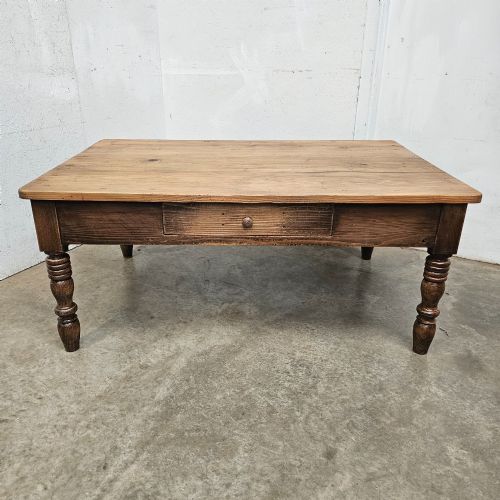
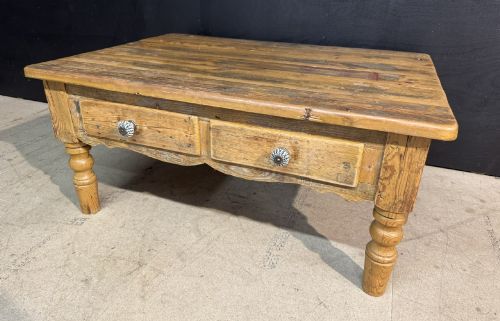
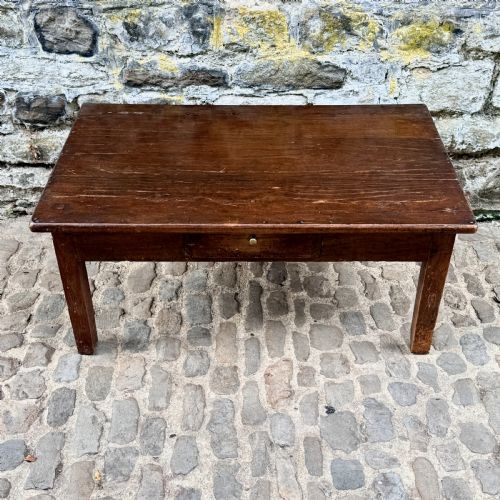
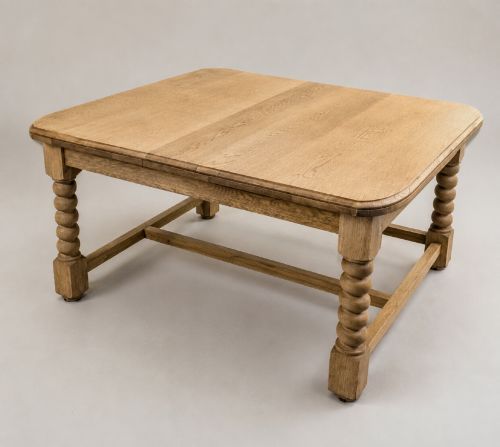
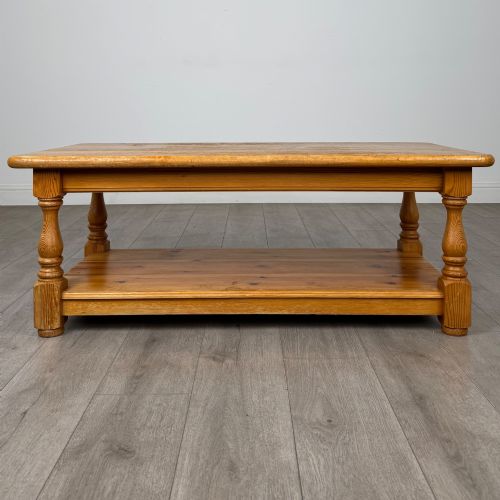
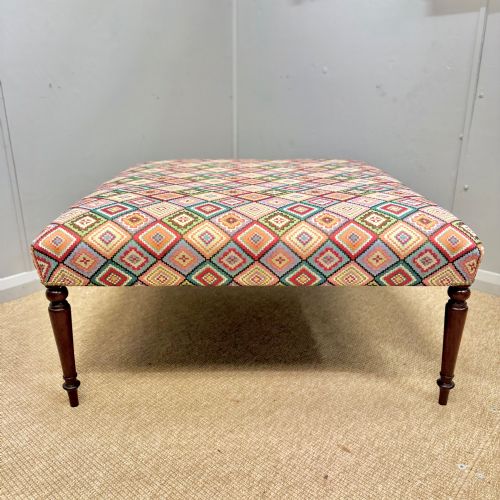
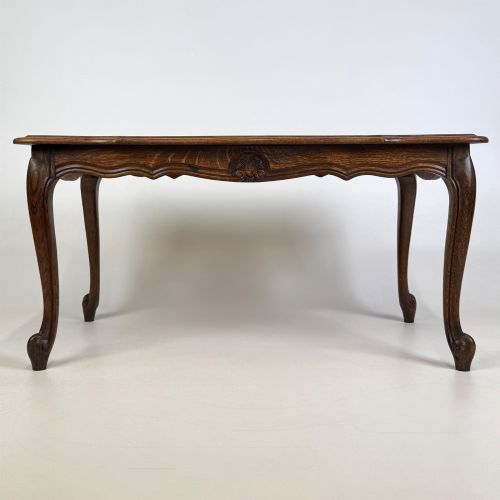
A country low table appears in various guises across the inventory, spanning lowboys, coffee tables, benches, and repurposed dresser bases. These forms originate primarily in domestic farmhouse and provincial settings rather than formal urban workshops.
The materials reflect regional availability, relying heavily on sturdy woods like oak, elm, pine, and walnut. Many pieces date from the eighteenth and nineteenth centuries, carrying the marks of prolonged daily use in provincial kitchens and halls.
How they were made
Joinery techniques prioritize structural honesty, utilising pegged mortise and tenon joints, turned legs, and robust plank tops. Timber was selected for utility, meaning secondary woods often support primary surfaces.
Finishes range from scrubbed raw pine and bleached oak to historical painted surfaces and polished walnut. Surfaces show the tool marks of adzes, saws, and planes from rural joiners.
What varies in quality
Quality rests in the proportion of the frame, the integrity of the timber, and the restraint of subsequent alterations. Tables retaining their original brasses, unreduced heights, and untouched patination command greater interest.
Construction details differentiate vernacular items, such as the thickness of the top boards, the crispness of hand-turned legs, and whether the framework remains tight without excessive modern intervention.
The Country Low Table Glossary
- Lowboy
- A small eighteenth-century dressing or side table featuring drawers beneath the top. It typically stands on four legs and often serves as a low coffee table today.
- Potboard
- A slatted lower shelf fitted between the legs of a dresser base or table. It was originally designed to hold pots and pans off damp floors.
- Joint stool
- A sturdy wooden seat built with pegged mortise and tenon joinery rather than turned parts. These heavy items double easily as low occasional tables.
- Cricket table
- A small, lightweight three-legged table with a round top. The three legs ensure stability on uneven flagstone floors.
Country Low Table: Frequently Asked Questions
What is a country low table?
A country low table is a utilitarian wooden item originating from domestic provincial settings. These pieces include lowboys, benches, and low coffee tables adapted from earlier forms.
They reflect the simple needs of rural households, built from local timbers like oak, pine, and elm without urban ornamentation.
How were low tables used originally?
Many of these low surfaces began life as side tables, dressing tables, or work benches in kitchens and halls. They provided stable spots for food preparation, holding lanterns, or storing household goods.
Over time, changing domestic habits transformed taller serving pieces and lowboys into coffee tables for modern living spaces.
How do I care for antique timber?
Keep wooden tables away from direct heat sources and drastic humidity changes to prevent the timber from splitting. Regular dusting with a dry or slightly damp cloth preserves the wax finish.
Avoid harsh modern polishes that build up a greasy film over the historic patination of the wood.
How can I tell the period?
Dating relies on examining construction methods, tool marks, and timber shrinkage. Hand-cut joinery, pegged joints, and vernacular design clues point toward eighteenth or nineteenth-century origins.
Hardware, such as original brass pulls or butterfly hinges, also provides reliable chronological markers when present.