
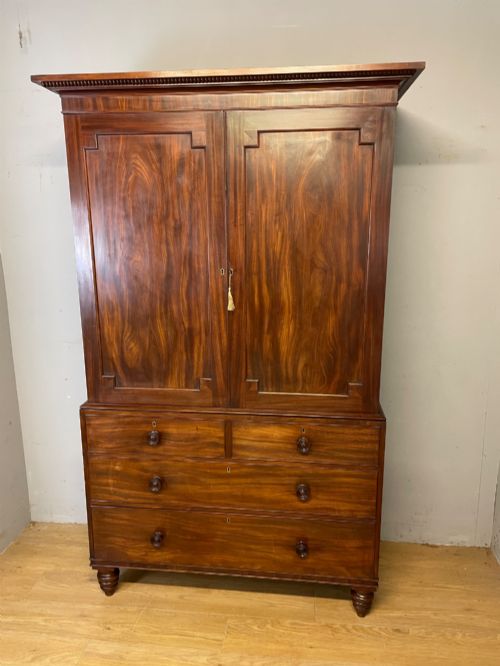
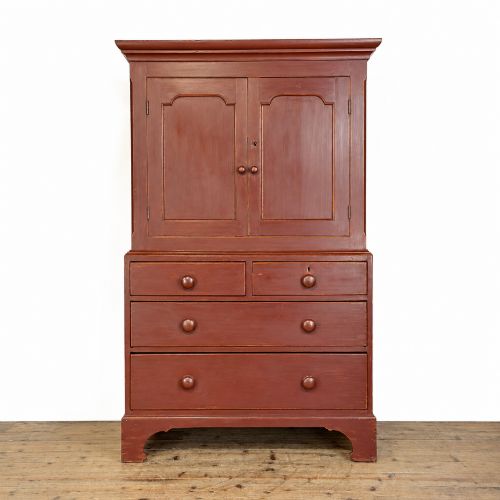
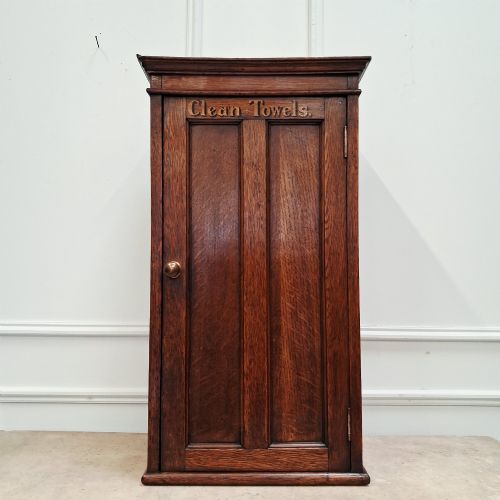
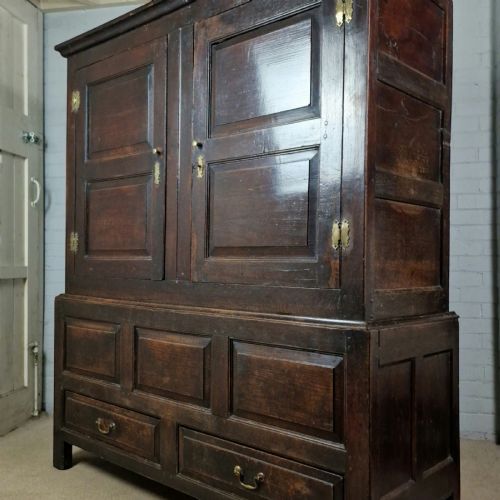
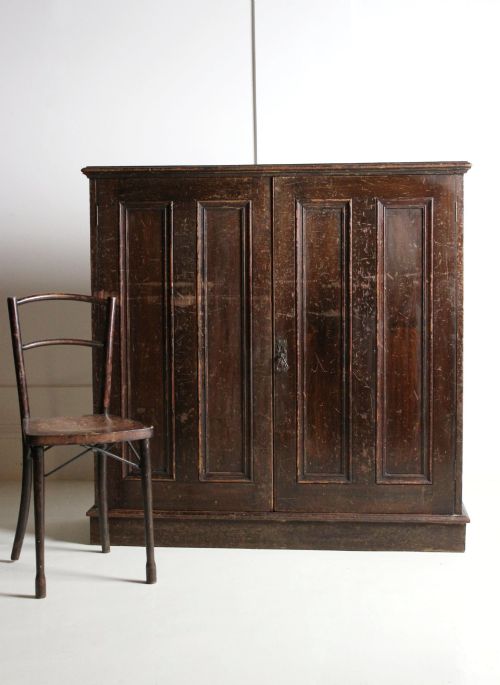
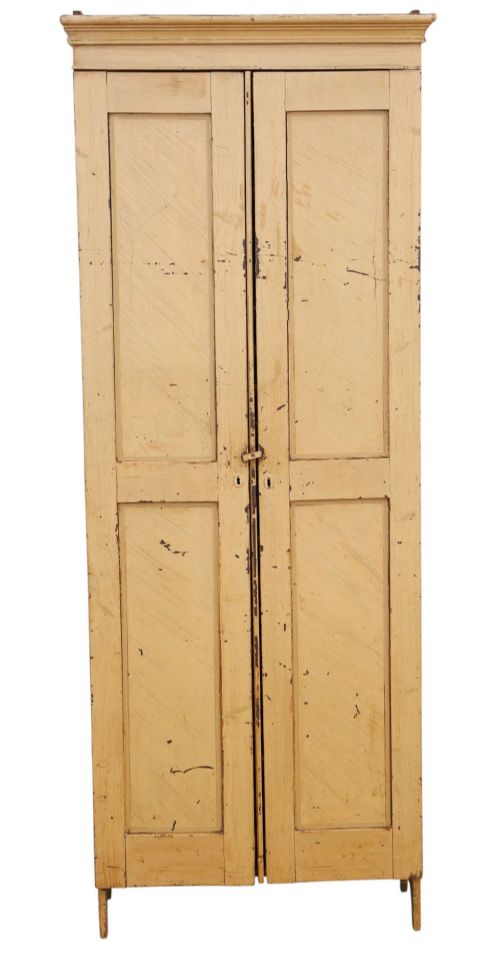
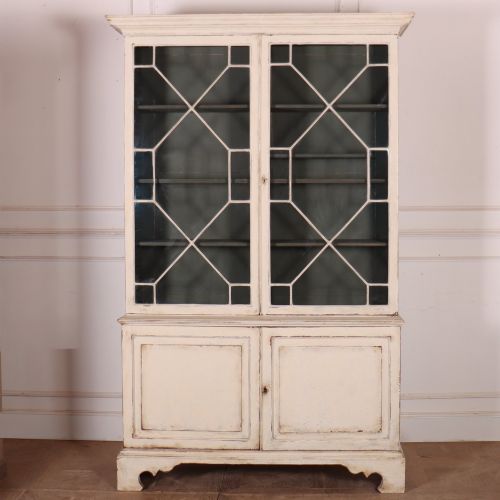
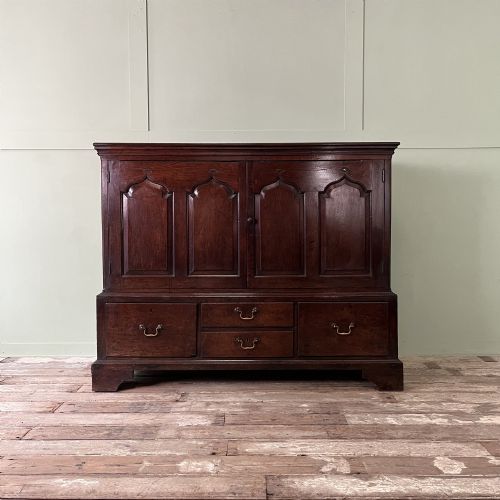
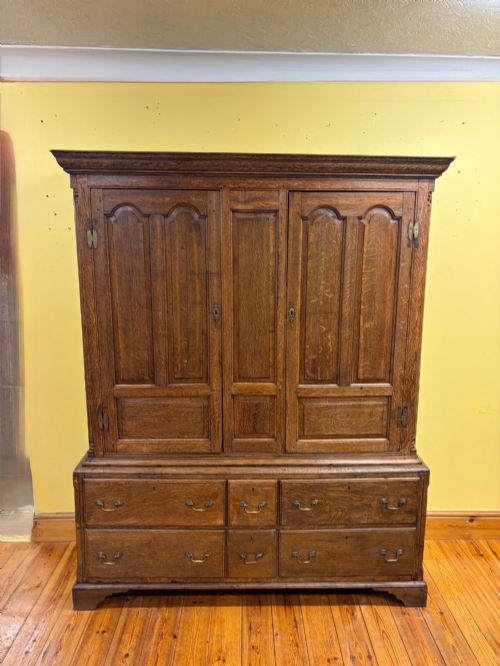
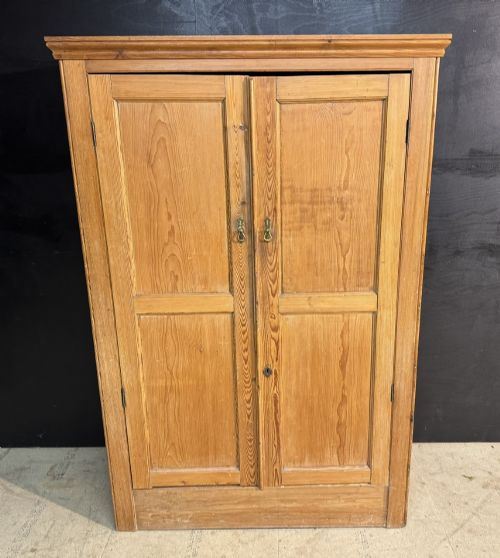
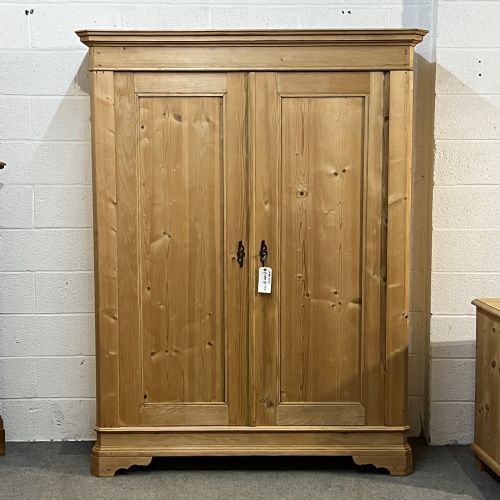
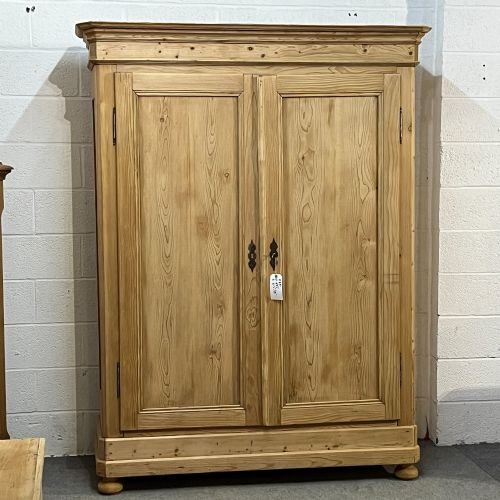
Country Linen Cupboard
A country linen cupboard organises domestic storage with a traditional regional utility.
Country Linen Cupboard
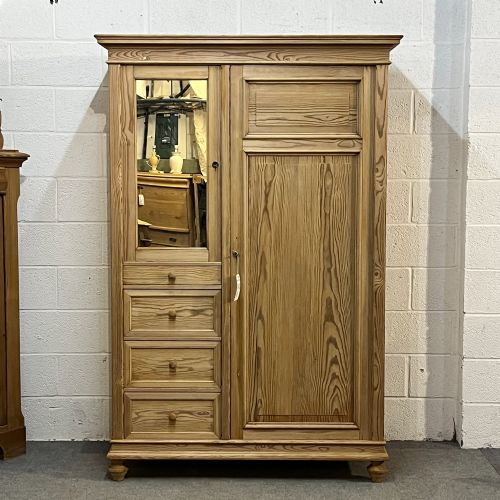
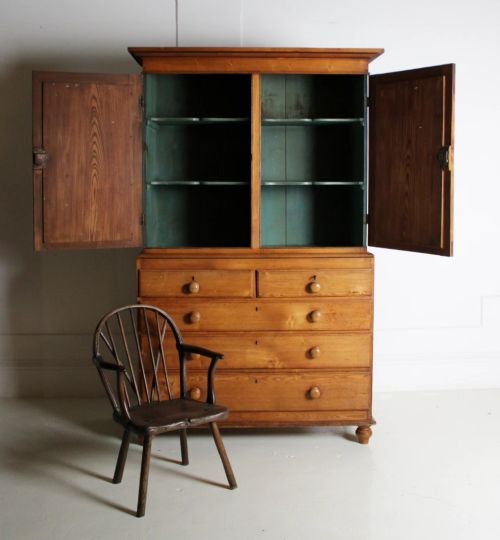
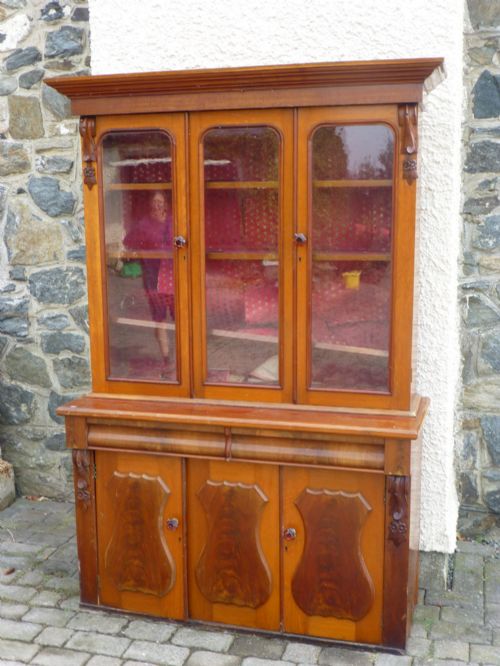
A country linen cupboard gathers various forms designed for household storage, ranging from tall wardrobes and press cupboards to low linen presses and housekeeper's cupboards. These pieces emerge from periods spanning the seventeenth century through to the nineteenth century, encompassing Georgian, Victorian, and provincial styles.
Buyers examining this page will frequently encounter pine and oak constructions, often finished with paint, glaze, or waxed surfaces. Originating from English, Welsh, Irish, French, and Spanish workshops, these items serve bedrooms, kitchens, and hallways with deep shelving and hanging space.
How They Were Made
Joiners and cabinet makers constructed these cupboards primarily from solid pine and oak, frequently incorporating ash, cherry, and mahogany for structural resilience or decorative contrast. Iron and brass fittings provide operational hardware for doors, drawers, and knockdown joints.
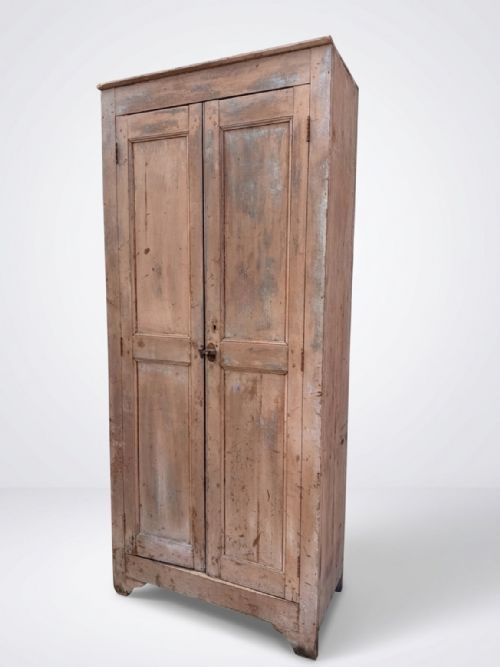
Surface treatments range from natural waxed finishes to original paint, scumble glaze, and polychrome decoration. Many larger wardrobe formats utilise knockdown construction to allow disassembly during transport.
Listings span periods from the 17th century through to the 1930s, featuring pine, oak, ash, cherry, and mahogany.
What Varies in Quality
The standard of a country linen cupboard rests upon the integrity of its timber selection and the preservation of its original surface finish, whether paint or wax. Examples retaining untouched regional paint schemes or early hardware hold distinct character compared to those stripped or heavily altered over time.
Proportion and scale also dictate distinction, where balanced architectural mouldings, well-fitted drawers, and robust panelled doors demonstrate superior regional joinery from eighteenth and nineteenth century workshops.
The Country Linen Cupboard Glossary
- Housekeeper's cupboard
- A large storage cabinet traditionally used in substantial country houses for storing household linens, provisions, and uniforms. These often combine upper cupboards with lower banks of drawers.
- Linen press
- A tall piece of furniture designed for pressing and storing textiles, featuring sliding trays or shelves enclosed by doors above a chest of drawers.
- Knockdown wardrobe
- A large wardrobe engineered to be dismantled into sections using pegs or bolts for ease of movement between rooms.
- Scumble paint
- A decorative surface technique where a translucent glaze is manipulated over a lighter base coat to imitate wood grain or create textured patterns.
- Armoire
- A large upright cupboard with doors, originating in continental Europe and used historically for storing garments and household goods.
Country Linen Cupboard: Frequently Asked Questions
What is a country linen cupboard used for?
These cupboards provide extensive vertical storage for household linens, clothing, and blankets within bedrooms or hallways.
Their deep shelves and internal hanging space accommodate bulky textiles that standard modern wardrobes struggle to hold.
How do I identify the period of a cupboard?
Dating relies on examining construction methods, timber species, and overall joinery style rather than a single feature.
Eighteenth-century examples often display pegged oak framing, whilst Victorian pieces frequently utilise pine with machine-sawn components.
Are these cupboards easy to move?
Many larger wardrobe and press designs incorporate knockdown construction, allowing the main panels to separate for transport.
Solid oak and large pine items remain heavy and require careful handling during relocation.
Should I choose painted or waxed pine?
Choosing between finishes depends on whether the piece retains historic paint or whether you prefer exposed timber.
Original painted surfaces show the authentic history of the piece, whilst waxed pine highlights the natural grain of the wood.