
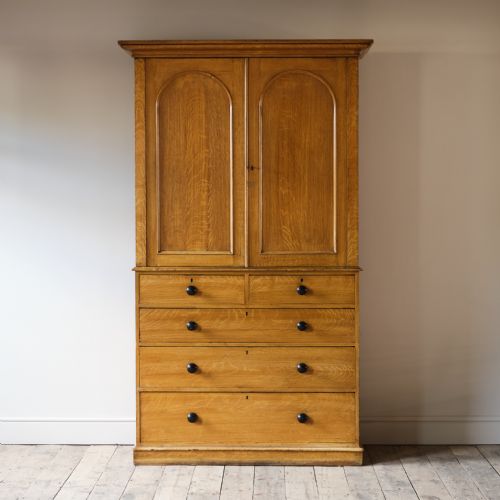
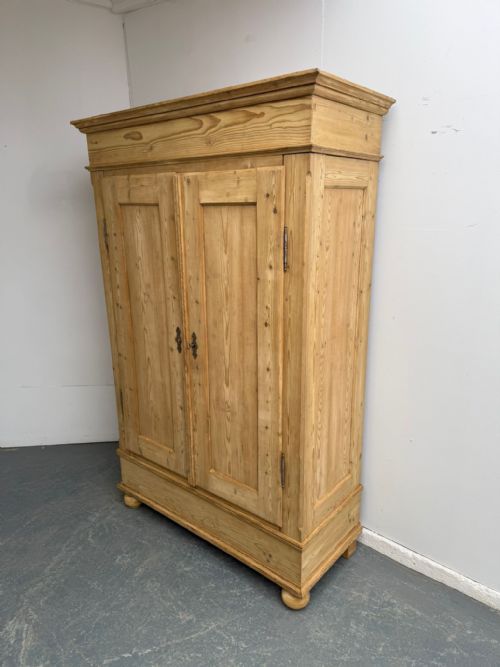
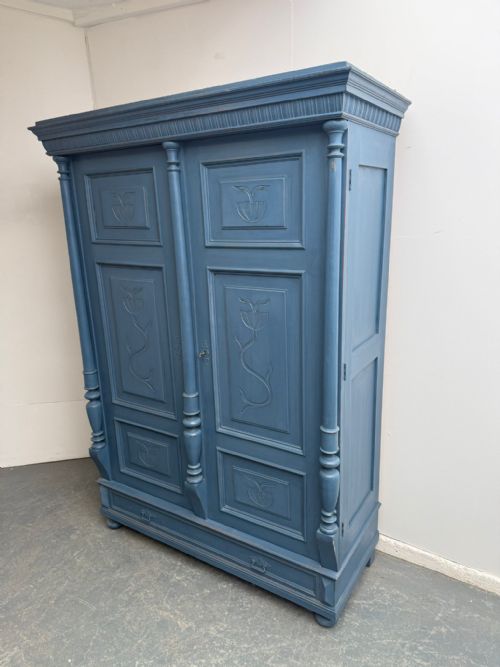
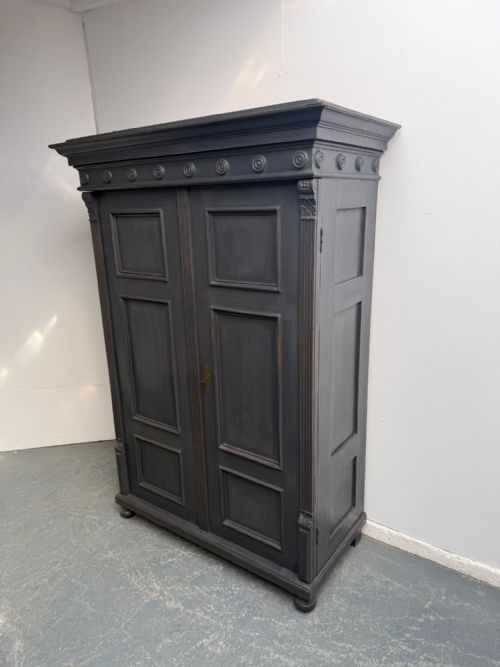


Original Painted Storage Armoire
An original painted storage armoire brings robust utility and vernacular character to a room, offering generous interior space wrapped in time-worn pigment.
Original Painted Storage Armoire
An original painted storage armoire encompasses substantial timber furniture designed for utility, frequently encountered as linen presses, wardrobes, and cupboards from the nineteenth century. Buyers searching for an original painted storage armoire typically meet vernacular pieces rooted in English country, Victorian, and European folk traditions.
The forms span two-door knockdown wardrobes, tall linen cupboards, and housekeepers' cabinets, alongside occasional industrial sheet metal variants. These items serve primary domestic storage functions while displaying decades or centuries of surface wear.
Origins stretch from English workshops to Hungarian households and French provinces, showing how diverse regional carpenters approached heavy domestic storage. The listings on this page demonstrate that pine serves as the primary structural timber for these functional storage pieces.
Materials and construction
Pine forms the structural core of these pieces, built with solid boards assembled to handle heavy domestic loads. Iron and wrought metal feature in hinges, latches, and internal hardware, securing the large panel doors characteristic of the form.
Surface treatment relies on layers of historic paint applied directly to the timber, sometimes showing remnants of later decorative layers. Joinery methods range from pegged frames to knockdown panel construction designed for ease of transport.
Listings span the nineteenth century through the 1920s, utilising pine, wrought iron, and glass across English, French, and Hungarian styles.
Assessing quality in painted storage furniture
Quality rests in the integrity of the original timber frame and the undisturbed character of the historic painted surface. Pieces that retain their early pigment without aggressive modern sanding display a superior depth of age.
Proportion and scale distinguish fine vernacular examples from standard utility cupboards, particularly where panel moulding and cornice details are executed with care. Hardware originality, from iron strap hinges to working latches, completes the standard of a well-preserved piece.
The Original Painted Storage Armoire Glossary
- Knockdown wardrobe
- A large wardrobe constructed so that the frame can be dismantled into separate panels for transport. This technique was essential for moving bulky furniture through narrow doorways in older buildings.
- Linen press
- A tall cupboard traditionally used for storing pressed linen and bedding on internal sliding trays or shelves. The upper section usually houses the main storage shelves while the lower portion contains deep drawers.
- Skeleton cupboard
- A specialised cabinet featuring an open or wire-framed door structure rather than solid timber panels. This design allowed air circulation for contents while maintaining secure enclosure.
- Housekeeper's cupboard
- A large multi-purpose storage piece historically kept in the service areas of large houses for provisions and household textiles. These robust cupboards generally feature deep upper shelving and lower drawer banks.
- Wrought iron
- Iron beaten into shape by hand while hot, producing durable hardware and structural elements. It appears frequently on industrial and vernacular cabinets for hinges and locking mechanisms.
Original Painted Storage Armoire: Frequently Asked Questions
How do I date an antique painted armoire?
Dating relies on examining construction marks, timber preparation, and the layering of the paint itself. Hand-sawn boards and forged iron hardware point toward earlier periods.
Later Victorian and transitional pieces often reveal machine-sawn components and different fastening methods beneath the surface coatings.
How should I care for historic painted surfaces?
Maintenance requires keeping the pieces away from direct sunlight and excessive humidity to prevent the old paint from flaking. Gentle dusting with a dry microfiber cloth is generally sufficient.
Avoid modern chemical cleaning agents, as harsh solvents can strip away fragile historic pigment layers and wax finishes.
What is the difference between a linen press and a wardrobe?
A linen press historically includes sliding trays or shelves behind its upper doors for flat textiles, paired with deep drawers below. A wardrobe focuses primarily on vertical hanging space for garments.
Both forms belong to the broader family of large storage furniture found in domestic interiors.